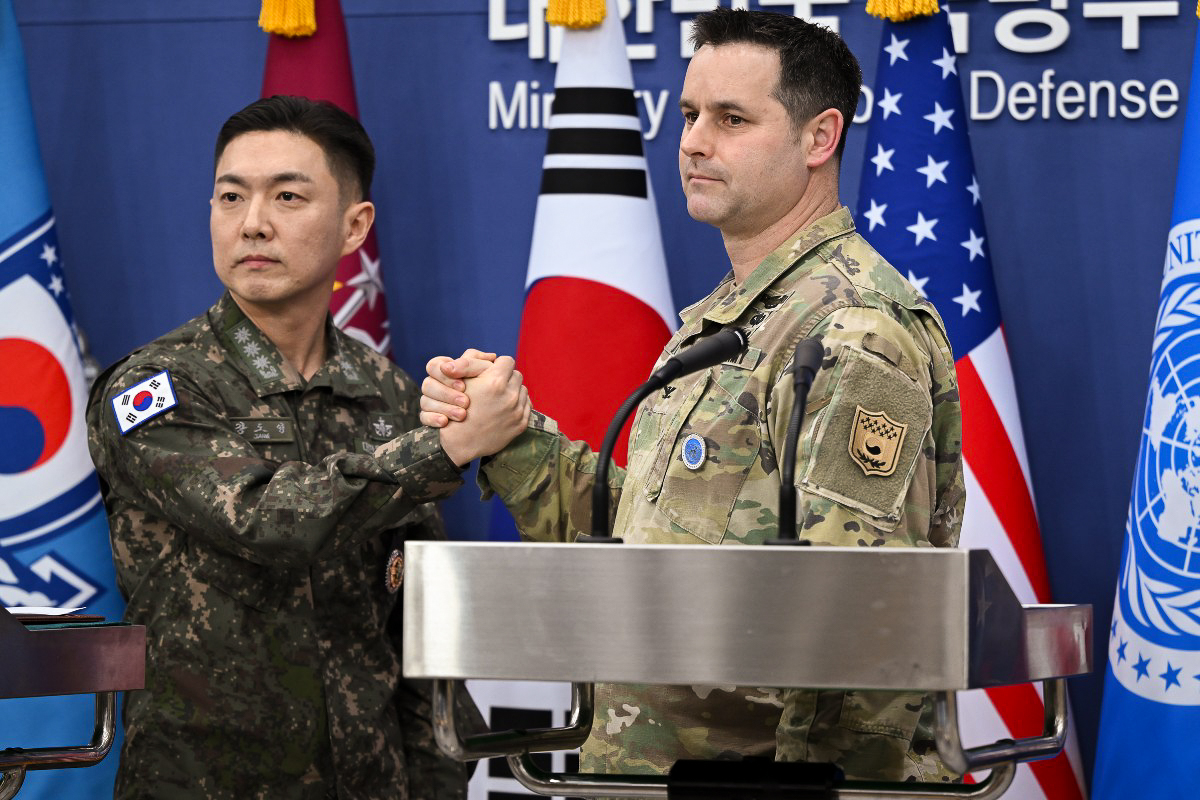

The United States and South Korea will conduct joint military drills known as “Freedom Shield” next month, military officials from both countries announced on Feb. 25.
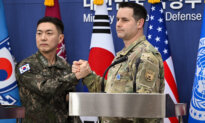
The directors of public affairs for the two allies announced at a joint meeting held at the Ministry of National Defense in Yongsan-gu, Seoul, that the 2026 Freedom Shield will take place between March 9 and 19, according to a statement from the South Korean Ministry of National Defense.
Freedom Shield is a defense exercise conducted every spring. It is expected to involve approximately 18,000 troops—similar in scale to previous years, the statement said.
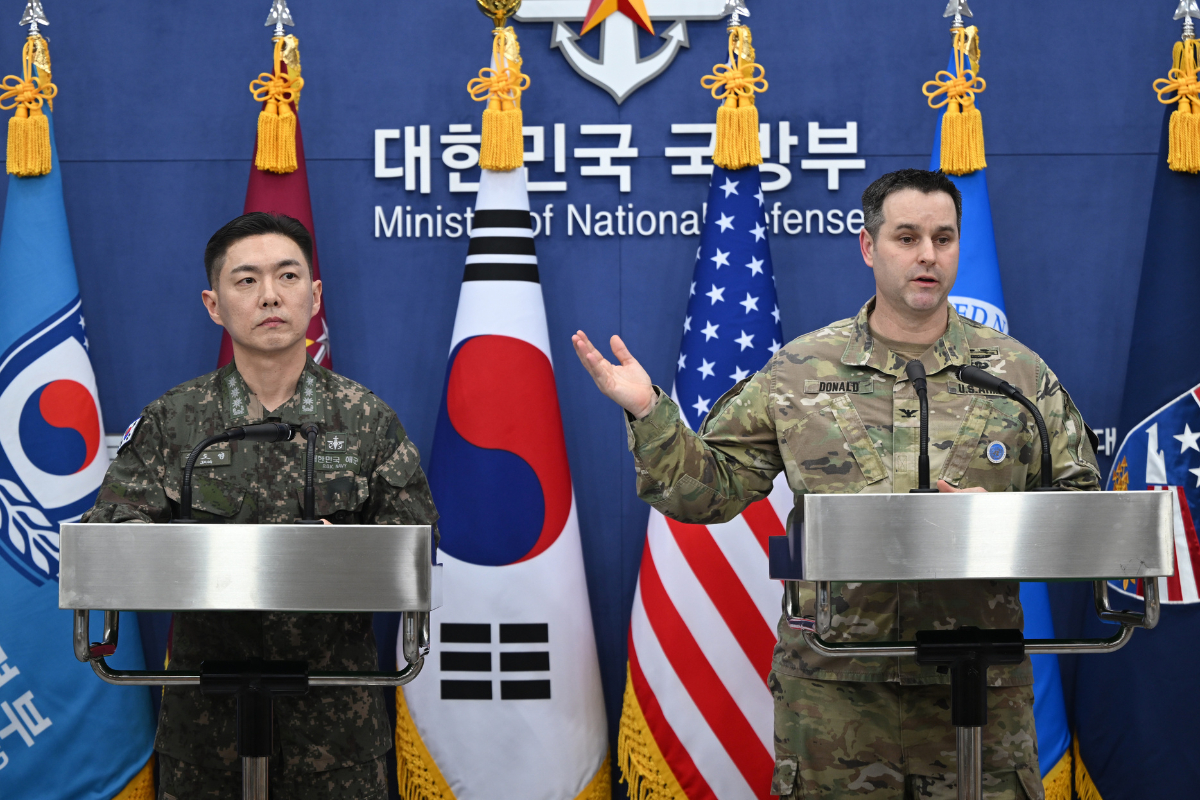
U.S. Army Col. Ryan Donald, director of public affairs of the U.S. Forces Korea, said the Freedom Shield exercise “reflects conflicts and lessons learned from around the world, training soldiers to address challenges and ensuring readiness to defend the Republic of Korea under any circumstances.”
The Republic of Korea (ROK) is South Korea’s official name.
The drills are designed to test the allies’ joint operational capabilities as they respond to evolving security challenges and defense scenarios. They are largely computer-simulated.
Donald told a press conference that, as usual, the March exercises will be accompanied by a field training program, called Warrior Shield, to enhance “training realism and combat readiness.”
The announcement comes as North Korea holds the ruling party’s Workers’ Party conference, where leader Kim Jong Un is expected to outline key domestic, foreign policy, and defense positions for the next five years.
North Korea has described the joint U.S.–ROK exercises as invasion rehearsals, though the allies have stressed they are defensive in nature.
Col. Jang Do-young, public affairs director for South Korea’s Joint Chiefs of Staff, said during the press conference that next month’s drills will not involve scenarios of a possible response to a nuclear attack from North Korea, but will include training aimed at “deterring nuclear threats.”
Freedom Shield is one of two annual command post exercises the allies conduct; the other is Ulchui Freedom Shield, held in the summer.
US–South Korea Alliance
In the past several months, representatives from Washington and Seoul have met to discuss defense and security issues.
In October, U.S. President Donald Trump announced that the United States would share sensitive nuclear propulsion technology to allow South Korea to build its own nuclear-powered submarines in order to be prepared to counter regional threats.
During a two-day visit to South Korea in November 2025, U.S. Secretary of War Pete Hegseth addressed the issue of nuclear-powered submarines, saying that the Pentagon would be working with the Department of Energy and the Department of State to fulfill Trump’s commitment.
Hegseth said Trump “wants allies to be strong.”
“He wants our allies to have the best capabilities, and because Korea has been a model ally, he’s open to opportunities like that that ensure they have the best capabilities in their own defense and alongside us as allies,” he said.
The U.S.–South Korean defense alliance was forged on Oct. 1, 1953, with the signing of the Mutual Defense Treaty, following the July 27, 1953, signing of the Korean Armistice Agreement, which ended active combat in the Korean War and established the cease-fire.
The U.S. Department of State describes the Mutual Defense Treaty as the “linchpin for security and stability in the Indo-Pacific.”
More than 28,500 U.S. military personnel are stationed in South Korea, working closely with the South Korean military and United Nations Command countries “to deter and defend against the threat from the Democratic People’s Republic of Korea (DPRK) and maintain the Korean Armistice Agreement,” the State Department said in a Jan. 20, 2025, statement.
The Associated Press contributed to this report.
 Friends Read Free
Copy
Facebook
Tweet
Friends Read Free
Copy
Facebook
Tweet