
U.S. President Donald Trump toughened his stance on Russia this week, pledging to supply Kyiv with “top-of-the-line” military equipment to be paid for by Washington’s NATO allies.
On July 14, he also threatened to slap tariffs of up to 100 percent on countries that continue to trade with Russia—especially those buying its oil—if Moscow fails to agree to a cease-fire with Ukraine within the next 50 days.
“However satisfying Trump’s reversal on Russia may sound to the rest of the world, it is more complicated than it sounds,” Julien Mathonnière, an oil markets economist at the U.S.-based Energy Intelligence, told The Epoch Times.
“Secondary tariffs on countries that rely on Russian oil imports could potentially cost Russia nearly $200 billion in revenue, if they are fully implemented and enforced. But that’s a big ‘if.’”
Trump, who was reelected on pledges to swiftly end the ongoing Russia–Ukraine war, issued his ultimatum at a July 14 meeting in Washington with NATO Secretary-General Mark Rutte.
Speaking to reporters the next day, Rutte warned that countries that keep doing business with Russia could be hit “very hard” if Trump makes good on his threat.
“If you live now in Beijing, or in Delhi, or you are the president of Brazil, you might want to take a look into this, because this might hit you very hard,” the NATO chief said after a meeting with U.S. senators.
“Please make the phone call to [Russian President] Vladimir Putin and tell him that he has to get serious about peace talks. Otherwise, this will slam back on Brazil, on India, and on China in a massive way.”
Like Russia, the three countries mentioned by Rutte are founding members of the BRICS group of nations, and China and India are now the top two importers of Russian crude oil.
Last month, Brazil was the third-largest buyer of Russian oil products, behind Turkey and China, according to the Helsinki-based Center for Research on Energy and Clean Air.
Secondary Sanctions
Since Russia invaded eastern Ukraine in early 2022, the United States and the European Union have imposed multiple sanctions packages on Russia and Russian-owned businesses.
On July 18, EU members agreed on an 18th sanctions package, which includes punitive measures specifically aimed at Russia’s energy sector.
Brussels and Washington, however, have so far refrained from imposing sanctions on third countries that continue doing business with Russia.
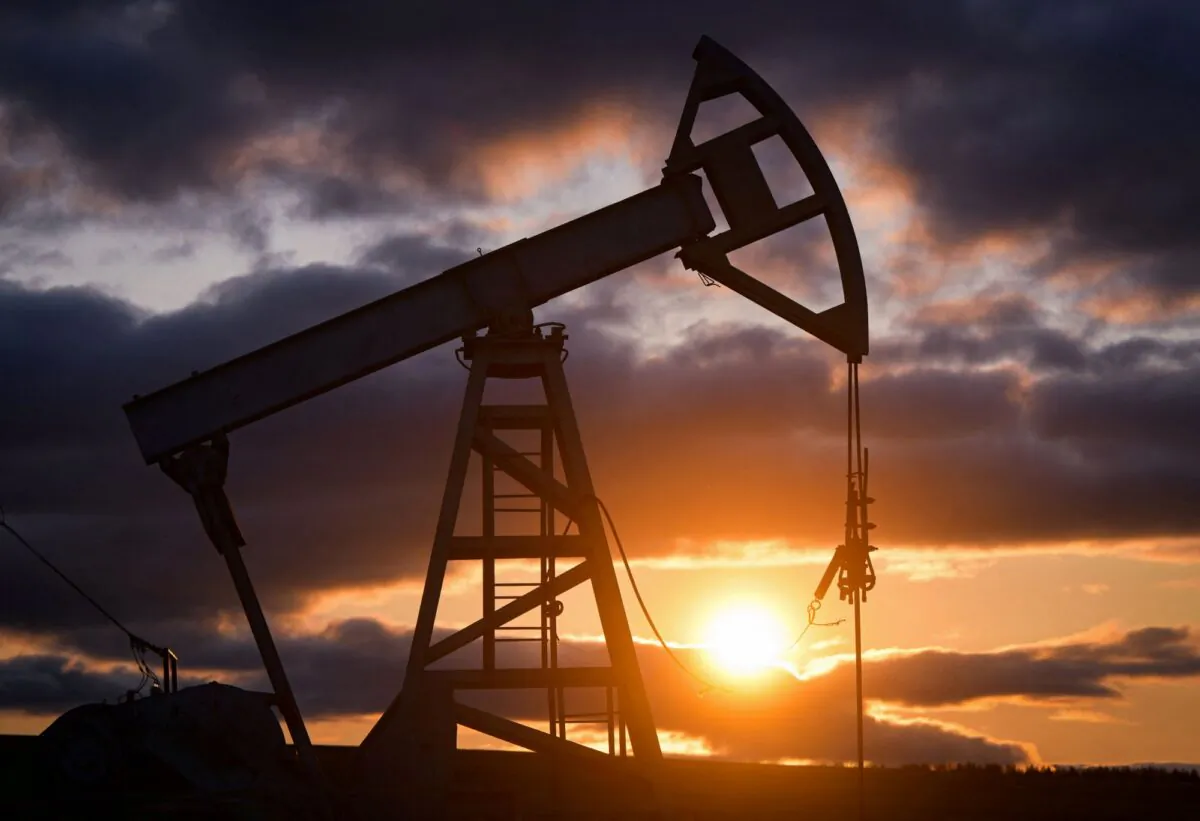
This has allowed Moscow to realize hundreds of billions of dollars in revenue by selling its oil to friendly buyers, with China and India at the top of the list.
“Despite the sanctions, Russian oil never left the market,” Carole Nakhle, founder and CEO of Crystol Energy, a UK-based consultancy firm, told The Epoch Times.
The introduction of fresh sanctions on Russia, she said, will “surely have some negative consequences for the [Russian] economy, but they won’t cripple it.”
“The new round of sanctions may put some buyers off, but others are unlikely to be deterred,” Nakhle said.
If carried out, the imposition of tariffs on Russia’s main trading partners—a practice referred to as secondary sanctions—would be a significant policy shift.
On July 15, Russian Foreign Minister Sergey Lavrov downplayed Trump’s threat to impose secondary sanctions if Moscow fails to meet the 50-day cease-fire deadline.
“The number of sanctions announced against us is already unprecedented,” he said in remarks cited by Russia’s TASS news agency. “I have no doubt we will cope [with them].”
Lavros also said that “sanctions have just been imposed by the European Union … and attempts are being made to embroil the United States into this.”
Since returning to office in January, Trump has spoken to Putin by phone several times to smooth relations and secure a cease-fire.
Moscow, however, has so far resisted Trump’s calls for an unconditional truce in Ukraine, where Russian forces continue to register gains on the battlefield.
Speaking to TASS on July 15, Malek Dudakov, a prominent Russian political commentator, said Trump’s threat to impose secondary sanctions should be seen largely as “an attempt to fend off pressure from the ‘hawks’ in Washington.”
“Trump will try to use this as a lever in the negotiation process and nothing more,” Dudakov told the news agency.
Markets Steady
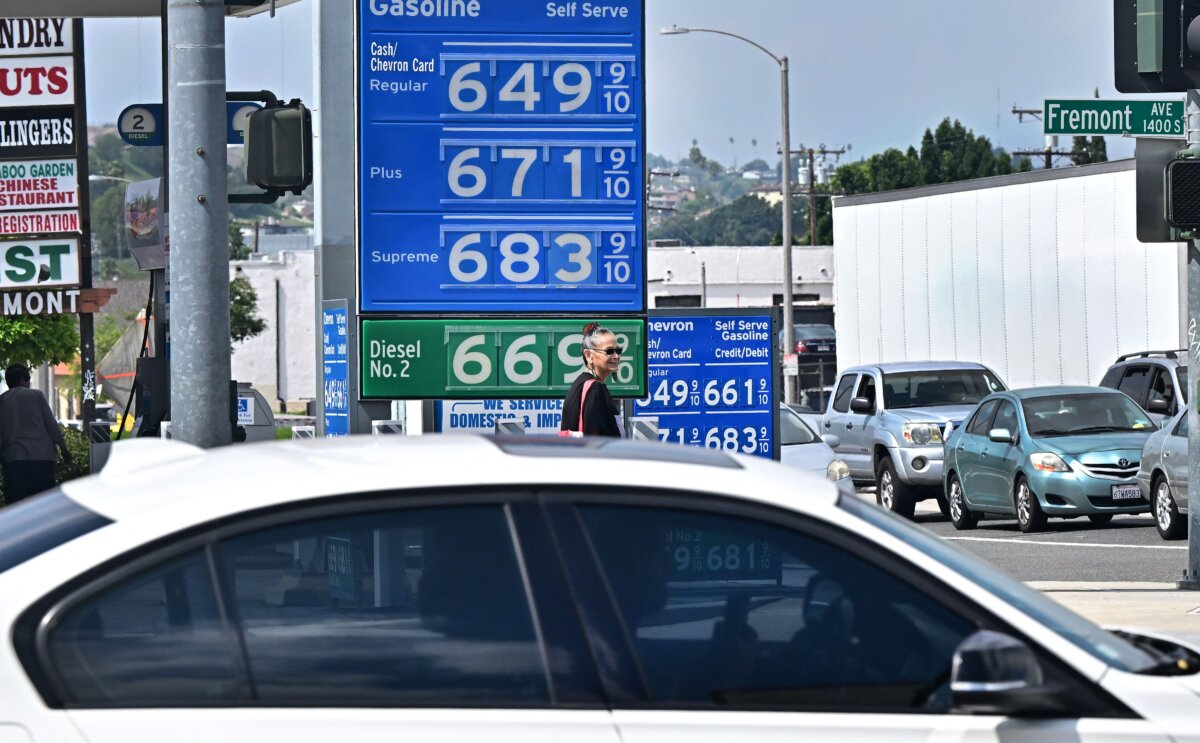
Global markets, meanwhile, were largely unfazed by Trump’s warning to Moscow, with oil prices falling slightly in the immediate wake of the announcement.
“So far, traders have shrugged off the announcement on the basis that Trump changes his mind all the time,” Mathonnière said.
“They also cite the risk of the policy backfiring on oil prices, which President Trump wants to keep low.
“The key thing to watch will be whether big buyers—like China, India, and Turkey—look to ramp up purchases of Russian crude and [oil] products in coming weeks to help fill stocks within the 50-day timeframe.”
China and India both currently import about 2 million barrels of Russian crude oil daily, according to Mathonnière, while Turkey imports roughly 300,000 barrels per day.
“And they have been buying at discounts,” he said.
“If you stop them from doing this, they will have to buy elsewhere, and their cost of supply will probably be higher, even after OPEC-plus added back supply faster than expected.”
Established in 2016, OPEC-plus comprises the 12 members of the Organization of the Petroleum Exporting Countries, along with 10 other oil-producing countries, including Russia.
“Also note that China may not really care about U.S. sanctions and could continue to buy [Russian] crude, even if India and Turkey don’t,” Mathonnière said.
“This would mean higher volumes would be available to China at a higher discount.”
On July 17, Hardeep Singh Puri, India’s oil minister, dismissed the potential threat posed to his country by Trump’s threatened secondary sanctions.
“I’m not worried at all,” Puri said. “If something happens, we’ll deal with it.
“India has diversified the sources of [energy] supply, and we have gone … from about 27 countries that we used to buy from to about 40 countries now.”
According to a spokesman for India’s foreign ministry, New Delhi’s energy procurement strategy is guided mainly by what is available on the international market and “prevailing global circumstances.”
Reuters contributed to this report.
 Friends Read Free
Copy
Facebook
Tweet
Friends Read Free
Copy
Facebook
Tweet