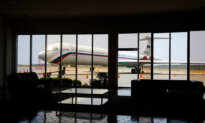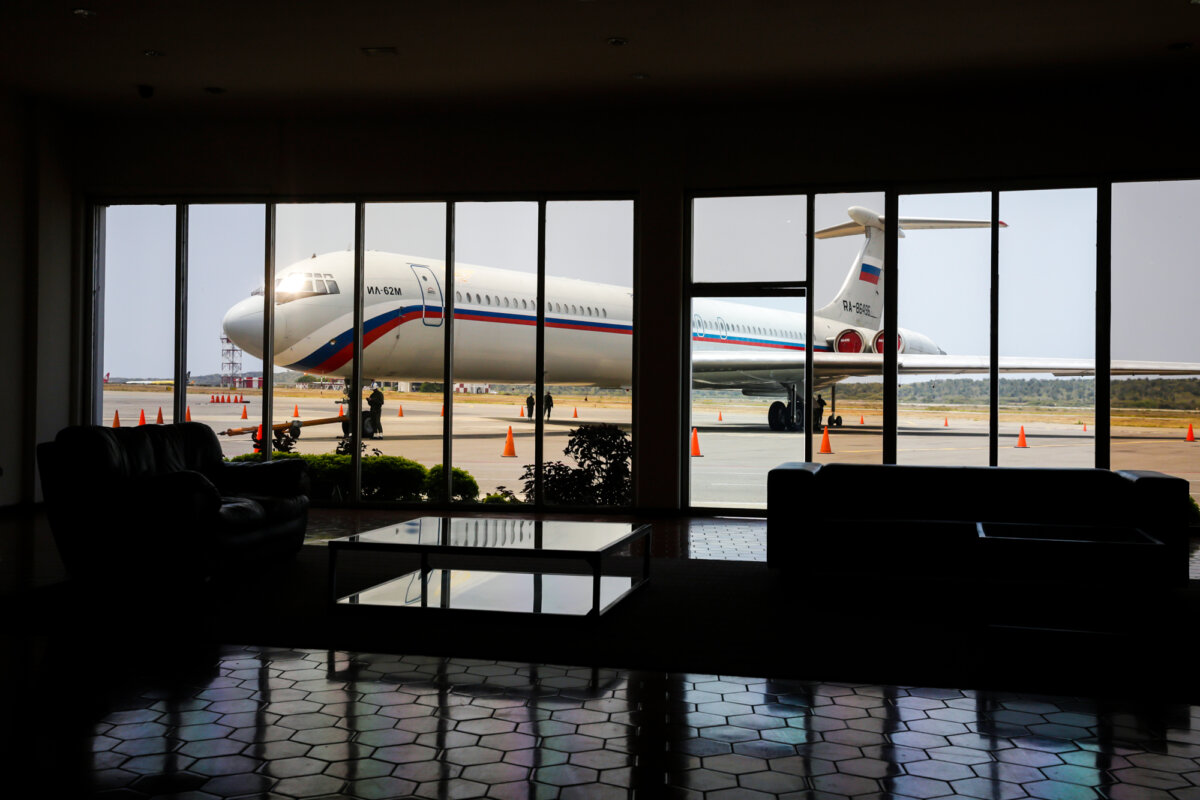

Venezuela has revoked the operating permits of six international airlines after they suspended flights to the South American country following a United States warning that pilots should use caution when flying through Venezuelan airspace.
Venezuela’s civil aviation authority announced on Nov. 26 that it was canceling permits for Brazil’s GOL, Colombia’s Avianca, Colombia’s LATAM Airlines Colombia, Portugal’s TAP, Spain’s Iberia, and for Turkish Airlines. The agency accused the carriers of participating in “the actions of state terrorism promoted by the United States government.”
Before revoking the permits, Venezuela’s government issued a 48-hour ultimatum for airlines to restore their canceled flights or risk being barred from operating in the country.
Spain’s Air Europa and Plus Ultra have also suspended service, but their permits were not revoked. Venezuelan authorities did not provide any explanation for the exemption.
The International Air Transport Association (IATA), speaking on behalf of the affected carriers, urged Venezuelan authorities to reverse the decision.
“Airlines have prioritized the protection of passengers and crew members, avoiding flights in high-risk areas,” the group said. It added that airlines are committed to resuming service “as soon as conditions allow,” with a focus on helping passengers whose travel plans have been disrupted.
The flight cancellations stem from a U.S. Federal Aviation Administration (FAA) warning of a “potentially hazardous situation” in Venezuelan airspace due to a “worsening security situation and heightened military activity in or around” the country. The advisory stated that undefined hazards could pose a “potential risk to aircraft at all altitudes,” including during takeoff, landing, and even on the tarmacs at airports.
U.S. carriers have been barred from serving Venezuela since 2019, after the Department of Homeland Security concluded that conditions there “threaten the safety and security of passengers, aircraft, and crew.” Some U.S. airlines, however, continue to overfly Venezuelan territory en route to other destinations in South America.
The aviation dispute comes amid escalating tensions between the United States and Venezuela over President Donald Trump’s military campaign, which is aimed at halting South American drug cartels from shipping illicit narcotics that have fueled a deadly opioid crisis.
Since September, the United States has conducted at least 21 strikes on suspected drug-trafficking vessels in the waters off Venezuela as well as in the eastern Pacific, killing at least 83 people.
The USS Gerald R. Ford, America’s newest and most advanced aircraft carrier, has also been deployed to the Caribbean in a show of force that adds to the pressure on Venezuelan leader Nicolás Maduro, who is accused of overseeing an international drug-trafficking conspiracy and using violent drug cartels to consolidate his power.
This week, the United States designated the Cártel de los Soles, or Cartel of the Suns, as a foreign terrorist organization, alleging that Maduro personally directs the drug-trafficking syndicate alongside high-ranking officials of his government.
Trump has also linked the Maduro regime to Tren de Aragua, a Venezuelan prison gang and designated terrorist organization, calling it a state-sponsored invading force and invoking the wartime Alien Enemies Act to fast-track the deportation of suspected gang members.
The United States does not recognize Maduro as the legitimate leader of Venezuela. In 2019, the United States severed diplomatic ties with Venezuela after Trump, alongside many Latin American leaders, rejected Maduro’s disputed reelection.
In 2020, the U.S. Department of Justice indicted Maduro on narco-terrorism charges, initially offering a $10 million reward for his capture. That figure was raised to $25 million in the final days of the Biden administration, and the Trump administration has recently doubled it to $50 million.
 Friends Read Free
Copy
Facebook
Tweet
Friends Read Free
Copy
Facebook
Tweet