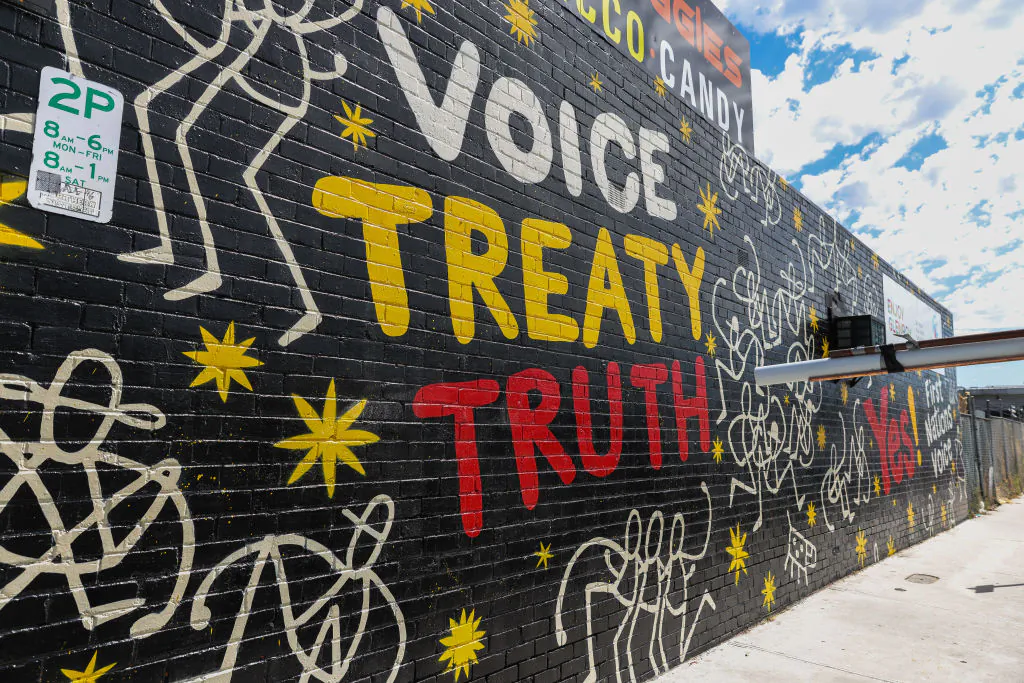

Victoria’s Treaty Bill has passed the state parliament paving the way for Australia’s first official “treaty” between Aboriginal communities and the government.
Once the new law gets implemented, it will establish a new statutory body, the Voice-like “Gellung Warl,” an evolution of the First Peoples’ Assembly of Victoria, which is a democratically elected body comprised of Aboriginal representatives.
The Gellung Warl will be permanent advisory body to parliament and is slated to cost about $71 million (US$46 million) in taxpayer funds once fully operational from 2027-28 onward. It includes three bodies, the First Peoples’ Assembly, a truth-telling body, and an accountability arm.
Members will be elected by Aboriginal people and groups from the First Peoples’ Assembly.
Gellung Warl means “tip of the spear” in Aboriginal Gunaikurnai language, and will act as the formal representative in negotiations with the Victorian government on matters like land, culture, and services.
The Treaty Bill does not change Victoria’s constitution nor does it give Gellung Warl the power to block laws. But the government will need to review laws with them and consider Treaty rules when making decisions.
A dedicated room will also be allocated to the body.
The law passed the upper house with 21 in favour from the Labor Party, Greens, Legalise Cannabis Victoria and Animal Justice Party. Against the Bill were 16 members from the Liberal and National Party, Libertarians, One Nation and Shooters, and Fishers and Farmers Party.
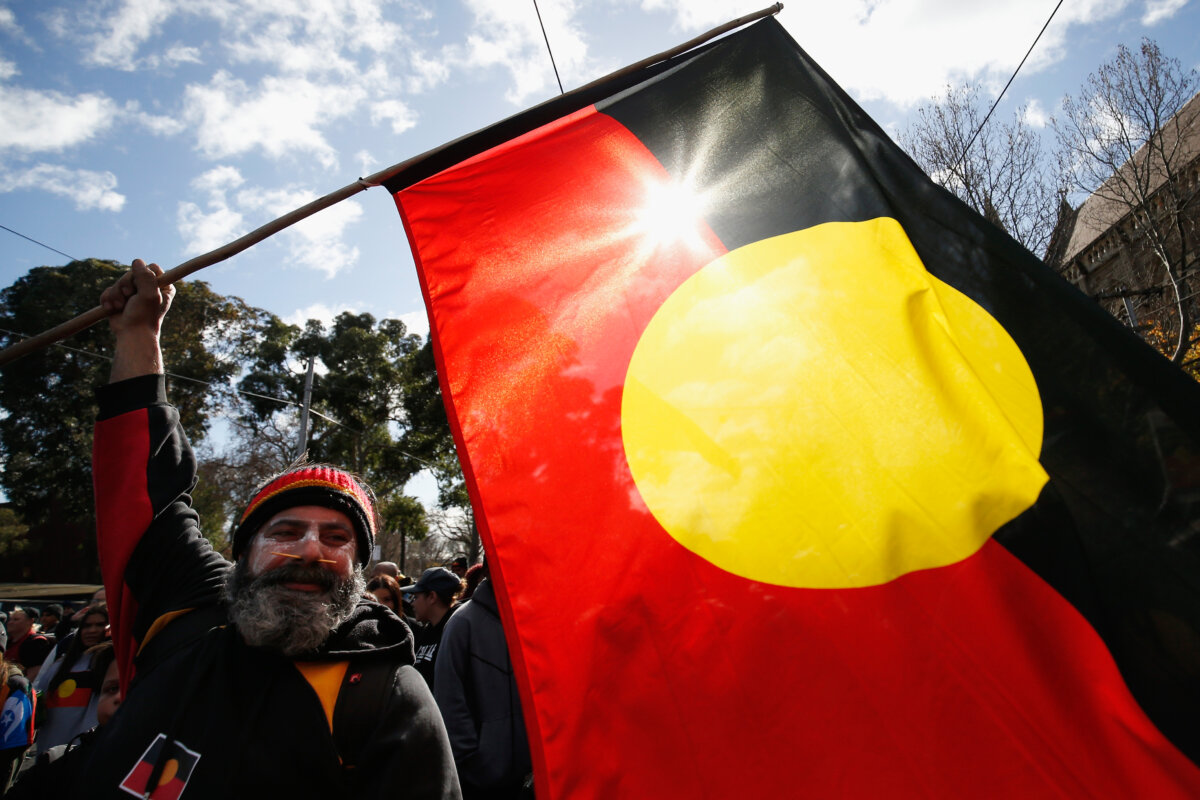
Who Is Eligible for the New Authority?
A questions and answers session on the bill was held in the Victorian Legislative Council on Oct. 30.
Labor Minister Lizzie Blandthorn explained the eligibility rules for being elected to the Gellung Warl authority.
“To be eligible to be an elected member of the assembly of Gellung Warl you must be on the electoral roll, a traditional owner in Victoria and a resident of Victoria or within 60 kilometres of the border of Victoria. Whether or not you are a traditional owner is guided by the definitions in the bill,” she said (pdf).
The First People’s assembly will consist of at least 10 members and cannot exceed 80.
The government confirmed the Labor government and Victoria’s First People’s Assembly would sign the statewide treaty in coming weeks when the governor-general provides royal assent to the bill.
A ceremonial exchange will be held at Federation Square in Melbourne on Dec. 12 to formally commence the treaty agreement.
Premier Jacinta Allan said the Treaty gives Aboriginal communities the “power to shape the policies and services that affect their lives.”
“This is how we build a fairer, stronger Victoria for everyone,” she said in a statement.
One of the first orders of business will likely be an official apology from the Victorian government, and other proposed initiatives include changes to the education curriculum.
Concerns About Discrimination
Shadow Minister for Health Georgie Crozie asked how the government would be able to manage other disadvantaged groups given that the “Indigenous population is being selected out and prioritised over others.”
Minister Blandthorn defended the Treaty Bill, suggesting it wasn’t about taking anything away from others.
“If we provide for self determination where Aboriginal families and Aboriginal children get better outcomes, then that is better for all families, that is better for all children and that is better for all of our community,” she argued.
Bev McArthur, Liberal Victorian member of the upper house, said the First Peoples’ Assembly would be entitled to two meetings a year with cabinet. She asked which other organisations in Victoria had that power to “discuss their grievances.”
“Minister, this is discriminating against other people, isn’t it? If one organisation can demand meetings of cabinet but nobody else in Victoria can, isn’t that discriminatory?” she said.
Blandthorn said the bill was about providing Aboriginal voices with self-determination.
“Ms. McArthur, this is a bill that is about resetting the relationship between First Peoples and the state of Victoria, and it is about ensuring that Aboriginal voices have an opportunity for self-determination through Gellung Warl and the capacity to then provide that advice through to government, and cabinet is an important part of providing that advice to government.”
The Victorian opposition has pledged to repeal the treaty within the its first 100 days if it wins power at next year’s election.
“We’re focused on delivering real change in the lives of Indigenous Victorians—not just through policy, but through genuine collaboration and respect for community-led leadership,” Leader of the Opposition Brad Battin said.
Funding Will Increase From 2027-28 Financial Year
Blandthorn also confirmed that the budget for the initiative would increase over time, starting at $3 million in 2025-26 to establish the treaty, then $71 million in 2027-28, $72 million in 2028–29, and ongoing amounts to be indexed annually at 2.5 percent.
“The lower amounts of funding in the first few years of operation reflect the staggered approach to the establishment of Gellung Warl and transition from the current First Peoples’ Assembly,” Blandthorn said.
She confirmed Gellung Warl would be able to keep any surplus funds generated via activities in the Aboriginal community.
“If Gellung Warl does not spend all funding within a given year on its functions and operations, it can direct any surplus funds to the self-determination fund or use them for investment purposes to support Aboriginal economic prosperity and sustainability,” she told parliament.
 Friends Read Free
Copy
Facebook
Tweet
Friends Read Free
Copy
Facebook
Tweet