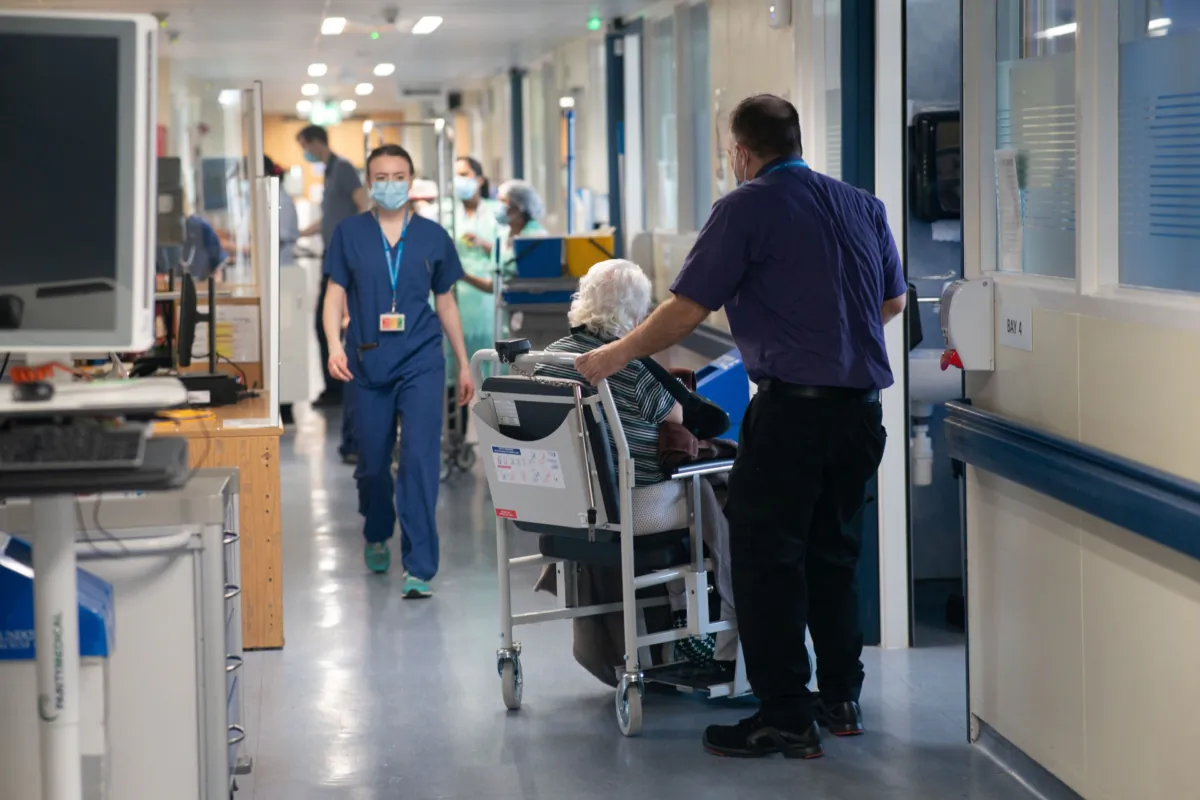

The number of people waiting for an urgent suspected cancer referral has dramatically increased in three years, according to the government.
On Tuesday, the leader of the Lib Dems, Ed Davey, received a parliament response to a question he had asked the Secretary of State for Health and Social Care about how many and what proportion of NHS cancer patients have waited long times for treatment.
The response showed that according to the government, the number of patients that had to wait 62 days after an urgent suspected cancer referral (with a decision to treat) has grown from 38,083 in 2020/2021 to 70,929 in 2022/2023. This is an 86.2 percent increase.
There were also increases in those waiting over three months, with data showing 16,084 in 2020/2021, jumping to 33,652 in 2022/2023.
The number of people waiting over 12 months increased from 18 to 42.
Mr. Davey has previously called for a new legal right for cancer patients to start treatment within two months of an urgent referral.
The Epoch Times understands that England’s latest cancer waiting times data will be published tomorrow.
Jamie Jenkins, former head of health analysis and labour market analysis at the Office for National Statistics, told The Epoch Times by email that waiting times for many conditions “have gone up over recent years as the NHS prioritised Covid.”
Strikes
Last Wednesday, NHS bosses warned that joint doctors’ strikes are hampering the NHS’s efforts to help people needing urgent care, including cancer.
The strikes are happening as NHS waiting lists in England hit record highs.
NHS performance data published in September showed there were 7,679,851 people on the waiting list at the end of July 2023. Patients will be waiting for treatment ranging from hip replacements to surgery to remove cancerous tumours.
In a letter to the BMA, NHS England leaders said: “We are increasingly concerned that the cumulative impact of this action is causing significant disruption and risk to patients.
“We are extremely concerned that Christmas Day cover is insufficient to ensure appropriate levels of patient safety are being maintained across local health systems.”
They warned that the Christmas Day staffing level is leading to problems in emergency care and affecting the NHS’s ability to “manage” urgent cases.
“We are becoming increasingly concerned that combined periods of industrial action are impacting on our ability to manage individuals who require time-sensitive urgent treatment, for example cardiac, cancer or cardiovascular patients, or women needing urgent caesarean sections,” the letter states.
“Although we recognise that consultants have been giving six weeks’ notice of industrial action, we are anxious this in itself is not sufficient to appropriately maintain safe care for these patients,” they added.
Lockdown Policies
In 2021, one of the world’s foremost cancer experts, Professor Karol Sikora, told The Epoch Times that lockdown policies had significantly disadvantaged cancer patients.
Mr. Sikora highlighted factors that stopped people from accessing services. The first was the impact of the psychology of brainwashing, mainly from the government’s ad campaign: “Stay Home. Protect The NHS. Save Lives.”
He said it stopped patients from suppressing the progressive symptoms of early cancer.
Other facts included a lack of face-to-face appointments and diagnostics, which all contributed to a delay in cancer diagnosis.
A spokesperson for the Department of Health and Social Care forwarded The Epoch Times to a statement that it had made in August, regarding plans they say will help urgent cancer referrals be diagnosed and treated sooner.
It said it has three new agreed standards, which came into effect in October, that “have been identified as the best measures to ensure patients are being seen and treated as quickly as possible.”
It said that “the COVID-19 backlog has been significantly reduced, and the NHS is on track to continue bringing this down, the focus will also be on increasing the number of patients starting treatment within 62 days.”
The Epoch Times contacted the NHS Confederation for comment.
PA Media contributed to this report.
 Friends Read Free
Copy
Facebook
Tweet
Friends Read Free
Copy
Facebook
Tweet