
RZ Resources has won financing from the Export-Import Bank of the United States (EXIM).
It is the first time an Australian critical minerals company has secured support from the U.S. agency and the first Australian project backed by EXIM in more than a decade. The last was the Roy Hill iron ore project in 2013.
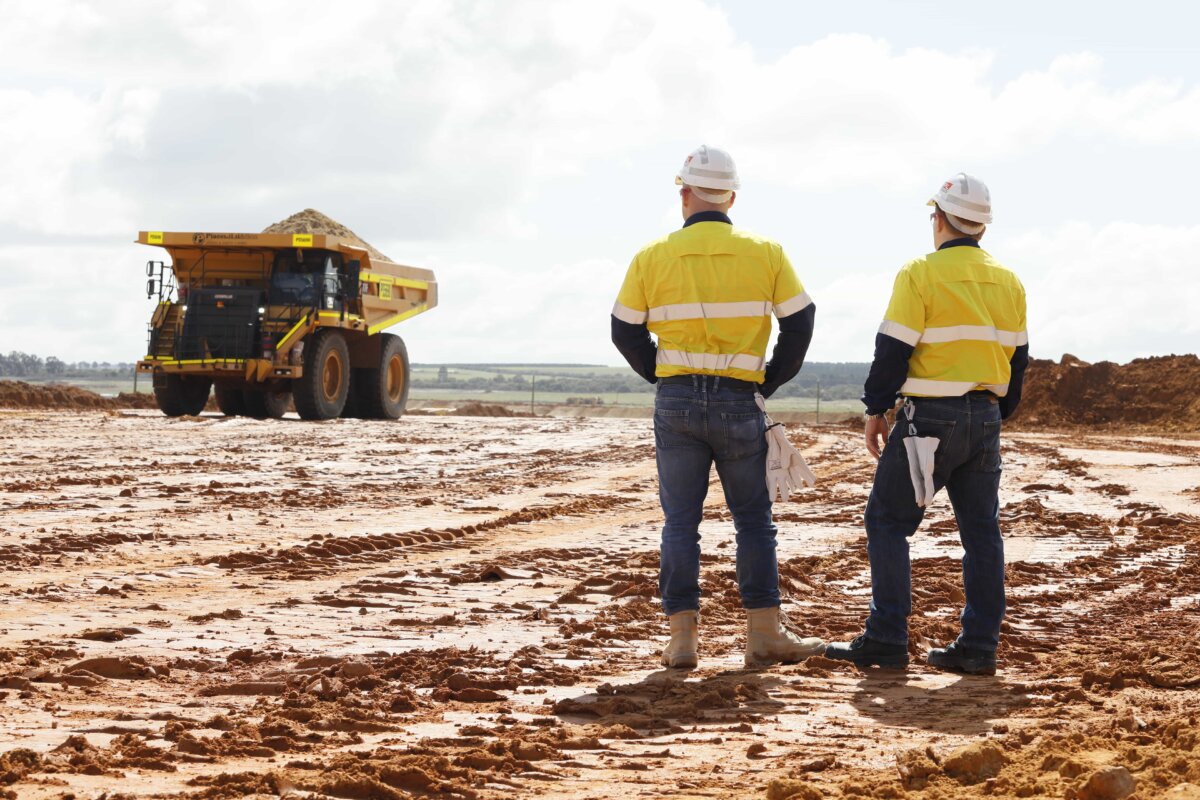
The funding is expected to advance engineering at the Copi Mine in far south-western New South Wales (NSW). Production is expected to start in 2028.
RZ also runs a mineral separation plant on the east coast, allowing direct exports to the United States and allies without relying on China.
AmCham Australia CEO April Palmerlee congratulated RZ on social media, writing, “This agreement is more than capital. It strengthens supply chain resilience for clean energy, advanced manufacturing, and defence.”
Partnerships With US and Japan
The Copi Project will supply rare earths, titanium, and zircon for renewable energy, defence, and advanced manufacturing.
At the 2025 Quad Leaders’ Summit, the Copi Project was labelled a project of “global significance.”
Once operational, it will employ about 240 workers and add nearly $98 million a year to the local economy.
“This funding is a powerful indication of how strategically significant this project is to both Australia and the United States,” RZ Executive Chairman David Fraser said.
EXIM Acting Vice President Jim Burrows called it a milestone that reflects EXIM’s commitment to strengthening supply chains with close allies.
“By supporting projects like RZ’s Copi Mine, we are advancing U.S. economic and national security interests while reinforcing the deep partnership between the United States, Australia, and Japan,” he added.
RZ has also struck a joint venture with Japan’s JX Advanced Metals Corporation. It is in talks with Export Finance Australia and Japan’s JBIC for further financing.
Broader Strategic Context
The financing comes at a time of growing competition with China over control of critical minerals.
Beijing dominates global supply, refining more than 80 percent of the world’s rare earths and maintaining a strong influence over titanium and zircon markets.
These materials are essential for electric vehicles, wind turbines, defence systems, and consumer electronics.
Washington has made critical minerals a priority, citing national security and industrial resilience.
In April, Australian Prime Minister Anthony Albanese’s Labor government vowed to establish a Critical Minerals Strategic Reserve to position itself as an alternative source of critical minerals.
“Australia is home to some of the largest critical minerals deposits on earth—just about the whole periodic table of elements,“ it stated.
“We are uniquely placed to meet the needs of increasing global and domestic demand.”
 Friends Read Free
Copy
Facebook
Tweet
Friends Read Free
Copy
Facebook
Tweet