
The new Liberal government has been in place since March, but it is only later this fall that Canadians will get an updated picture of the country’s finances.
Anxiety is rising in some sectors of society due to proposed austerity cuts to various programs coupled with massive increased spending in areas like defence and infrastructure, as well as the continuation of recently introduced support initiatives like dental care.
Unions are worried about public sector job cuts and fiscal conservatives are concerned about spiralling debt.
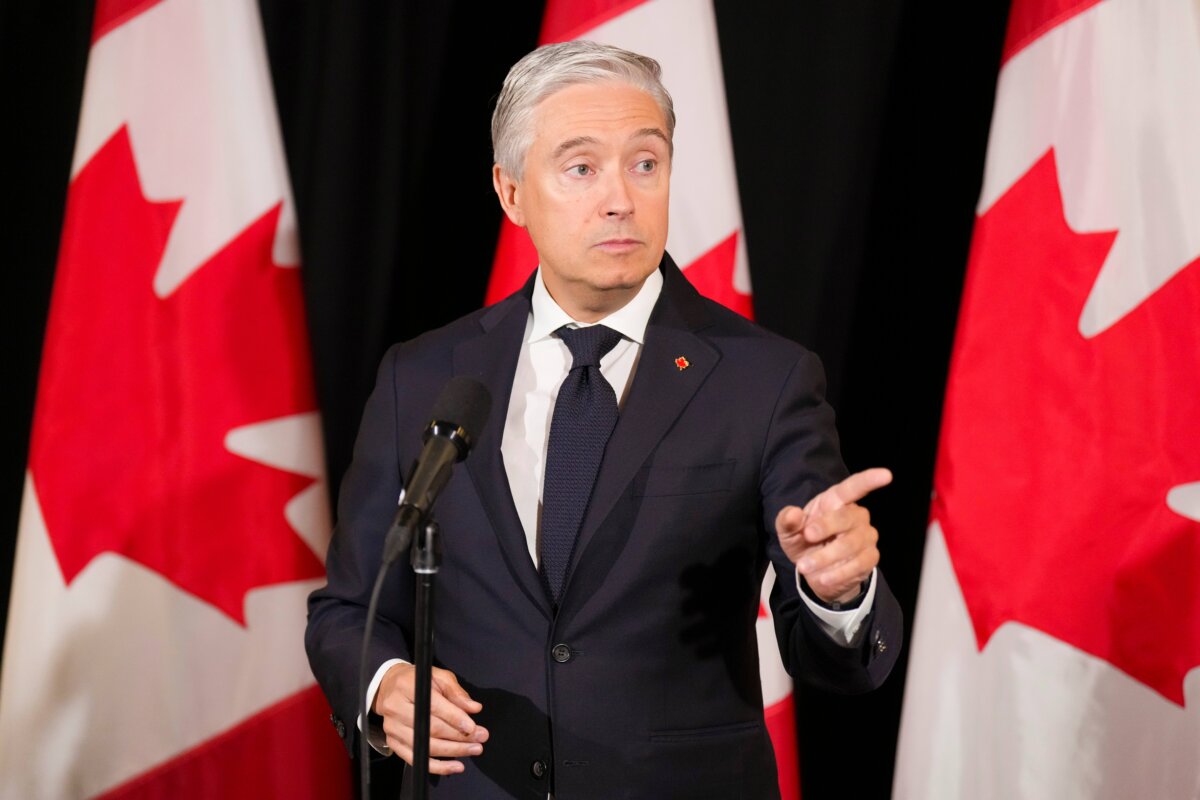
There is limited clarity so far regarding the precise budget outlook, but Finance Minister François-Philippe Champagne has set the budget’s release date for Nov. 4.
Those who supported the Liberal Party in the election to prevent cuts they believed would be imposed by the Conservatives could be caught off guard by future developments.
The Liberal leadership has, however, remained steady in its messaging about what it intends to do with the country’s finances.
“Spend less to invest more” is the slogan Prime Minister Mark Carney has been repeating since his campaign during the past winter’s Liberal leadership race. As of this week, it remained the main talking point from other ministers as well.
“We talked about spending less and investing more, and that’s exactly what we continue to talk about,” Government House Leader Steven MacKinnon said on Sept. 15. He was responding to a reporter saying that Canadians may not have voted for austerity and sizable deficits during the last election, a deficit MacKinnon said will be “substantial” in the upcoming budget.
“I think we were very realistic,” said MacKinnon. “Canadians certainly had the full financial picture for the previous fiscal year. They know what we’re facing.”
Meanwhile, Champagne attempted to demystify the “spend less, invest more” concept in recent weeks. “To make it simple, Canadians understand, when you buy a house, you invest, when you go to the grocery, you spend,” he said on Sept. 16.
Deficit Size
The anticipated deficit for fiscal year 2025–26 was projected to reach $42.2 billion, according to the latest official estimates provided in the 2024 Fall Economic Statement. Meanwhile, the Liberals’ costed election platform released in the spring predicted a deficit of $62.3 billion.
Much has changed since then, however, amid U.S. tariffs and Canadian counter-measures initially imposed, then adjusted, and more recently fully repealed in some cases. Carney has also pledged to reach NATO’s now previous defence spending guideline of 2 percent of GDP. The benchmark was increased to 5 percent at the military alliance’s summit in June.
Without direct insight into updated federal numbers, then-Parliamentary Budget Officer (PBO) Yves Giroux speculated in June that the deficit could reach up to $70 billion. Meanwhile, the C.D. Howe Institute said it could reach $92 billion.
Giroux has since left his post after his term expired on Sept. 2, and his replacement, interim PBO Jason Jacques, would not share the deficit projections he is working on when he testified before a House of Commons committee on Sept. 16.
However, he did raise an issue regarding the government’s fiscal anchors. “I don’t know that the government currently has fiscal anchors, which, of course, causes the people that I work with a considerable degree of concern at this point,” he said.
Conservative Leader Pierre Poilievre used Jacques’ testimony to question Carney in the House of Commons on Sept. 17, noting that the PBO said the deficit will be “absolutely higher” than the previous year due to increased spending.
“Deficits drive up inflation, grocery prices, housing costs, and interest rates. They drive out investment from our country and [create] uncertainty that destabilizes our economy,” said Poilievre. “How big is the deficit that the prime minister is running?”
In response, Carney said the budget will contain the “biggest investment in this country’s future in a generation—building homes; building new port infrastructure, new trade corridors, new energy infrastructure; building the strongest economy in the G7.”
Aside from increased military spending, Ottawa announced a recent $13 billion plan to build affordable housing, and it will also put money aside to provide federal support or incentives for the first major projects announced.
The first five projects, announced by Carney on Sept. 11, have already cleared late approval stages and some are already operating in some capacity, but the expansion of LNG Canada in B.C. is awaiting an investment decision by the owners.
Spending/Investments
There will be substantive taxpayer spending on such initiatives—what the government calls investments—in a bid to develop Canada’s industrial base and boost economic growth.
How substantive will these investments be? Champagne has compared the current period to post-war Canada in 1945, when Liberal Minister C.D. Howe oversaw the overhauling of the Canadian economy to develop its industry.
“This budget is going to be a generational investment in Canada,” said Champagne. “A bit like [how] C.D. Howe did it in 1945, now we need to reinvent ourselves. This is nothing like business as usual. We need to be ambitious in our investment, rigorous in our expenses.”
If there’s a general idea of where Ottawa wants to go with investments, it is less clear where the rigour on expenses will come from.
Carney has already expressed displeasure with the “7 percent” year-over-year growth rate of federal expenditures during the last decade under his predecessor, noting it’s growing much faster than the economy. “We must now stop this trend and this kind of management for the federal bureaucracy and institutions,” Carney said on Sept. 3.
The prime minister acknowledged that his first budget would bring austerity, while remaining vague on the planned cuts.
“Regarding the things which should be taboo and untouchable, we will keep them, and we will also improve individual transfers from the federal government,” he said.
Health and pensions will likely be regarded as untouchable. Carney has not spoken of mass layoffs in the federal public service but has said the adjustment will “happen naturally through attrition” as employees retire or seek other opportunities.
Carney has been big on reducing operational spending, and the federal government’s largest expenditure is wages and other employee-related expenses. The Office of the PBO reported in August that the amount was $71.1 billion for the previous fiscal year 2024–25.
The latest data from the Treasury Board indicates there are 357,965 employees in the federal public service in 2025, a drop of nearly 10,000 over the previous year.
The Montreal Economic Institute said in August that a reduction of 64,000 public service jobs could lead to $10 billion in savings.
While Carney says he doesn’t intend to lay off public servants, a process to find efficiencies in government departments is already underway. Champagne told his colleagues this summer to find savings of 7.5 percent in fiscal 2026–27 and then 10 percent and 15 percent respectively in the next two years.
Matthew Horwood, Chandra Philip, and Jennifer Cowan contributed to this report.
 Friends Read Free
Copy
Facebook
Tweet
Friends Read Free
Copy
Facebook
Tweet