
News Analysis
The Trump administration is leaning on the forced labour issue to impose new tariffs on trading partners, but why has Canada been targeted and how is the government responding?
The United States Trade Representative (USTR) said in a June 2 report, based on an investigation it launched in March, that 60 U.S. trade partners, including Canada, have failed to ensure their trade practices do not allow products made with forced labour to enter U.S. markets.
The USTR has proposed an additional 10 percent tariff on 16 countries, including Canada, Mexico, the UK, and the European Union for allegedly failing to institute forced labour restrictions, and a 12.5 percent tariff on all other countries, including China, India, and Japan.
The report acknowledges that Canada amended its Customs Tariff in March 2020 to include goods “mined, manufactured or produced wholly or in part by forced labour,” meaning the country forbids such imports.
The change was made before the Canada-United States-Mexico Agreement (CUSMA) on free trade came into force in July 2020. Canada is obliged under the trade deal to prevent goods made by forced labour from entering the country. However, the USTR found Canada has failed to effectively enforce the ban.
“Although Canada’s import prohibition came into effect nearly six years ago, the number of enforcement actions Canada has taken to prevent the entry of forced labor goods is minimal,” the report said.
The Canada Border Services Agency (CBSA), which is responsible for enforcing the prohibition on imports made with forced labour, “does not appear to publish official statistics or other information regarding its enforcement efforts,” the report added.
Canadian statistics show very few shipments suspected of containing goods made from forced labour have been detained and denied entry since 2020. The CBSA previously told The Epoch Times that, of the 48 shipments it detained from 2020 to late 2025, only two were prohibited entry, including a shipment of textile products in 2024 and a shipment of frozen seafood in 2025—both from China.
Comparatively, U.S. customs denied entry to nearly 23,000 shipments suspected of containing goods made from forced labour over a similar time span under its Uyghur Forced Labor Prevention Act.
The USTR also said “Canada has not taken action to restrict the importation of goods for which there is a known risk of forced labour” in regions of concern.
The CBSA said that while the country or region of origin “may serve as a risk indicator,” Canadian legislation does not allow goods to be prohibited solely on that basis.
The USTR pointed to a 2021 report by Above Ground, a Canadian human rights organization, indicating there is a “high risk” that Canadian companies are profiting from forced labour abroad.
The report notes research documenting widespread forced labour in the production of certain goods made in particular regions that are in the Canadian market, such as seafood from Thailand, coffee from Brazil, cocoa from Côte d’Ivoire and Ghana, and clothing and other products made from cotton.
‘Dumping Ground’
The U.S. trade office also pointed to a 2025 report by the Coalition Against Forced Labour in Trade that said Canada’s “weak enforcement” of its prohibition on imports made with forced labour has “effectively turned Canada into a ‘dumping ground’ for goods produced with forced labour.”
Mehmet Tohti, executive director of the Uyghur Rights Advocacy Project, has called Canada “officially a dumping ground for the products made by the use of Uyghur forced labour.”
The Canadian government has recognized the practice of forced labour in China, with Global Affairs Canada saying in 2021 that “evidence suggests that forced labour of Uyghurs and other ethnic minorities is taking place not only in Xinjiang, but across China.”
Canada also sanctioned Chinese officials in December 2024 for persecuting Uyghurs, Tibetans, and Falun Gong practitioners, saying that these groups are subject to various forms of suppression by the Chinese regime, including arbitrary detention and forced labour.
The USTR also found that Canada lacks a public list of specific entities, products, sectors, and regions where there is a “reasonable cause” to believe forced labour is used. It also said Canada does not use a “rebuttable presumption” standard, which presumes designated goods are made with forced labour unless the importer can demonstrate otherwise. An April report by Harvard University identified both measures as important for ensuring an effective forced labour import prohibition.
The CBSA previously told The Epoch Times that U.S. legislation allows border officers to prohibit goods suspected of being made with forced labour “unless proven otherwise,” but Canadian law requires officers to assess imported goods on a case-by-case and shipment-by-shipment basis.
“Given these known risks, Canada’s overall low level of enforcement indicates Canada is deficient in compelling observance of its forced labor import prohibition in a manner to produce the desired effect,” the U.S. trade office said in its report.
Investigation’s Conclusion
The USTR’s investigation concluded that Canada’s failure to impose and effectively enforce its prohibition on forced labour imports “burdens or restricts U.S. commerce.”
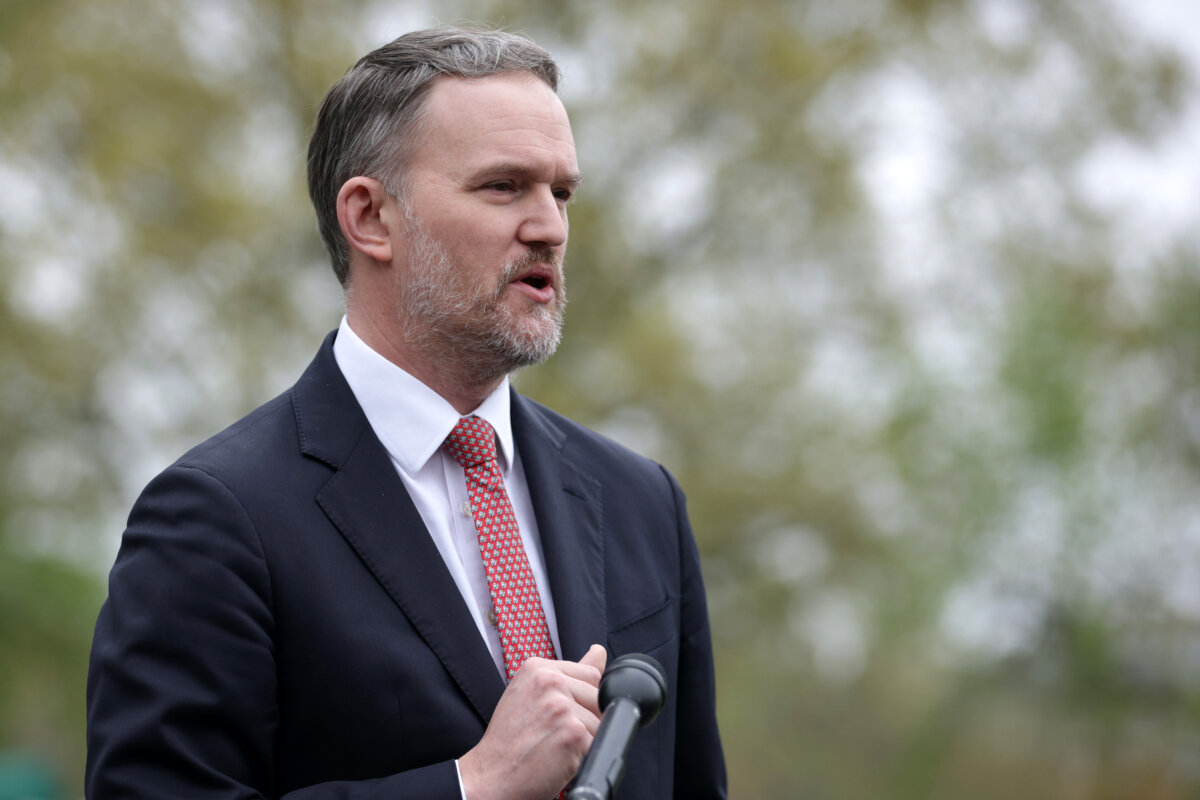
“The failure of our most important trading partners to address the importation of goods made with forced labor is unacceptable,” USTR Jamieson Greer said in a June 2 statement. He added that the United States will “no longer tolerate this disparity” and that each trading partner “must do more to ensure that trade does not perversely encourage and entrench forced labor globally.”
The USTR is set to hold hearings on its proposed tariffs on July 7. Comments on the proposals will be accepted until July 6, and requests to appear at the hearing will be accepted until June 22.
The U.S. trade office’s findings come after it announced in March that it was expanding trade investigations into whether the acts, policies, and practices of 60 countries related to the failure to impose and effectively enforce a ban on imports made with forced labour are “unreasonable or discriminatory and burden or restrict U.S. commerce.”
Canada’s Reaction
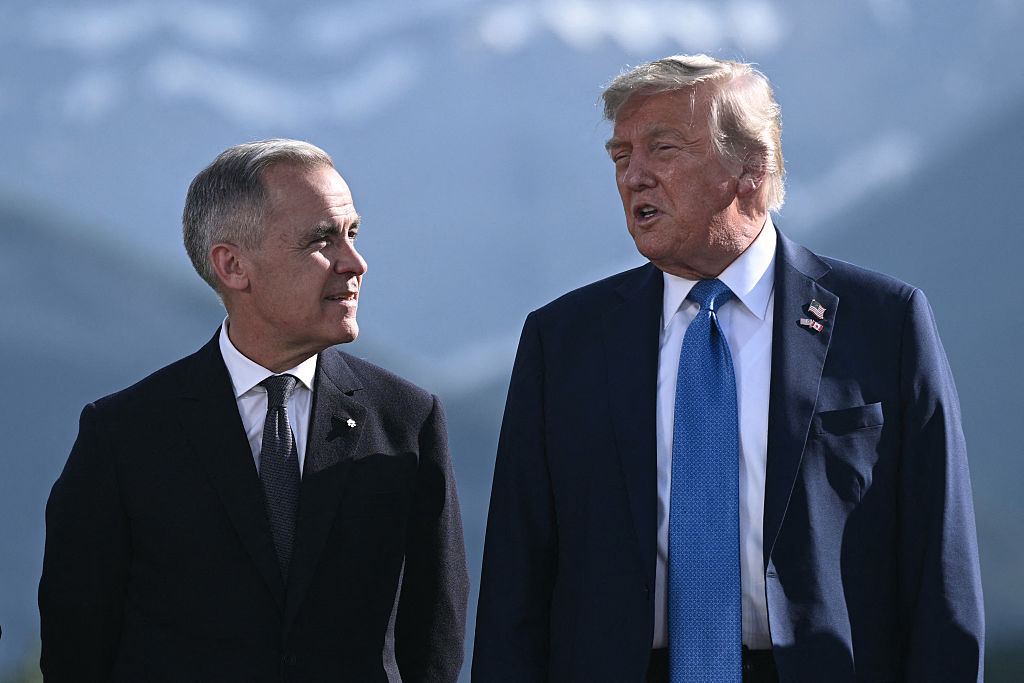
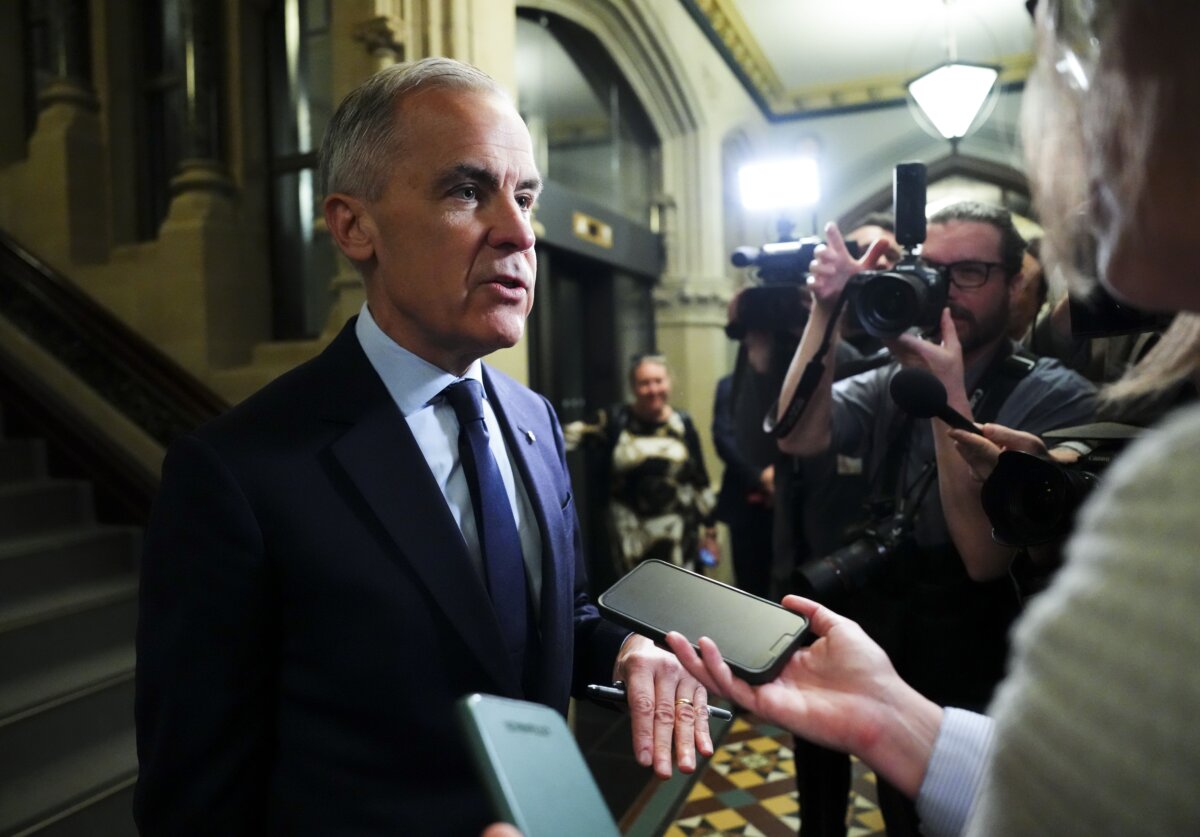
Reacting to Washington’s proposed tariffs, Prime Minister Mark Carney said most Canadian exports would remain exempt under CUSMA.
He told reporters on June 3 that the new tariffs are “not a surprise” since the United States had been planning to announce them for several months. He also reiterated that Canada would continue to have “the best trade deal of any of the U.S. trade counterparts” under CUSMA.
Carney added that Canada has a “very strong legislative regime” against forced labour in supply chains, is reinforcing policies on forced and child labour, and shares the U.S. administration’s concerns about the practice.
He said, however, that some of the measures have proven “not as effective” and that his government would introduce additional proposals in the House of Commons in the coming weeks.
Conservative MP and foreign affairs critic Michael Chong said in a June 3 statement that Conservatives believe the U.S. administration’s proposed tariffs are “unjustified and present another threat to our workers and our industries.”
However, he said Conservatives are also “deeply concerned” about the findings of forced labour in Canadian supply chains.
“Prime Minister Carney has been unable to speak clearly on this issue and for six years the Liberal government has continually failed to stop products using forced labour from entering Canada. This failure is now putting Canadian jobs and trade at risk,” Chong wrote.
CUSMA
The threat of additional tariffs comes as the July 1 CUSMA review is less than a month away. The USTR’s announcement on June 2 came on the same day that Canada-U.S. Trade Minister Dominic LeBlanc met with Greer.
LeBlanc said on X the following day that the announcement didn’t “come as a surprise,” as the United States has stated its “intention to replace existing baseline global tariffs imposed under Section 122 when they expire in July.” He noted that the new tariffs related to forced labour include a “CUSMA carve-out and other existing product exemptions.”
LeBlanc echoed Carney’s remarks that Canada has a “robust regime” to protect against forced labour practices and will introduce legislation this month to “make it even stronger.”
“We share the United States’ objective of ensuring that goods produced with forced labour do not enter our supply chains, and we will be engaging constructively with them over the coming weeks,” he said.
In the USTR’s 2026 National Trade Estimate Report on Foreign Trade Barriers, released on March 31, forced labour was included as a new trade irritant.
The report criticized Canada for not imposing enough measures to protect North America from non-market practices, which can include measures promoting over-capacity or extensive subsidies.
Matthew Horwood, Melanie Sun, and Noé Chartier contributed to this report.
 Friends Read Free
Copy
Facebook
Tweet
Friends Read Free
Copy
Facebook
Tweet