
News Analysis
The Liberal government announced its pick on March 9 to lead the Office of the Parliamentary Budget Officer, the federal fiscal watchdog that is currently without a leader.
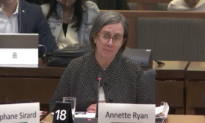
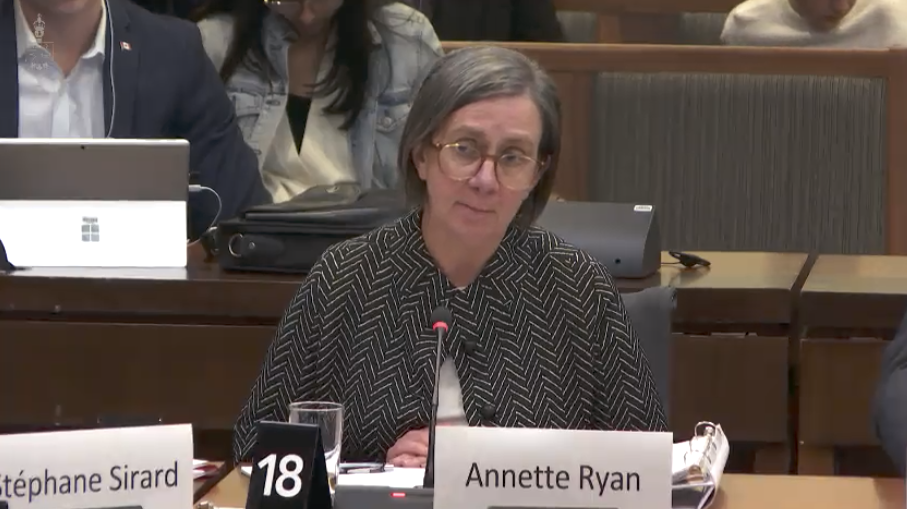
Annette Ryan, chief financial officer and a deputy director with Canada’s financial intelligence agency, FINTRAC, has been selected by Ottawa for the role.
The Parliamentary Budget Officer (PBO) is a position whose purpose is to scrutinize the country’s fiscal situation and various programs and plans put in place by the government. The role is intended to be independent from the government and the nominee must receive the approval of both Houses of Parliament.
Budget officers in recent years have generated controversy for providing analyses that contradict government messaging and for criticizing Ottawa’s fiscal management.
Ryan is an economist by training who has held various federal public service posts since 2002.
At FINTRAC, she serves as one of four deputy directors reporting to director and CEO Sarah Paquet. FINTRAC, or the Financial Transactions and Reports Analysis Centre of Canada, is a lesser-known player in the Canadian intelligence community, but the information it collects—on potential money laundering and terrorist financing—can underpin or bolster investigations across security agencies.
Ryan earlier served as associate assistant deputy minister with Finance Canada and as chief economist with Industry Canada, among other government posts.
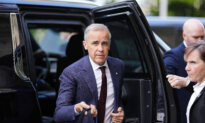
Like Prime Minister Mark Carney, Ryan studied economics at Oxford University in the United Kingdom. She completed her master’s degree on a Rhodes scholarship from 1992 to 1994. Carney completed his master’s degree in 1993 and his PhD in 1995.
Vacant Post
The previous PBO, Yves Giroux, was not renewed for a second term in September 2025. Budget officers are appointed for seven-year terms and can be renewed only once. No PBO has ever served two consecutive terms since the office was created in 2006.
The process to replace Giroux was launched in November 2025. According to the job description, the candidate must provide “non-partisan, authoritative analysis on the state of the nation’s finances, the government’s budget and estimates, and economic trends.” The government had indicated preference could be given to applicants who are female, indigenous, disabled, or from visible minority groups.
Jason Jacques, who served as PBO in the interim, said in November that he would apply for the permanent position. His six-month term ended on March 2.
The government’s process to replace the budget officer has been criticized by opposition parties and has drawn some international attention.
The Organisation for Economic Co-operation and Development (OECD) released a Feb. 24 report on Canada’s PBO function and said it “aligns strongly” with the OECD principles of promoting fiscal transparency.
The organization, however, lamented “persistent delays” in appointing budget officers, saying it can impact the office’s independence and stability.
The OECD also echoed some concerns previously expressed by the PBO regarding a lack of access to key government data. “Remaining restrictions on tax microdata and dependence on informal data-sharing arrangements with government departments continue to create inefficiencies and constrain its work,” the report says.
Controversies
Under Jacques, the Office of the PBO had flagged Ottawa’s lack of transparency, and his chances of being confirmed in the permanent role were likely impacted by remarks he made during his initial committee testimony.
After becoming interim PBO, Jacques appeared before the House of Commons government operations committee on Sept. 25, the same day his office released its fiscal outlook.
At the time, the PBO and other economic think tanks were producing analyses to forecast the size of the federal deficit. The Carney government had done away with tabling budgets in the spring and a first budget was to be presented some weeks later in November.
The PBO’s fiscal outlook stated that the deficit would increase “sharply” from $51.7 billion to $68.5 billion. This would lead to a growing debt-to-GDP ratio, while lowering that ratio was a fiscal anchor of the previous Liberal government.
Jacques told MPs on the committee that the fiscal outlook was “very alarming.”
“It’s not a funny fiscal outlook. It’s a really serious fiscal outlook. We don’t lightly use the word ‘unsustainable,'” he said. “Unsustainable means you don’t have the option of saying, ‘Maybe I’ll wait a couple of years and see how things go.’ It means, if you don’t change, this is done.”
The budget tabled by the Liberal government weeks later projected an even higher deficit of $78.3 billion.
One former PBO, Kevin Page, had criticized Jacques’ comments and said Canada has the “fiscal room to help finance the hinge moment” brought by the trade policies of the U.S. administration.
Jacques later said he regretted his choice of words in committee, telling The Canadian Press that it was “totally unnecessary.”
“People make mistakes. And again, for myself, it was a learning opportunity,” he said.
Jacques’ predecessor, Yves Giroux, had been more measured in his public statements. However, his work on a key debate of the time, the consumer carbon tax, had put him under the spotlight.
Under then-Prime Minister Justin Trudeau, the Liberals had argued that 8 out of 10 households were receiving more money back from the carbon tax and its associated rebate.
Meanwhile, Conservatives, whose key message was to “axe the tax,” said that 8 out of 10 Canadians were worse off when the economic impacts of the consumer carbon tax, or fuel charge, were factored in.
Both arguments were true, as per the PBO, but Giroux came under fire from the Liberals when his office reported an error in its calculations of the impact of the fuel charge.
The PBO conducted a new analysis using the correct data and came to the same initial conclusion in October 2024, saying that Canadians are generally worse off because of the fuel charge.
The issue never became the ballot-box question the Tories wanted, with Carney setting the carbon tax rate to zero upon becoming prime minister in March 2025, ahead of the April election.
Opposition Reactions
Tory Leader Pierre Poilievre weighed in on Ryan’s nomination on March 9 while commending Jacques.
Speaking to reporters in Ottawa, he described Jacques as “highly qualified” and praised him for criticizing Carney’s deficit increase and for noting that Carney’s housing plan was not expected to significantly improve affordability.
“We believe that the existing interim parliamentary budget officer should have been made permanent because he was doing the job,” said Poilievre, adding his party would examine Ryan’s nomination and vote accordingly.
The Bloc Québécois had a similar message, with MP Christine Normandin telling reporters on March 9 that the party would have liked to see Jacques appointed permanently. Normandin said Jacques was a good fiscal watchdog and “truly outspoken.”
“For the new person that’s about to be appointed, there will be time during committees to ask questions,” she said.
The NDP made no immediate comment on the matter.
 Friends Read Free
Copy
Facebook
Tweet
Friends Read Free
Copy
Facebook
Tweet