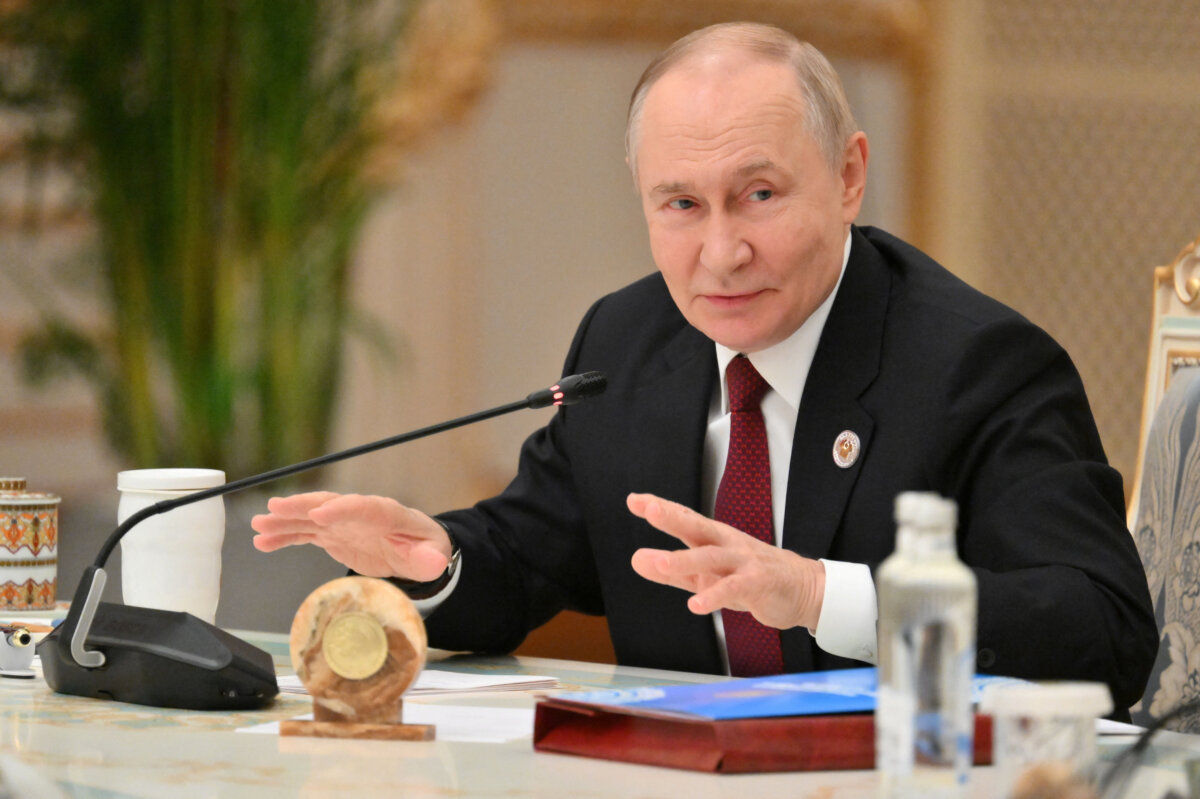
Russian President Vladimir Putin said on Jan. 21 that he believes the United States and Denmark will work out for themselves what to do with Greenland, maintaining that it was none of the Russian Federation’s concern what happens to the Arctic island.
“What happens to Greenland is absolutely none of our business,” Putin told the permanent members of Russia’s Security Council, according to a Kremlin transcript of his comments from the meeting.
Alluding to the United States and Denmark, he said, “I think they’ll sort it out between themselves.”
President Donald Trump has said he wants to annex Greenland, a self-governing Danish territory, and has faced opposition from European leaders.
Trump has said that acquiring the Arctic island is essential for securing the region amid growing threats from Beijing and Moscow.
Trump had initially said he would impose tariffs on eight European countries that opposed his plans, but pulled back on the threats on Jan. 21 after signaling that there had been progress on a framework discussed with NATO Secretary-General Mark Rutte.
Putin: Greenland Could Be Worth $1 Billion
While Putin said that the fate of Greenland was not Russia’s concern, he noted that Moscow had “experience resolving similar issues with the United States,” referencing the United States’ 1867 purchase of Alaska from the then-Russian Empire for $7.2 million.
He also noted that in 1917, Denmark sold the Virgin Islands to the United States, suggesting these as precedents for similar land transactions.
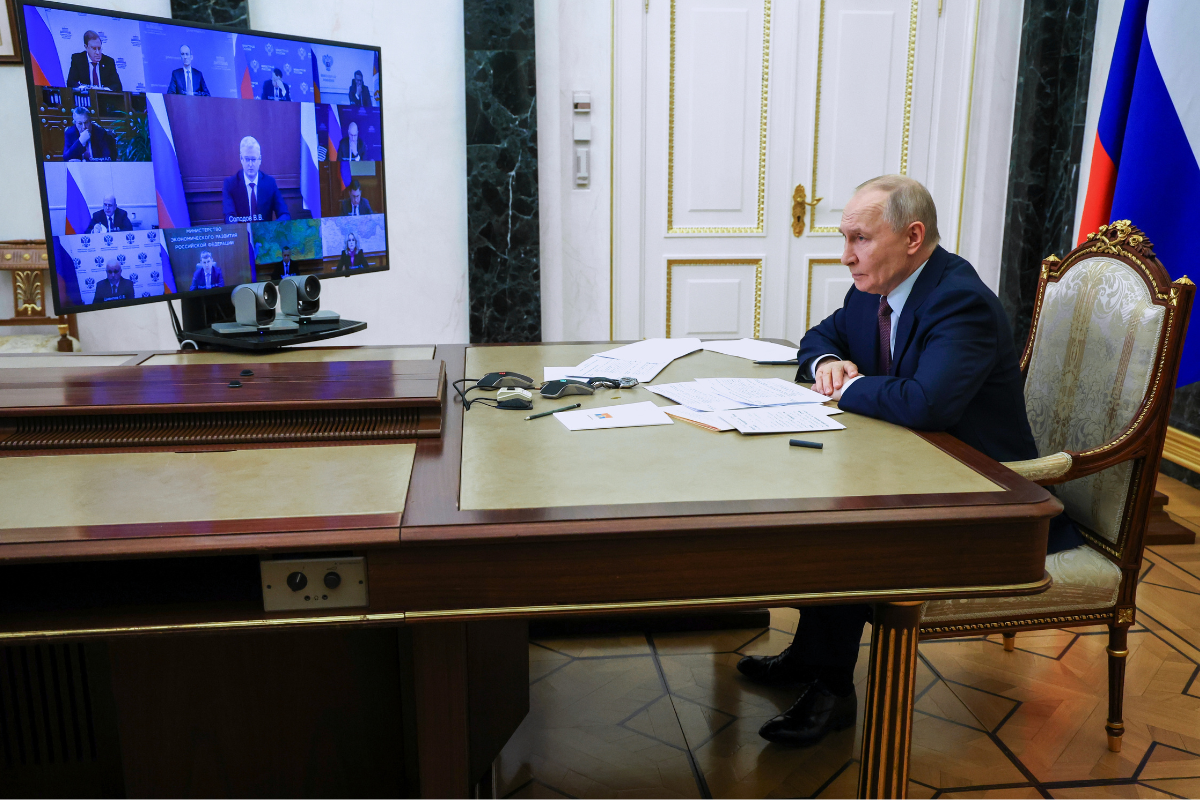
Putin told the security council members that he estimated that, relative to gold prices and in today’s money, Greenland’s price could be close to $1 billion.
“I think the United States could handle that figure,” the Russian president said.
“Incidentally, Denmark has always treated Greenland as a colony and has been quite harsh, if not cruel, toward it. But that’s a different matter entirely, and I doubt anyone’s interested right now. It certainly doesn’t concern us,” Putin said.
Greenland Framework
On Jan. 21, Trump met with Rutte on the sidelines of the World Economic Forum Annual Meeting in Davos, Switzerland.
The NATO secretary-general said that Trump was right about Chinese and Russian aggression in the Arctic, and that the alliance needed to defend the region.
Trump subsequently announced a prospective deal in a Truth Social post, writing, “This solution, if consummated, will be a great one for the United States of America, and all NATO Nations.”
He later told CNBC that the deal was “complex,” but that it would last “forever.”

“The Secretary General had a very productive meeting with President Trump during which they discussed the critical significance of security in the Arctic region to all Allies, including the United States.” NATO spokesperson Alison Hart told The Epoch Times in an email on Jan. 21.
Details of the framework are sparse, and Hart said that negotiations are ongoing.
“Discussions among NATO Allies on the framework the President referenced will focus on ensuring Arctic security through the collective efforts of Allies, especially the seven Arctic Allies,” she said.
“Negotiations between Denmark, Greenland, and the United States will go forward aimed at ensuring that Russia and China never gain a foothold—economically or militarily—in Greenland.”
Tariffs Canceled
After he signaled progress on the framework, Trump canceled plans to impose 10 percent tariffs on Denmark, France, Germany, Finland, the Netherlands, Norway, Sweden, and the UK. The levies were planned to start on Feb. 1 and increase to 25 percent on June 1.
Trump told CNBC that his administration removed the tariff threat “because it looks like we have pretty much a concept of a deal.”
That same day, Rutte said in an interview with Fox News that the possibility of Greenland remaining part of Denmark did not come up in conversation with the U.S. president during their meeting.
“[Trump] is very much focused on what do we need to do to make sure that that huge Arctic region—where change is taking place at the moment, where the Chinese and the Russians are more and more active—how we can protect it,” Rutte said.
Travis Gillmore contributed to this report.
 Friends Read Free
Copy
Facebook
Tweet
Friends Read Free
Copy
Facebook
Tweet