
President Donald Trump has once again urged the UK to maintain its sovereignty over the Chagos Islands and not hand them over to Mauritius.
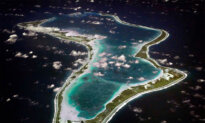
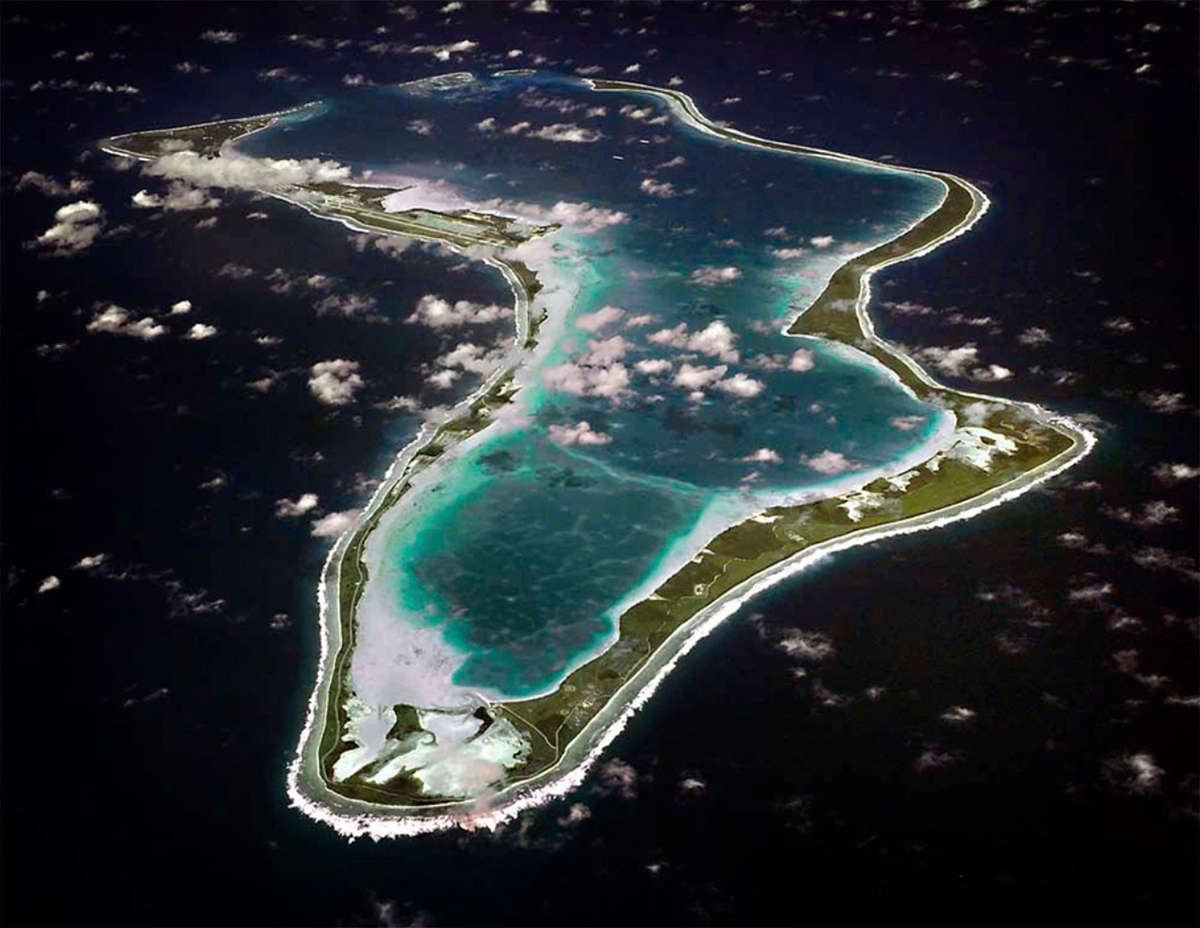
The archipelago, located in the central Indian Ocean, comprises over a thousand islands, with Diego Garcia hosting a vital U.S.–UK joint military facility that London has leased to Washington until 2036.
The wranglings over the islands’ sovereignty have dragged on for years, but on Feb. 18, Trump issued his sternest rebuke yet of Britain for moving forward with its plan to cede control of the territory to its former colony.
Here’s what we know.
What Trump Said About the Chagos Islands
Trump on Feb. 18 urged British Prime Minister Keir Starmer to retain control of Diego Garcia, saying the island territory could help deter future aggression by Iran.
“Should Iran decide not to make a Deal, it may be necessary for the United States to use Diego Garcia and the Airfield located in Fairford, in order to eradicate a potential attack by a highly unstable and dangerous Regime. An attack that would potentially be made on the United Kingdom, as well as other friendly Countries,” Trump wrote in a Truth Social post.
“Prime Minister Starmer should not lose control, for any reason, of Diego Garcia, by entering a tenuous, at best, 100 Year Lease,” Trump wrote.
Trump’s remarks about the agreement came a day after the U.S. State Department said the United States “supports the decision of the United Kingdom to proceed with its agreement with Mauritius concerning the Chagos Archipelago.”
The post by Trump contradicting the State Department’s comments the previous day was not the first time he had criticized or expressed reservations about the deal.
Though Trump wrote in a Truth Social post on Feb. 5 that he had held “productive discussions” with Starmer on the issue, he also stated that he retained the right to militarily secure Diego Garcia.
“I understand that the deal Prime Minister Starmer has made, according to many, the best he could make,” he said.
“However, if the lease deal, sometime in the future, ever falls apart, or anyone threatens or endangers U.S. operations and forces at our base, I retain the right to militarily secure and reinforce the American presence in Diego Garcia.”
Trump also criticized the UK’s decision on Jan. 20, calling the move an “act of total weakness” and linking it to broader U.S. national security concerns.
He said the decision exposed Western weakness to strategic rivals and cited it as further justification for his long-standing push to acquire Greenland.
“Shockingly, our ‘brilliant’ NATO Ally, the United Kingdom, is currently planning to give away the Island of Diego Garcia, the site of a vital U.S. Military Base, to Mauritius, and to do so FOR NO REASON WHATSOEVER,” Trump wrote on Truth Social.
He also wrote that “China and Russia have noticed this act of total weakness” and that they “only recognize STRENGTH.”
However, in May 2025, the Trump administration appeared more on board with the decision, saying it “secures the long-term, stable, and effective operation of the joint U.S.–UK military facility at Diego Garcia.”
Why UK Is Giving the Chagos Islands to Mauritius
Responding to Trump’s latest remarks, a British Foreign Office spokesperson said the deal was “crucial to the security of the UK and our key allies.”
“The agreement we have reached is the only way to guarantee the long-term future of this vital military base,” the spokesperson added.
The UK government maintains that it had no choice but to make a deal after international court decisions threatened its ability to maintain the base under previous arrangements.
The UK agreed in May 2025 to cede sovereignty of the Chagos Islands, a small archipelago in the Indian Ocean, to Mauritius after decades of legal and diplomatic pressure. The agreement, first announced in October 2024, followed years of negotiations and was finalized after consultations with Washington, according to the UK government.
Under the terms of the deal, the British–U.S. naval and bomber base on Diego Garcia would remain under UK control for at least 99 years, ensuring continued access for U.S. forces.
The British Labour government has said the agreement was necessary to safeguard the long-term operation of the base, following the series of international court rulings that weakened Britain’s legal position.
The UK had exercised control over the region since 1814, but separated the Chagos Islands from Mauritius in 1965, creating what became known as the British Indian Ocean Territory.
Mauritius, which gained independence from Britain in 1968, has long argued that the Chagos Islands were unlawfully separated from its territory before its independence. The dispute gained momentum in 2019, when the United Nations’ highest court ruled in an advisory opinion that Britain’s administration of the islands was unlawful.
Later that year, the U.N. General Assembly voted by 116–6 that the UK should unconditionally withdraw from the archipelago within six months.
The move has not been uncontroversial in Britain, with the right-wing Reform UK and Conservative parties opposing the Labour government’s agreement to cede sovereignty.
There has also been opposition from the people of the archipelago, known as Chagossians, many of whom say they wish to remain British subjects.
The Chagos Islands are located some 1,250 miles from Mauritius.
Diego Garcia’s Strategic Significance
Trump has most recently said that the Indian Ocean base could prove vital for the United States to deter aggression from Iran.
Diego Garcia has previously been involved in multiple American troop deployments into the Middle East, with recent operations out of the base including strikes in Yemen against Houthi terrorists and aid deliveries to the Gaza Strip.
Strikes against the Taliban and al-Qaeda terrorist groups in Afghanistan were launched from the archipelago in 2001.
The base was also crucial to the execution of the Iraq War of 2003.
Along with the Middle East, Washington regards it as a critical hub for operations across East Africa and the Indo-Pacific.
The United States has described the base, home to about 2,500 mostly American personnel, as “an all but indispensable platform” for security operations in the Middle East, South Asia, and East Africa.
Other concerns include Mauritius’s relationship with China.
In 2004, the Bank of Mauritius and the People’s Bank of China signed a bilateral currency swap agreement, and the two countries have also signed a free trade agreement, which came into force in 2021.
Evgenia Filaminova, Chris Summers, Ryan Morgan, The Associated Press, and Reuters contributed to this report.
 Friends Read Free
Copy
Facebook
Tweet
Friends Read Free
Copy
Facebook
Tweet