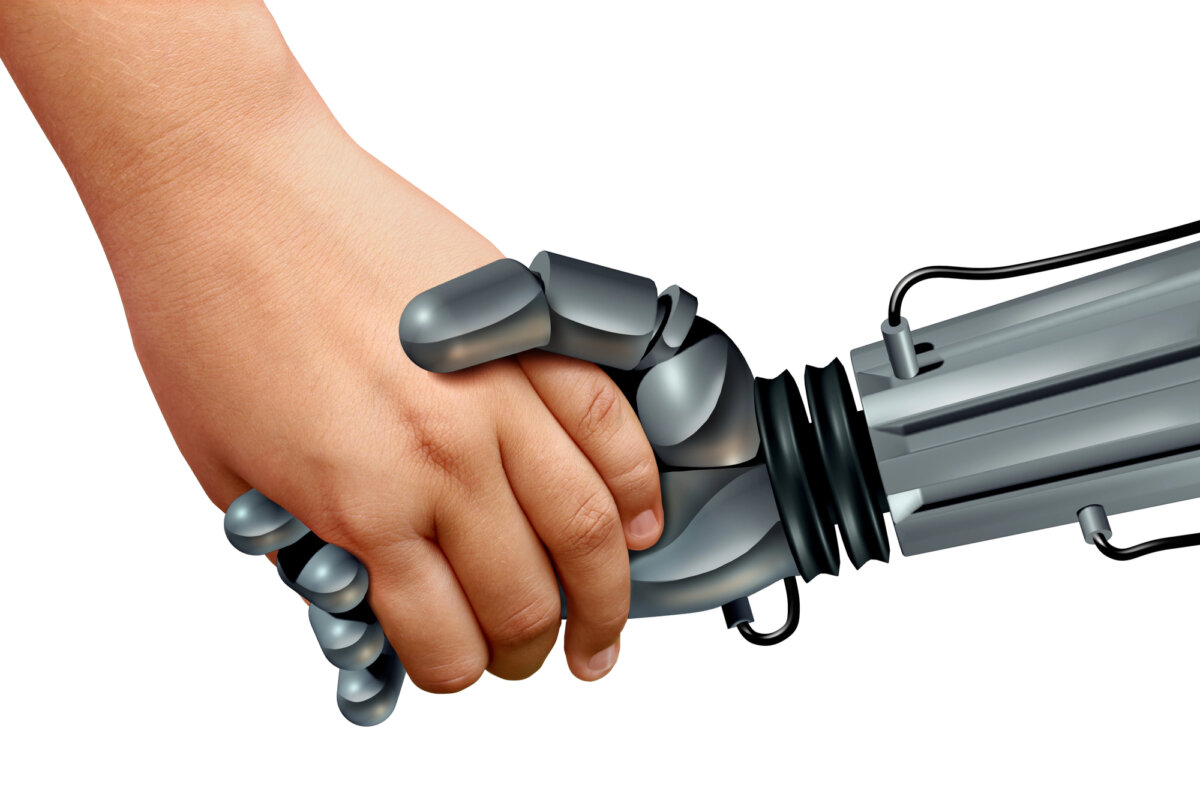

Almost one in three Australians aged 10-24 are turning to generative AI—like ChatGPT, Gemini, or Claude—for mental health support, a report has found.
The report, which tallied results from a survey of over 2,300 young people in the state of New South Wales, found that “mental health and wellbeing” was the top issue across all three age brackets—10 to 12, 13 to 17 (both 40 percent) and 18 to 24 (27 percent).
Ian Hickie, a professor of psychiatry and the co-director of health and policy at the Brain and Mind Centre, University of Sydney, told The Epoch Times he’s not surprised at the results, given the high rates of mental distress among young people.
That, plus increasing demand for services, high costs, and the inconvenience of many traditional face-to-face services, mean online services offer greater ease and convenience, he said. Young people also have lower levels of concern about the possible risks than do health professionals, parents and older adults.
“The challenge for the field is to work out how best to make use of these new technologies to enhance self-care safely and work effectively alongside face-to-face services,” Hickie said.
Costs of Mental Health Support
But while three in five generally found that services such as sports and recreation, youth spaces, and public transport are affordable, when it comes to mental health support, 72 percent of people with a mental health condition rated it as unaffordable or very unaffordable.
The report cited complaints about long wait lists and high costs for parents, which are barriers to children accessing professional help.
Seeing a psychologist will typically cost around $318 for 46 to 60 minutes, according to the Australian Psychological Society. However, some people with mental health disorders and children with an autism spectrum disorder or disability can be subsidised by Medicare, as can women concerned about a current pregnancy, or one that occurred in the previous 12 months, and people who have a chronic medical condition and complex care needs.
To have the consultations covered by Medicare, the patient needs a referral from their GP or, in some cases, by a psychiatrist, paediatrician or consultant physician.
Counsellors—who are not trained psychologists but usually have a certificate or diploma in counselling—generally charge between $100 and $160 per hour, according to the Psychotherapy and Counselling Federation of Australia.
That level of cost means young people are turning to artificial intelligence despite the risks, with 29 percent reporting that they’d used such help in the past year. That was higher than the number who’d used an online chat or text support service such as Headspace or ReachOut (19 percent) and nearly double the number who’d contacted a telephone helpline such as Beyond Blue, Lifeline, or Kids Helpline (16 percent).
This comes despite the report stating that four in five young people are happy with their lives.
According to a media statement by NSW Minister for Youth, Rose Jackson, data from the report “makes clear” that social media and bullying continue to impact the mental health of young people, despite the social media ban.
“It’s encouraging to see the majority of young people say they are happy, but that sits alongside some pretty stark realities about the challenges they’re facing too,” Jackson said.
Overseas, chatbots have allegedly led to the suicide of children after prolonged use of the technology. ChatGPT even helped a young Ukrainian woman draft a suicide note after validating her thoughts of self-harm and suggesting ways that she could kill herself.
Studies have shown that generative AI can simulate empathy and respond to distress but lacks true clinical judgement, accountability, and duty of care.
In some cases, chatbots may offer inconsistent or inappropriate responses to high-risk situations such as suicidal ideation.
A Stanford University study, which tested chatbots as therapists last year, found that they may not only be less effective than their human counterparts but could also contribute to harmful stigma and even provide dangerous responses, which researchers described as “significant risks.”
“The default response from [developers of] AI is often that these problems will go away with more data, but what we’re saying is that business as usual is not good enough,” said Jared Moore, a PhD candidate in computer science at Stanford University and the lead author on the paper. “If we have a [therapeutic] relationship with AI systems, it’s not clear to me that we’re moving toward the same end goal of mending human relationships.”
Lifeline 13 11 14
Kids Helpline 1800 55 1800 (for people aged 5 to 25)
 Friends Read Free
Copy
Facebook
Tweet
Friends Read Free
Copy
Facebook
Tweet