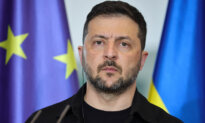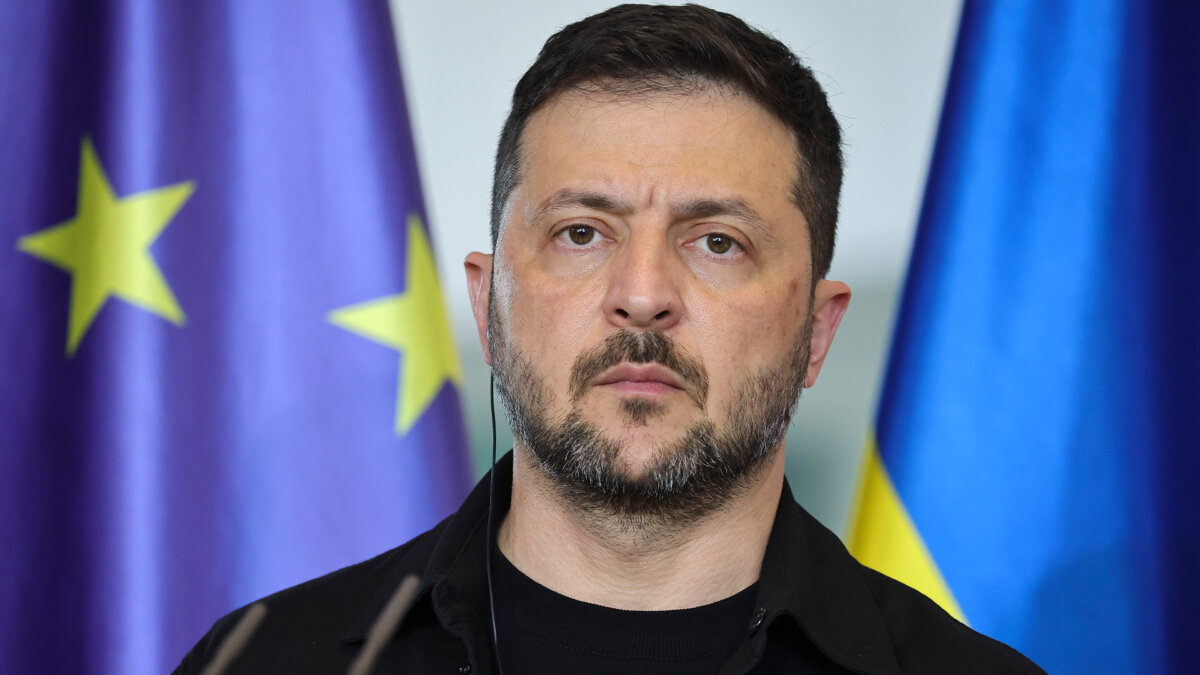
Ukrainian President Volodymyr Zelenskyy says he wants to get clarity within the next 10 days on the nature of security guarantees before he agrees to a meeting with Russian President Vladimir Putin.
Speaking to reporters on Aug. 20, after returning from Washington, Zelenskyy said: “We want to have an understanding of the security guarantees architecture within seven to 10 days. And based on that understanding, we aim to hold a trilateral meeting. That was my logic.”
The venue for the meeting, which would involve Zelenskyy, Putin, and U.S. President Donald Trump, could be in Switzerland, Austria, or Turkey, he said.
Hungarian Foreign Minister Peter Szijjarto has also offered to host the meeting in Budapest.
“If we are needed, we are ready to provide appropriately fair and safe conditions for such peace negotiations. We are pleased if we can contribute to the success of peace efforts,” Szijjarto said in a daily podcast on Facebook on Aug. 21.
Retired Lt. Gen. Keith Kellogg, the U.S. special envoy to Ukraine and Russia, has said that U.S. Secretary of State Marco Rubio is spearheading the effort to draft security guarantees for Ukraine.
“What they’re doing right now—like as we speak—they’re looking at the security guarantees, what do they actually look like, and bringing a list of options—under Secretary Rubio—a list of options they’ll bring to the president and to the allied leaders as well,” Kellogg told Fox News host Larry Kudlow in an interview released on Aug. 19.
But Russian Foreign Minister Sergei Lavrov said on Aug. 20 there was no point discussing security guarantees without the involvement of Moscow.
“I am sure that in the West and above all in the United States they understand perfectly well that seriously discussing security issues without the Russian Federation is a utopia, it’s a road to nowhere,” Lavrov said.
Zelenskyy said that whatever the format of the meeting with Putin, there was a need beforehand to establish an “approximate framework, similar to Article 5.”
Article 5 is NATO’s collective security guarantee, under which all 32 nations are duty-bound to come to the defense of any member of the alliance that comes under attack.
NATO’s military committee met on Aug. 20 with U.S. Gen. Alexus Grynkewich, NATO’s supreme allied commander of Europe, present for the first time.
‘Candid Discussion’ at NATO Meeting
After the meeting, Italian Admiral Giuseppe Cavo Dragone, who chairs the committee, wrote on X, there had been a “great, candid discussion.”
“I thanked everyone for their always proactive participation in these meetings: we are united, and that unity was truly tangible today, as always,” Dragone wrote.
Zelenskyy said on Aug. 20: “Today we have a positive signal from America, from President Trump, from his team, that they will be participants in the security guarantees for Ukraine. And this opens up the possibility for other countries.”
“Now the general staff of key countries have already started talking about what they are ready for. And some countries that were not there will probably appear now,” he said.
Zelenskyy said Turkey might now be ready to provide security along the Black Sea after Trump suggested he was favorable toward security guarantees.
Zelenskyy also gave his reasons why he did not want China to be among the nations offering security guarantees in Ukraine.
The Interfax news agency in Ukraine said he told reporters: “Why is China not in the guarantees? First, China did not help us stop this war from the beginning.
“Second, China helped Russia by opening the drone market. Third, the question here is not even about the military personnel who are present there.”
He said China had been one of the countries that signed the Budapest Memorandum, which gave Ukraine security assurances when the former Soviet state agreed to give up its nuclear arsenal in 1994.
But Zelenskyy said: “They did nothing when Crimea was occupied. That is why we do not need guarantors who do not help Ukraine and did not help Ukraine at a time when we really needed it after February 24, [2022].”
In an interview with Fox News on Aug. 19, Trump said several European countries are “willing to put people on the ground.”
“We’re willing to help them with things, especially, probably, if you talk about by air, because there’s nobody who has the kind of stuff we have,” he said.
The Kremlin, on its Telegram channel, said Putin spoke to Turkish President Recep Tayyip Erdogan on the phone on Aug. 20, and expressed “Russia’s appreciation of Turkey’s efforts to facilitate talks between Russian and Ukrainian representatives in Istanbul.”
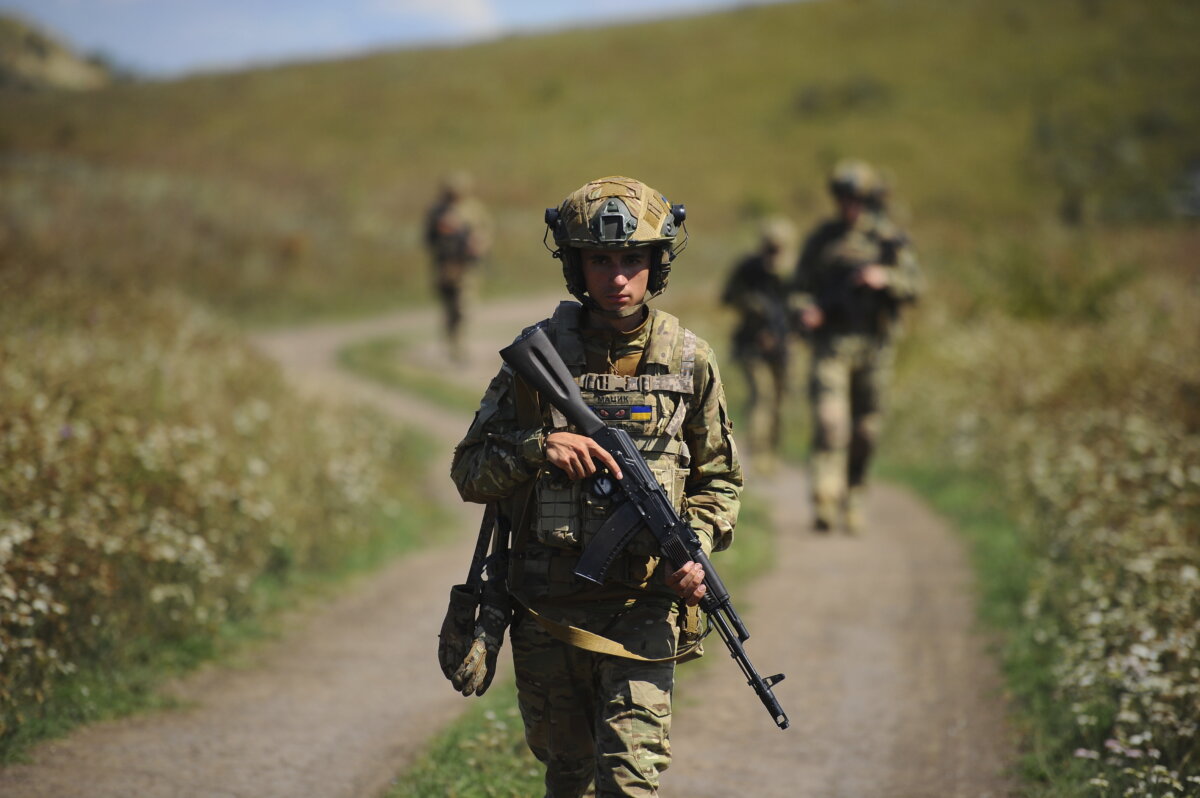
Overnight, into Aug. 21, Russia carried out another aerial bombardment of Ukraine.
Zelenskyy posted on X on Aug. 21 that “the Russian army set one of its insane anti-records” by launching its biggest aerial attack of 2025, firing 40 missiles and 574 drones overnight.
“Several cruise missiles were lobbed against an American-owned enterprise in Zakarpattia,” he wrote. “It was a regular civilian business, supported by American investment, producing everyday items like coffee machines. And yet, it was also a target for the Russians. This is very telling.”
Zelenskyy said 15 people were injured in the air strike.
The Epoch Times is unable to verify the details of the incident in Zakarpattia, a district that borders Hungary and Slovakia.
“The Russians carried out this attack as if nothing has changed at all, as if there are no global efforts to stop this war,” Zelenskyy said. “This requires a response. There is still no signal from Moscow that they truly intend to engage in substantive negotiations and end this war. Pressure is needed. Strong sanctions, strong tariffs.”
Western Ukraine is far from the front line of the conflict in the east and south of the country, but it contains a number of factories producing drones and other equipment, as well as storage depots.
The Associated Press contributed to this report.
 Friends Read Free
Copy
Facebook
Tweet
Friends Read Free
Copy
Facebook
Tweet