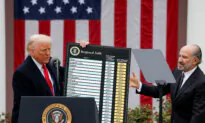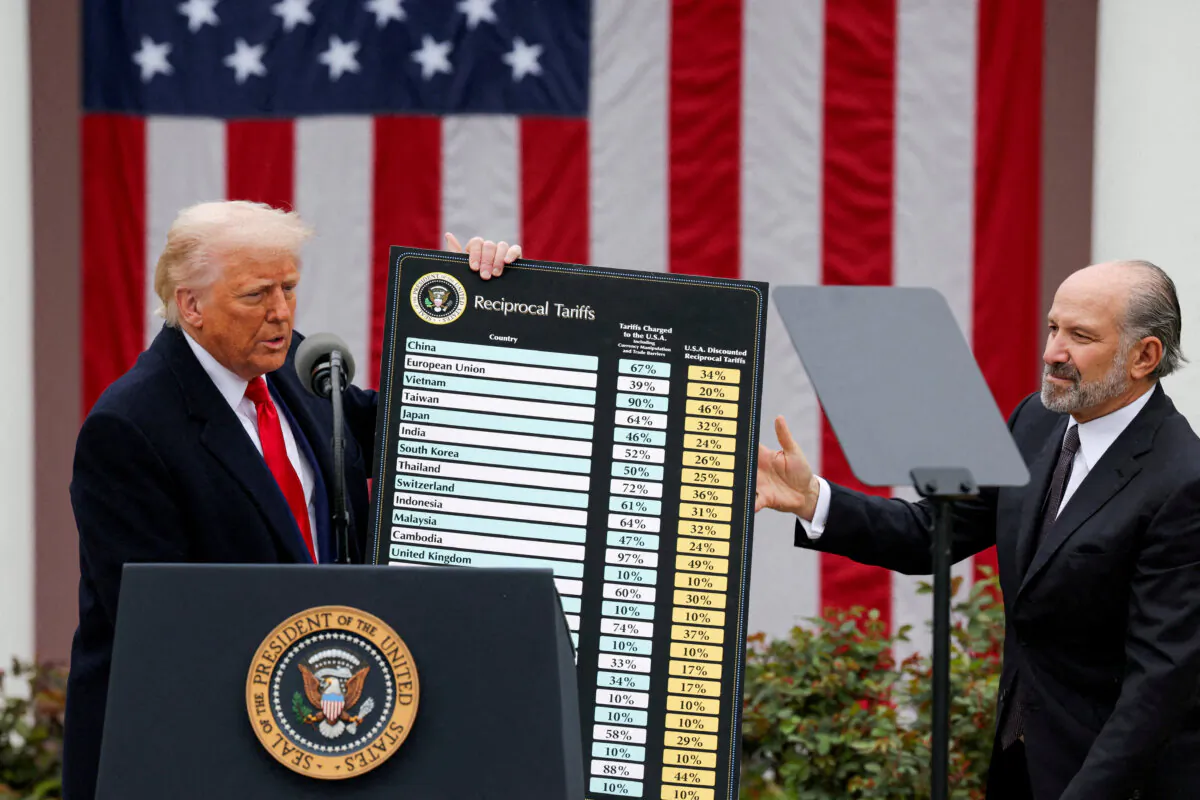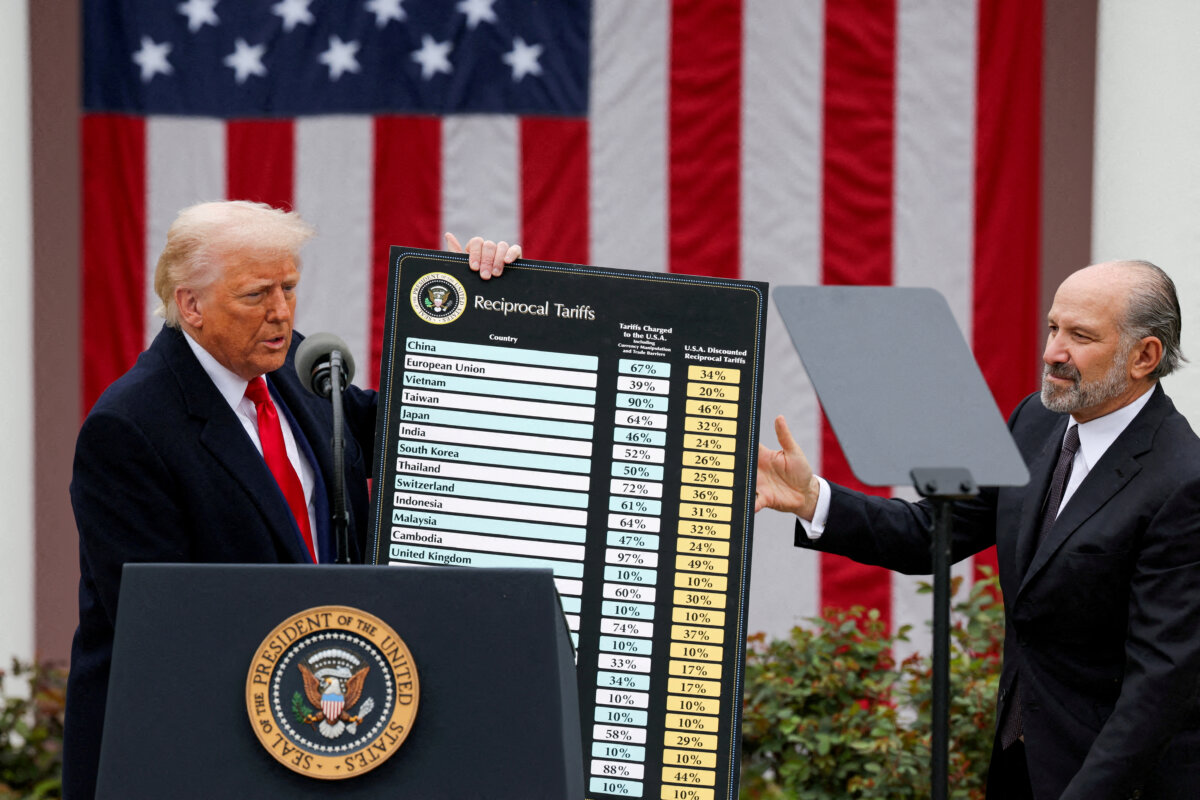

President Donald Trump’s sweeping global tariff plans are facing legal hurdles.
Trump has invoked the International Emergency Economic Powers Act of 1977 (IEEPA) to implement his comprehensive trade agenda. The decades-old law grants a president the broad authority to impose economic measures in response to national emergencies.
A three-judge panel on the U.S. Court of International Trade determined that IEEPA does not give the president unilateral authority to impose tariffs on nearly every country. The court decision blocked multiple tariffs announced since February.
Later a second federal court struck down a significant portion of the president’s tariffs, ruling that the president does not have sole authority to impose tariffs by declaring emergencies related to trade deficits and fentanyl.
“This case is not about tariffs qua tariffs,” said U.S District Judge Rudolph Contreras, in a 33-page opinion. “It is about whether IEEPA enables the President to unilaterally impose, revoke, pause, reinstate, and adjust tariffs to reorder the global economy.
Shortly after filing an appeal, the U.S. Court of Appeals for the Federal Circuit halted the first of two rulings blocking the president’s tariffs.
White House officials said throughout May 29 that they would operate on the assumption that these rulings would be lifted.
National Economic Council Director Kevin Hassett told the Fox Business Network that the tariff rulings by “activist judges” would not impact trade negotiations.
“If there are little hiccups here or there because of decisions that activist judges make, then it shouldn’t just concern you at all, and it’s certainly not going to affect the negotiations,” Hassett said.
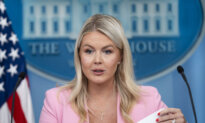
White House press secretary Karoline Leavitt said at the May 29 press briefing that the Trump administration expects the tariff battle will unfold at the Supreme Court.
“The Supreme Court must put an end to this,” Leavitt said.
Hassett, Leavitt, and others have suggested that numerous tariff tools are available to the president.
Goldman Sachs released a report earlier in the day, addressing various options Trump could employ.
The bank’s analysts referenced Section 122 and Section 301 of the Trade Act of 1974. The former allows a president to implement tariffs of up to 15 percent for 150 days on imports from countries with large trade surpluses. The latter permits the president to address unfair trade practices through the use of tariffs, sanctions, and other measures.
Section 232 of the Trade Expansion Act of 1962, which Trump has also invoked to impose tariffs on steel, aluminum, and automobile imports, could be broadened to other sectors identified as a threat to national security.
Section 338 of the Tariff Act of 1930 is another measure that empowers the president to impose additional tariffs and new import duties on foreign goods.
Charles Benoit, international trade attorney and trade counsel for the Coalition for a Prosperous America, also thinks the White House could work with Congress.
“I think that in addition to exploring the other presidential tools, they should also spare no time and work with Congress to get the 10 percent universal tariffs, at a minimum, legislated,” Benoit said in an interview with The Epoch Times.
U.S. officials say the legal challenges have yet to have an impact on trade discussions.
Canadian Prime Minister Mark Carney touted the U.S. court’s decision. He said on the floor of the House of Commons that the ruling is “consistent with Canada’s long-standing position.”
While it might alleviate some negotiating pressure on U.S. trading partners, it would unlikely be enough to alter talks substantially, Benoit says.
“I think that a foreign government would be making a mistake if they thought that they didn’t have to worry anymore,” he continued. “I think that the president still has a lot of power even without using IEEPA.”
—Andrew Moran and Emel Akan
BOOKMARKS
The Trump administration is giving Harvard University 30 days to submit evidence refuting allegations that it collaborated with the Chinese Communist Party, or else it will no longer be allowed to enroll foreign students. Among other allegations, the government says Harvard “hosted and trained” members of the Chinese paramilitary groups it says were “complicit in the Uyghur genocide” in China’s Xinjiang region.
District Court Judge Indira Talwani has blocked the Trump administration from ending a program that allowed illegal immigrants to seek work permits and permanent residence in the United States. The judge said she blocked the termination to stop “hundreds of thousands of individuals” becoming unlawfully present in the country, and not being legally able to work in their communities or provide for themselves and their families.
The Department of Health and Human Services (HHS) is asking health officials to change their approach when dealing with minors suffering from gender dysphoria. HHS is now recommending psychotherapy, citing other nations’ shift away from using surgery and hormones to treat the condition in children.
A Swiss village was almost completely obliterated after a collapsing glacier on a nearby mountain prompted a mudslide. The village had been evacuated earlier this month, but authorities say a 64-year-old man remains missing.
The U.S. Department of Agriculture plans to launch a $200 million plan to boost timber production across the country by expanding logging in national forests. “President Trump is committed to cutting red tape, rolling back burdensome regulations and unleashing the potential of America’s abundant natural resources,“ Agriculture Secretary Brooke Rollins said in a statement.
—Stacy Robinson
 Friends Read Free
Copy
Facebook
Tweet
Friends Read Free
Copy
Facebook
Tweet