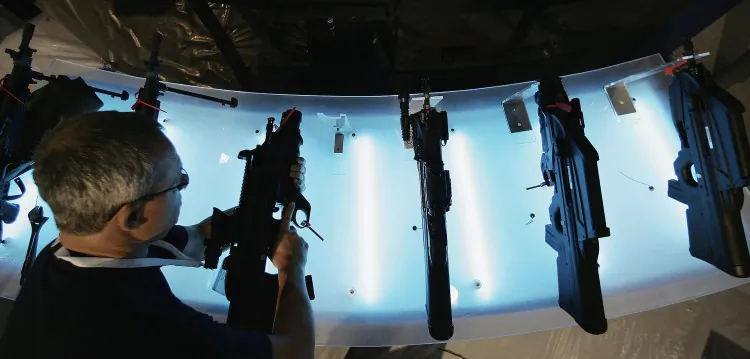

The European Parliament adopted a resolution Wednesday calling on United Nations member states to publicly disclose all arms trade deals, including reporting on small arms and light weapons.
The resolution stipulates that those U.N. members who sign the Arms Trade Treaty (ATT) that will be negotiated in July in New York should disclose their international weapons deals.
Accounting for around 30 percent of arms exports, European Union member states “should do more to ensure that the trade is properly regulated and more transparent,” states a release by Parliament, adding, “Poorly regulated arms trade causes unnecessary human suffering and fuels armed conflict.”
The U.N. ATT should encompass the “widest possible spectrum of conventional weapons, including small arms and light weapons and all aspects and activities of trade,” urge EU parliamentarians.
The treaty will not interfere with the domestic sale of arms to civilians inside a member state’s country.
The resolution received a yes from 612 members, while 18 voted against it, and 36 abstained.
Amnesty International said in a report two days ago that poorly regulated arms trade regulations have led to scores of deaths, injuries, torture, and other abuses. The London-based rights group said that more than a million people are affected by the trade each year.
“We’re calling on governments—especially the ‘Big Six’ arms exporters–to reject the ‘body bag’ approach where they just resort to imposing a U.N. arms embargo after the human rights catastrophe has already engulfed a population,” said Brian Wood, the rights group’s arms specialist, referring to China, Russia, the United States, France, Germany, and the U.K.
 Friends Read Free
Copy
Facebook
Tweet
Friends Read Free
Copy
Facebook
Tweet