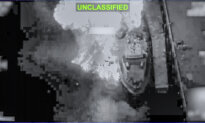

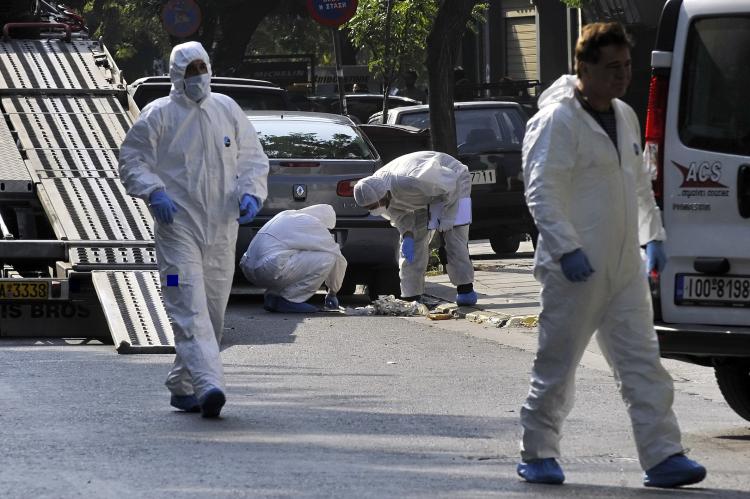
On Thursday, the 14th parcel bomb in Greece in week was sent to the French Embassy in Athens, but the police managed to neutralize it after receiving an alert from French Embassy staff.
The latest incident occurred after Greek authorities suspended foreign air cargo delivery on Wednesday in an effort to stop suspected domestic guerrilla groups from sending explosives to European leaders, including German Chancellor Angela Merkel and French President Nicholas Sarkozy.
The potential for such attacks was not unknown. A report published by the Center for American Progress in 2007, penned by Philip J. Crowley now spokesperson for the State Department, stated that “placing a bomb in a commercial shipment via global supply chains is an obvious and feasible means to bring down a U.S. airliner without having to board it or even enter the United States.”
The Yemen-originated mail bombs were disguised as printer components sent via UPS and FedEx to Chicago synagogues. The Yemen-based branch of al-Qaeda is believed to be responsible for the attempted terrorist plot.
The bombs contained the explosive PETN, which is difficult to detect with conventional airport screening. The explosives were only discovered after Saudi security forces tipped off officials in Dubai and the U.K. After that, Germany, France, and England canceled cargo shipments from Yemen.
After the 2007 report had came out, Congress passed legislation, the 9/11 Commission Act, requiring that within three years, screening for 100 percent of all cargo placed on passenger flights. The deadline passed in August this year, but industry analysts say the new standards were not yet in place.
According to a Heritage Foundation report published in June, the U.S. transportation security administration is not fully capable due to several constraints.
One is that air carrier facilities were never designed to handle the task of conducting piece-level scanning.
A second is that the approved technologies were engineered to inspect baggage, not large shipments arriving in containers and pallets that may contain 200 individual pieces. Therefore, effective screening means taking the packages apart, which eats up time and money. It's also prone to false alarms and human error, says the report.
“Currently, there is no government certified technology to screen standard size pallets and large items,” said Giovanni Bisignani, the International Air Transport Association’s (IATA) director general in a Tuesday’s press release after the World Aviation Security Summit in Frankfurt, Germany.
“There is some promising technology but it is taking far too long to move from the laboratory to the airport. We must speed up the process.”
Cost is another important factor, not just of the screening equipment but the cost to businesses of delays and bottlenecks. "The 100 percent screening mandate truly is an unfunded mandate on the private sector," says the report.
 Friends Read Free
Copy
Facebook
Tweet
Friends Read Free
Copy
Facebook
Tweet