NBC, the Super Bowl’s media partner, eventually sold all of the spots prior to the game. But FedEx’s absence underscores a broader shift of fortune for the sporting world, which typically relies on advertising, sponsorships, and partnerships in addition to ticket sales.
In addition to FedEx, all three of the U.S. automakers stayed on the sidelines this year. General Motors had been a regular advertiser since 1993, and Chrysler bought a spot in 2007.
Cutting Back on Sports Advertising
Honda Motor Co. Ltd. announced last December that it would no longer participate in Formula One activities. Formula One (F1) is a popular kind of motor racing, controlled by the International Automobile Federation.
“This difficult decision has been made in light of the quickly deteriorating operating environment facing the global auto industry, brought on by the sub-prime problem in the United States, the deepening credit crisis and the sudden contraction of the world economies,” Takeo Fuku, president and CEO of Honda, said in a published statement.
The Daytona 500, also called “The Great American Race,” to be held on Feb. 15, was still frantically trying to sell around 15,000 event tickets—almost 10 percent of the 168,000 tickets—two weeks before the event.
Not a single Daytona 500 ticket was left by the beginning of January for last year’s event. Like many other sports and recreational events, this year’s Daytona 500 is hit by the financial crisis.
The Daytona 500 $99 tickets were cut to $55, “the lowest price for Daytona 500 ticket[s] since 1995,” said Robin Braig, president of Daytona International Speedway in a January NASCAR press release.
Financial Crisis Hits the Bottom Line
Racetrack tickets prices have been reduced throughout the industry. Darlington Raceway in Darlington, S.C., cut prices for 9,000 tickets to the Southern 500 race. Talladega Superspeedway in Talladega, Ala., also discounted 20,000 tickets because people aren't buying.
The Indianapolis 500 race lost over $5 million last year, and expects substantial losses during the May 2009 event, according to media releases. Cost cutting measures include the cutting of practice days from five days to three.
“It’s clearly a response to the economic times we’re facing,” John Griffin, Indy Racing League spokesman, told the media.
NASCAR, the premier racing league in the United States, announced cutbacks by sponsors. NASCAR took Sprint Nextel Corp. off its donor list after the firm announced $1.2 billion in labor cost cutting measures, according to a January Sprint Nextel press release.
“Many [team] owners have merged, others have slashed their budgets and some have simply folded their race teams,” Brian France, NASCAR chairman said in a press release. “Hundreds of team members have been laid off since November's season-ending race, and the cutbacks spanned the entire spectrum.”
NASCAR and other sporting event promoters expect severe cutbacks in sponsorship after traditionally cash-rich corporations such as Caterpillar Inc., Home Depot Inc., GM, and many other corporate sponsors announced cost cutting and employee layoffs.
This year, GM even ended its endorsement association with Tiger Woods.
Trouble Brewing for Sports Projects
The New York Yankees’ $1.5 billion new stadium—with an original projected cost of $800 million—is in trouble if New York Assemblyman Richard L. Brodsky has his way.
“The public, not the Yankees, is paying the cost of constructing the new stadium … and the stadium will not create any significant new permanent employment or economic activity,” Assemblyman Brodsky said in a statement.
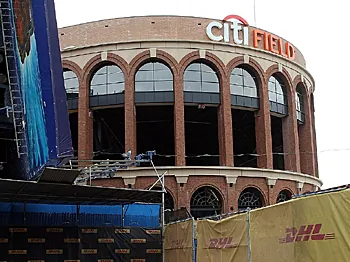
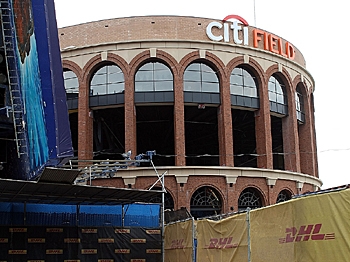
Citigroup Inc.’s $400 million naming rights deal with the New York Mets’ new ballpark is not only getting bad press, but also heat from Washington as Reps. Dennis Kucinich, D-Ohio, and Ted Poe, R-Texas, sent a stern letter to U.S. Treasury Secretary Timothy Geithner. Citigroup is currently in financial trouble and has received billions in taxpayer assistance.
“At Citigroup, 50,000 people will lose their jobs. Yet, in the boardroom of Citigroup, spending more than $400 million to put a name on [a] stadium seems like a good idea,” Kucinich and Poe said in a joint press release.
The letter continues, “Citigroup [must] cancel its $400 million advertisement at the Mets field and instead begin to repay their debt to the taxpayers."
Citigroup claimed in 2006 that its contract with the Mets would bring in more customers. Experts suggest that the opposite would happen given the financial crisis.
Bank of America Corp. faces a similar backlash for stadium naming rights. The bank is spending $140 million for the naming rights for the Carolina Panthers stadium.
“Sports are not recession-proof,” says Mitchell Zeits, sports finance consultant, in a recent Knowledge @ Wharton report. “More recently, however, sports leagues have tied their fortunes more closely to corporations—and now are living with the consequences,” said the KW report.
 Friends Read Free
Copy
Facebook
Tweet
Friends Read Free
Copy
Facebook
Tweet