The San Diego Zoo says that researchers have bred the first tree lobster (Dryococelus australis), one of the rarest insects on Earth.
It’s also called the Lord Howe Island stick insect, which was once thought to be extinct. According to OutdoorHub.com, there are now more than 1,000 adults being kept in captivity to prevent them from going extinct.
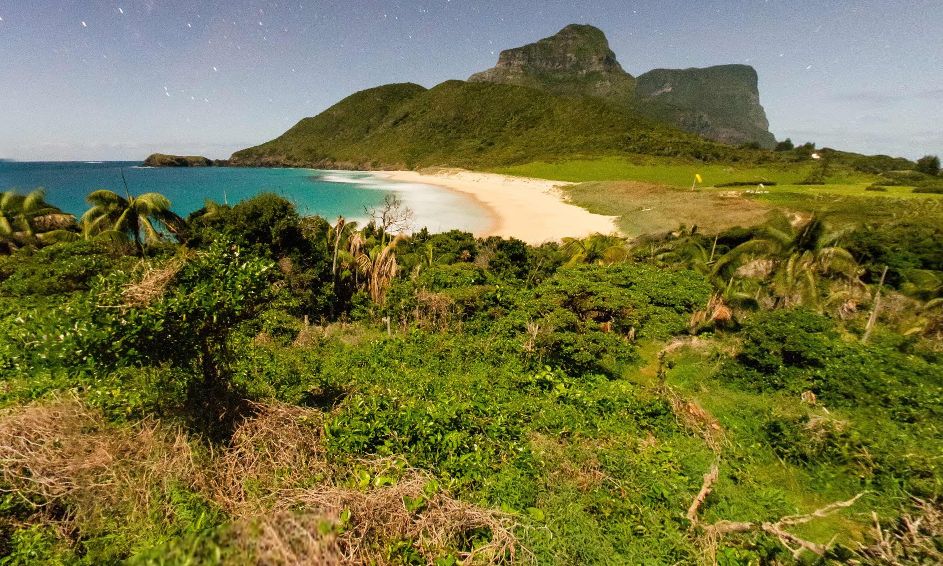
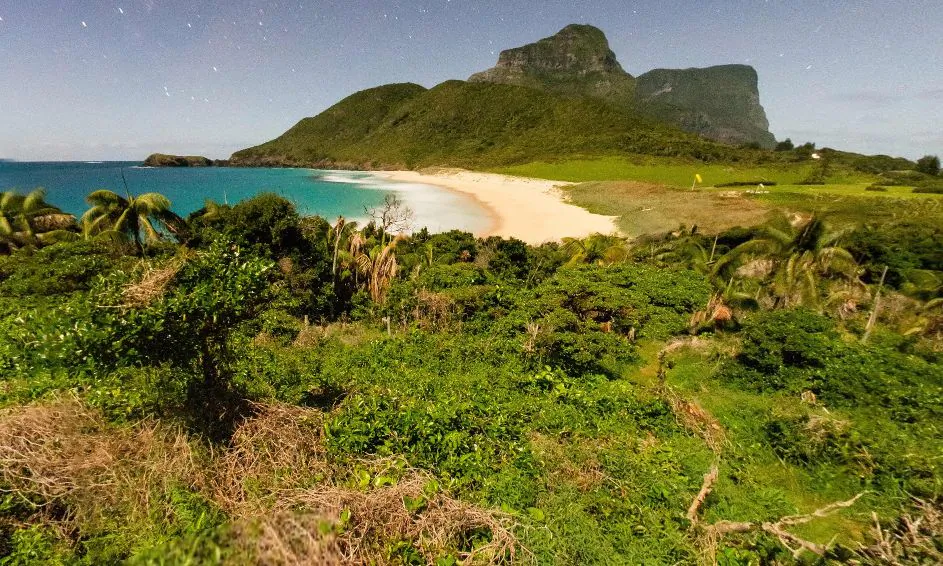
The insect disappeared from Lord Howe Island, an irregularly crescent-shaped island in the Tasman Sea between Australia and New Zealand, after black rats came in and almost wiped them out.
It wasn’t until 2001 that researchers were able to actually find them again.
Go back. “Meet The Tree Lobster Back From The Brink” https://t.co/KiH5ZOWdVW pic.twitter.com/Q8Y2m81kiP
— pourmecoffee (@pourmecoffee) February 11, 2016
And, according to NPR, they appeared on Ball’s Pyramid, a mountain of rock in the South Pacific Ocean, located near Lord Howe Island. “Ball’s Pyramid is a very inhospitable place,” Paige Howorth, the San Diego Zoo’s curator of entomology, told the broadcaster this week.
“There’s no free water on the rock. Really, not much grows there.”

When they were again discovered 15 years ago, “it was a massive, massive P.R. event for insects,” Howorth added.
Last month, Howorth flew to Melbourne to bring the insects back to San Diego.
[morearticles]1898510[/morearticles]
“The nymphs seem to emerge from the egg overnight or in the very early morning hours,” Howorth said. “Most mornings since Saturday have included one or two little green surprises. We couldn’t be happier!”
Love Giant Insects? Meet The Tree Lobster, Back From The Brink https://t.co/n6LXLm1o6m via @wgbhnews pic.twitter.com/Wiwhq7ch6A
— WGBH News (@wgbhnews) February 11, 2016
Say hi to the cuddly, fluffy “tree lobster” https://t.co/vjZSwjxONo #nope pic.twitter.com/pfeb7r1kFr
— KQED (@KQED) January 21, 2016
The ‘Tree Lobster’ – the Lord Howe stick insect. pic.twitter.com/F4578cY2Q0
— Barry Thompson (@ThompsonLab) January 19, 2016
For your enjoyment, the Tree Lobster. pic.twitter.com/dfhM8B4c3x
— Bill Fitzgerald (@funnymonkey) February 28, 2015
The insects also appear to be eating plants.
“The nymph that comes out of the egg is about three times the size of the egg itself,” added Howorth. “It’s just folded up in there like an origami piece or something—it’s amazing.”
 Friends Read Free
Copy
Facebook
Tweet
Friends Read Free
Copy
Facebook
Tweet