
Military conflicts and potential hostilities have some American voters concerned about the future.
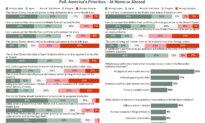
A reader survey found that many are concerned about the state of the Middle East conflict as midterm elections are just a couple of weeks away.
While readers are worried about conflict overseas, they also believe that warding off threats from nations such as Iran and China is best for the long-term safety of the United States.
Middle East Action
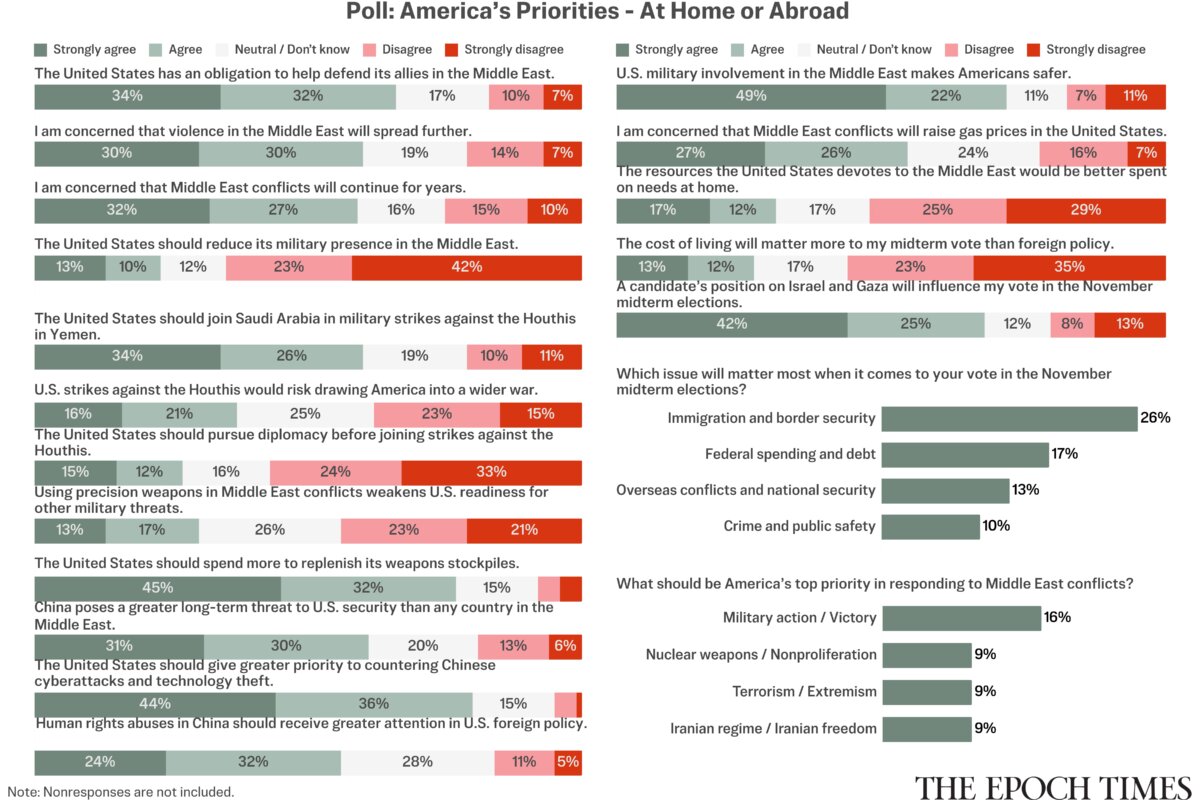
The United States has been seen as the watchdog of many global affairs in recent decades. Most Epoch Times readers (66 percent) also believe that the United States has an obligation to help defend its allies in the Middle East.
However, around 60 percent are concerned that violence in the Middle East will spread further, while only one percent less (59 percent) are worried the current conflict will continue for years, similar to how previous interventions have gone.
When asked if the United States should reduce its military presence in the Middle East, 65 percent disagree with that idea.
One reader recommended that the administration “Aggressively and quickly complete the war with Iran. Trump has waited far too long to complete this mission, allowing Iran to rebuild and replenish their defenses. You can not negotiate with them … they want Death to America.”
However, yet another pushed for “Non-involvement, neutrality. USA should step away from any Middle East military conflicts and focus on its own problems.”
Additional Military Action
As the nation with the largest military budget in the world, the United States could be seen as in a strong position to engage in additional conflict.
Sixty percent of those polled were not against additional conflict and said the United States should join Saudi Arabia in military strikes against the Houthis in Yemen.
Readers were more divided when asked if U.S. strikes against the Houthis would risk drawing America into a wider war. Thirty-seven percent agree, while 38 percent disagree with the idea. Another 25 percent don’t know or are unsure.
Just over half of those who responded (57 percent) disagreed that the United States should pursue diplomacy before joining strikes against the Houthis.
Forty-four percent of readers disagree with the idea that using precision weapons in Middle East conflicts weakens U.S. readiness for other military threats, but only about 30 percent agree with the idea.
A large majority of readers (77 percent) believe the United States should spend more to replenish its weapons stockpiles.
Military concern also extends to other continents; however, 61 percent of respondents agreed that China poses a greater long-term threat to U.S. security than any country in the Middle East.
One reader said that the United States should “mind its own business and stay out [of the Middle East]. China is the primary threat anyway, and the U.S. should cut off all trade with China.”
Around 80 percent of readers think the United States should give greater priority to countering Chinese cyberattacks and technology theft.
Just over half, or around 56 percent, of readers think the human rights abuses in China should receive greater attention in U.S. foreign policy.
Impacts at Home
Many readers are acutely aware that what happens overseas will have wide-reaching impacts at home, and more than 70 percent believe that U.S. military involvement in the Middle East makes Americans safer.
When asked if they were concerned about the Middle East conflict causing a rise in gas prices in the United States, about 53 percent agreed.
However, 54 percent of respondents disagreed that the resources the United States devotes to the Middle East would be better spent on needs at home.
As to how this will carry over into the upcoming election, about 58 percent disagreed that the cost of living will matter to them in the midterm election more than foreign policy.
Additionally, 67 percent said that a candidate’s position on Israel and Gaza will influence their vote in the November midterm elections.
When asked which issue will matter most when they vote, the largest percentage of readers (25 percent) said immigration and border security is their greatest concern.
One reader weighed in, saying, “The priority should have been the mid-term elections. All the advantages gained in the last election could now be potentially lost.”
Next on the list was federal spending and debt, with 17 percent selecting that response, and about 13 percent said overseas conflicts and national security were at the top of their list.
When asked what should be America’s top priority in responding to Middle East conflicts, the highest percentage of readers said that military action or victory should be the top concern.
Fewer than 10 percent said nuclear weapons and nonproliferation should be at the top of America’s to-do list.
About the same percentage said Iranian freedom and concern regarding extremism should be considered most important.
The Epoch Times conducted this reader survey on Oct. 14 and Oct. 15, 2026, by email and social media, generating 3,461 responses. Friends Read Free
Copy
Facebook
Tweet
Friends Read Free
Copy
Facebook
Tweet