
There was a time when “‘Twitter’ was a sound, ‘4G’ was the name of a parking space, and ‘Skype’ for most people was a typo,” said Thomas Friedman, Pulitzer Prize-winning author.
Today, social media serves as a foundation for political and economic success. It has reached 82 percent of the world’s population, according to a recent publication from comScore, an Internet-marketing research company.
For advertisers, it used to be all about mass marketing. “You rarely get relevant advertisements in front of you. It’s taking the shotgun approach. Facebook, however, is using a laser,” said J.D. Lasica, a social media consultant for Fortune 1,000 companies.
By categorizing people through age, ethnicity, and geographic region, Facebook is able to target the right audience for advertisers, Lasica said.
Facebook is the third largest Web-based company in the world, placing after Google and Microsoft. Although it only brings in 15 percent of U.S. display ad dollars, social networking is the leader in delivering 1 in 4 display ads, according to comScore.
In the latter part of 2011, Facebook delivered 28 percent of display ad impressions. It is more than what portals such as the news, sports, and e-mail delivered, combined, comScore states.
For companies that once doubted whether social media could portray the value of their business or merchandise, there is the “Like” button on Facebook. After a person clicks on the “Like” button of a particular company or person, they become fans of the page, which shows on the newsfeed for their friends to see.
According to comScore, this was certainly the case for companies such as Starbucks, Southwest, and Bing. It was concluded that their fans, and friends of fans, were much more likely to visit the company website compared to the average visitor. For Starbucks, the fans and their friends were 418 percent more likely to visit Starbucks.com.
For Shirley Dai, owner of bridal business Something Ivory, social media has unwittingly expanded her business.
“I haven’t had much time for social media. But my clients post pictures of themselves wearing my pieces [on the Something Ivory Facebook page] and share it with other brides, broadening my business,” Shirley said.
Shirley feels that Facebook is a platform for opportunities. “It’s not only for brides anymore, a girl from a pageant wore one of my pieces recently,” she said.
Social networking is no longer something only for teenagers. “Several years ago, there was some truth to that. However, in the last 18 to 24 months, that has changed completely,” comScore says.
Social Media in Politics
“The 2008 Obama campaign was groundbreaking in a sense that if it weren’t for social media, we’d be in the fourth year of the Hilary Clinton presidency now,” Lasica said.
According to Lasica, President Obama’s strategic use of social media marked a turning point. “Every campaign on forth have been using social media in a powerful way.” All major candidates of the current election have a Facebook and Twitter account.
“If a certain moment [for a politician] is captured and that thing goes viral, it can turn people who are obscure into political leaders,” said Neal Asbury, chief executive of The Legacy Companies.
Asbury pointed to Marco Rubio, a senator from Florida who has been spoken of as the potential vice president of 2012. “He caught fire and went viral in social media … it is very important for politicians,” Asbury said.
Meanwhile, microblogging, such as Twitter and Tumblr, is catching up to Facebook. Microblogging is a broadcast medium in the form of blogging.
In 2011, Twitter was the central means of communicating events such as the death of Osama bin Laden, and Steve Jobs’s resignation and death. The very announcement of singer Beyonce’s pregnancy generated 8,868 tweets per second, according to comScore.
Lasica attributed the success of large companies such as Best Buy to the use of social media, especially Twitter. “They had people of all different areas of the company … 15,000 employees answer customers’ questions on Twitter. They used social network the same way customers used it,” he said.
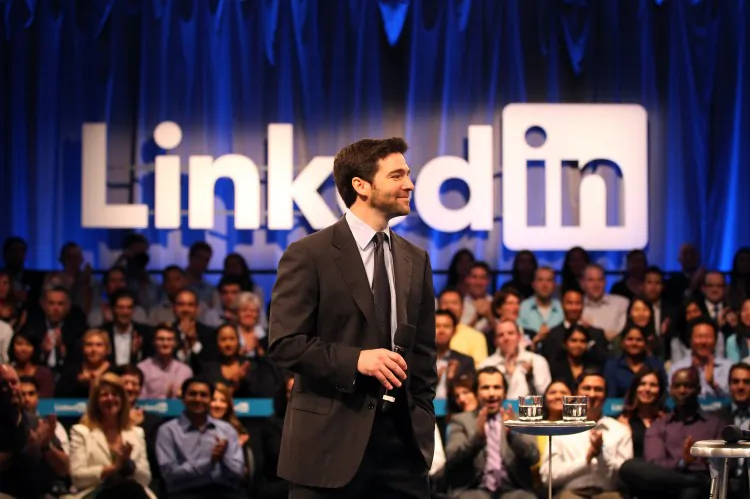
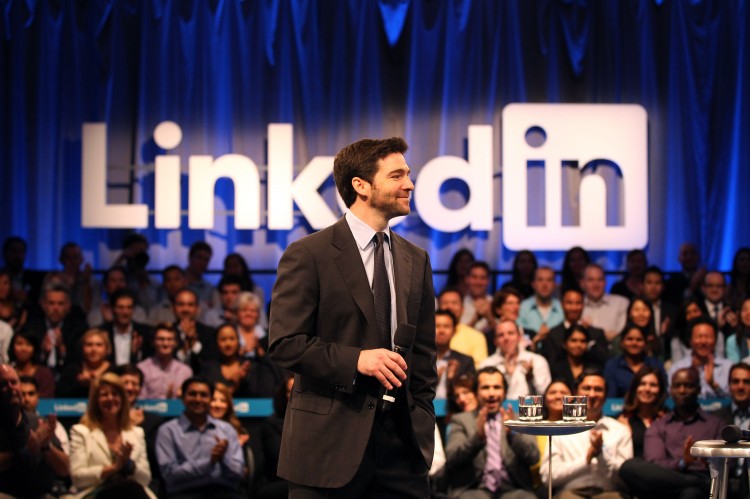
Yet just as LinkedIn replaced Myspace in 2011, a new social network can disrupt Facebook.
Soon after its release, Google+ generated global unique visitors faster than any other social network in history, reaching 25 million less than a month. Meanwhile, it took Facebook and Twitter around 30 months to reach such heights, according to comScore. But it remains to be seen if the inertia will be maintained.
 Friends Read Free
Copy
Facebook
Tweet
Friends Read Free
Copy
Facebook
Tweet