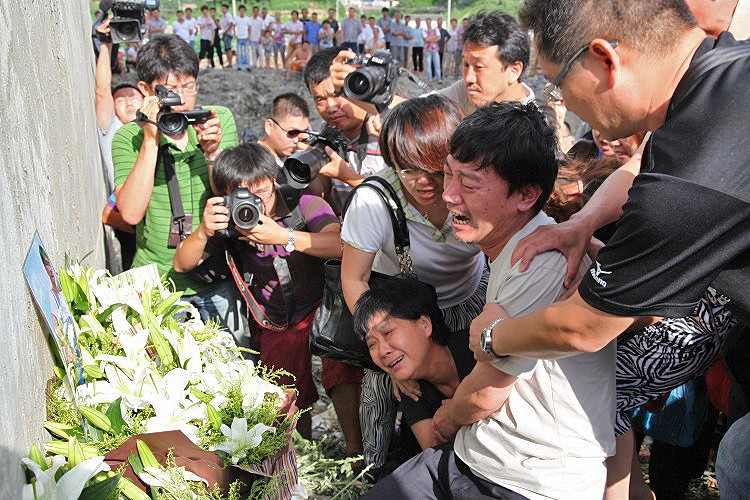
The July 23 bullet train crash outside China’s coastal city of Wenzhou has resulted in an astonishing phenomenon of Chinese media defiance as well as a number of large-scale public displays of grieving, leading some observers to believe that Chinese people have turned an important corner as they have found the courage and tools to safeguard their rights.
The train crash, like none of the other thousands of tragedies which have befallen the people of China in recent years, caused the regime’s information censorship and propaganda to collapse. People not only learned the truth, but were able to express their feelings, opinions, and demands for justice. And authorities were forced to comply with the people’s demands. The Chinese people have won a victory over the regime’s oppressive machinery.
In the aftermath of the crash that caused nearly 200 injuries and 39 deaths, according to official data—the number of missing is still being withheld by authorities—the media and the public witnessed the regime’s callousness. Rescue efforts were stopped less than 10 hours after the accident and some train wreckage was buried the next morning. Victims’ families were urged to quickly cremate the remains of their loved ones and forfeit future investigations in exchange for cash.
The Central Propaganda Department then issued multiple emergency orders to ban media from further reporting on the accident. But in an unprecedented move, many media defied the orders and demonstrated unusual courage and integrity.
In addition, Chinese netizens posted over a million pieces of news related to the crash and its aftermath on blogs and microblogs, which helped Chinese people and the world learn about the facts.
Media Defiance
Right before the media ban was issued, the Economic Observer published an eight-page special report titled, “There Was No Miracle in Wenzhou.” The article refuted the Ministry of Railways’ claim that it was a miracle when two-year-old Xiang Weiyi was found alive 16 hours after the rescue had been stopped, as the rescue should have never been stopped that soon.
On July 31, Southern Metropolis Daily published an article titled, “To hell with the Miracle.” But it was quickly taken down.
To no one’s surprise, punishment was soon handed down. Radio France Internationale reported that the deputy editor of the Shanghai Youth Daily was removed from his post and “arranged to work somewhere else.”
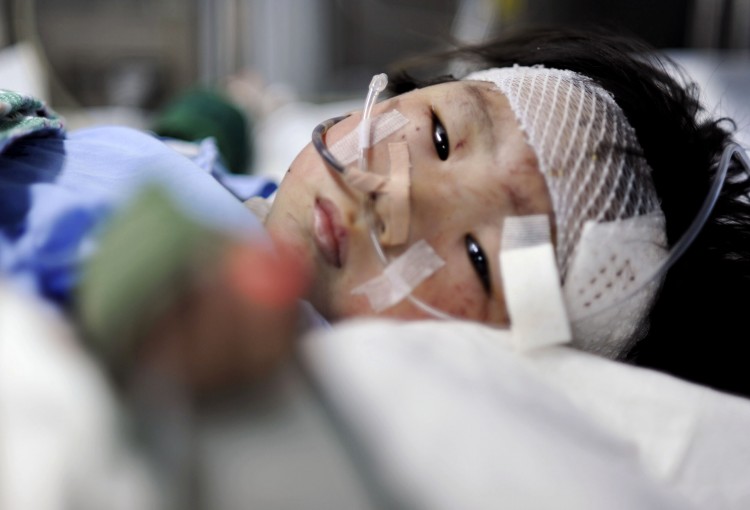
Meanwhile, microblogs became an outlet for Chinese public to help each other deal with the tragedy, spread the facts, and vent their anger over the regime’s ineptness and irresponsibility.
One Chinese netizen said, “Judging by the many microblog posts, it looks like Chinese people are ready to stand up against the regime.”
Chinese people also showed their grief and expressed their grievances in public places.
Thousands turned out in downtown Wenzhou on July 25 to mourn the victims. Young people sang lines from the national anthem, “Arise! All those who don’t want to be slaves!”
On Aug. 1, the soccer crowd of 10,000 at Beijing Worker’s Stadium, after hearing the national anthem, spontaneously pointed their index fingers to the sky in a silent act of mourning.
On Aug. 4, more than 1,000 people attended the funeral of Xiang Weiyi’s (the little “miracle” girl’s) parents, who were among those killed in the train crash.
Continued … A Crack in Dictatorship
 Friends Read Free
Copy
Facebook
Tweet
Friends Read Free
Copy
Facebook
Tweet