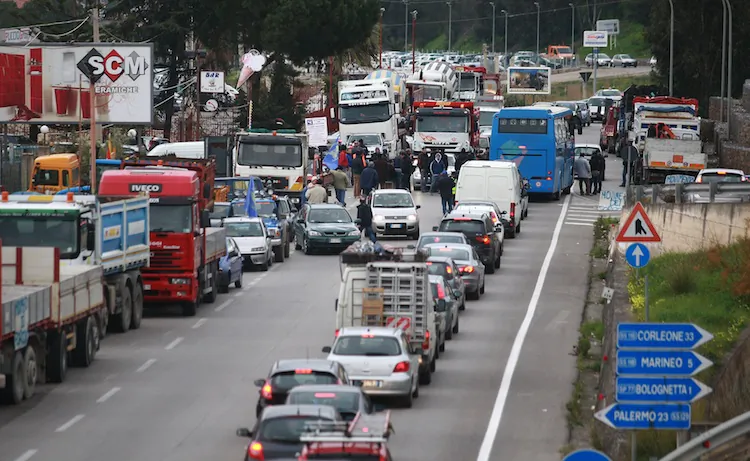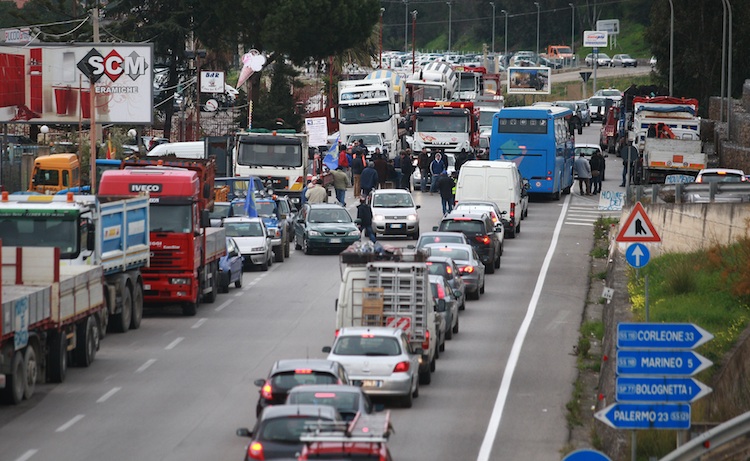

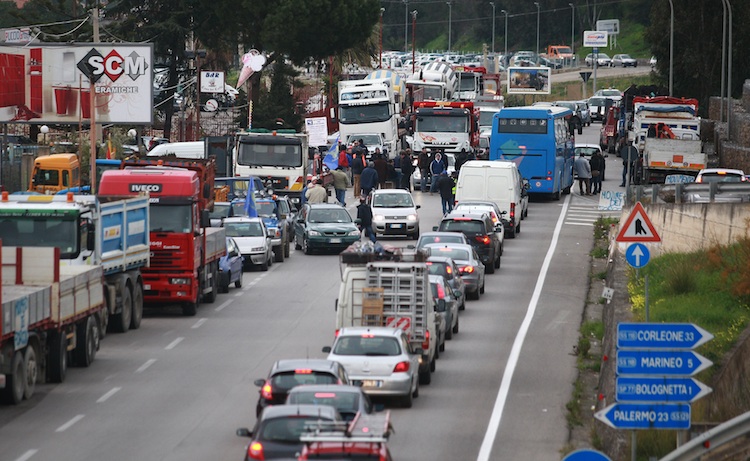
FLORENCE, Italy—After five days of strikes ground Sicily to a halt last week, on Monday, truck drivers erected roadblocks across Italy paralyzing main traffic arteries in an action that organizers say will continue until Friday.
The truck drivers’ strike clogged highways and blocked ports in 60 locations, preventing goods from being delivered across the country. Fiat announced that due to a lack of supply of components, it has to shut down several factories Tuesday morning, including operations in Melfi, Cassino, Pomigliano, Mirafiori and Sevel Val di Sangro, reported national business daily Il Sole 24 Ore.
According to the official site of FIAP Trasporto Unito, the union leading the protest, “It’s a strike at the national level, involving stopping trucking services all over the country during the period between Jan. 23 and 27.”
The reasons for the action, FIAP National Secretary Maurizio Longo told Radio 24, relate on the one hand to the high cost of “fuel, insurance, [and] road tolls, which does not allow companies to balance the accounts.” And on the other hand, the strike is about “all the regulations adopted by the Italian Parliament but not applied,” he said referring to provisions to regulate the trucking sector.
Over the past three years, the price of diesel in Italy has jumped from $1.69 to $2.34 per liter.
The impact of the strike is being felt in all sectors of the economy.
“We are very concerned about the consequences of the truck strike on farming. The long strike of drivers in Sicily has already dampened the entire regional agricultural economy, with losses close to 60 million euro, [about US$78 million]. Now the expansion of the protest across Italy could really deliver a mortal blow” to the agricultural sector, said the Italian Farmers Confederation in a statement.
Confindustria, the national association of manufacturers, has asked for the government to step in to immediately order drivers back to work to. They argue that the strike is illegal because it blocks services, impedes companies from conducting business, and it prevents citizens from traveling freely, reported Italian news agency ANSA.
The government has so far indicated that it will seek a negotiated end to the situation, but it would be willing to take further action.
“Roadblocks will not be tolerated. As far as we can, we’ll use dialogue, but we must also consider the rights of citizens,” Interior Minister Interior Minister Anna Maria Cancellieri told journalists at a press conference, according to broadcaster RaiNews24.
Italy’s strike regulation authority mentioned the possibility it could issue an injunction against the unions. “The blocks caused by the protests are unacceptable,” said the authority’s President Robert Alesse, in announcing the start of “a process for assessing penalties on anyone violating the law and hurting people,” the broadcaster reported.
In the next week, the strike could extend to pharmacists, taxi drivers, lawyers, gas station operators, and railway workers.
 Friends Read Free
Copy
Facebook
Tweet
Friends Read Free
Copy
Facebook
Tweet