



My first cooking job, when I was 16, was at a Cambridge, Massachusetts, cafe called The Blacksmith House.
I prepared all the food on the menu of soup, salad, and sandwiches, and my fellow staff were a parade of restaurant archetypes: Doris, the tough old Austrian baker who ran the kitchen like a Swiss watch and always made me feel so nervous to steal bites of frosting in the walk-in cooler; Betty, the cashier who wouldn’t call it the “Ari Special” even though she ate my chopped turkey sandwich every day for lunch; Ele, the hot waitress with whom I didn’t have a chance; the muscled and managerial Curtis, who was also on the hunt; and the head waiter, Steve, who was on cocaine.
I arrived early to make the soup when there was no one else there but Doris, following the splattered pages of the “Moosewood Cookbook” in my weekly rotation of vichyssoise, cucumber dill, Hungarian mushroom, and the whacky but delicious fruit soup. But the most popular was gazpacho, which was in such demand that I had to make a double batch when I made it, which I dreaded to do because of all the chopping. And I had to make it a day early to let the flavors marinate.
Alas, it seems that gazpacho chefs these days want to take the easy way out, as most modern recipes involve the food processor. But I shouldn’t point fingers. It’s been decades since I’ve made a batch, thanks to the post-traumatic stress disorder, and also thanks to the fact that I found another tomato-based soup from the south of Spain that I prefer: salmorejo, which is little more than tomato, garlic, and bread. I first tried it in a small Andalusian cafe, alongside a mix of red wine and Sprite called Tinto de Verano.
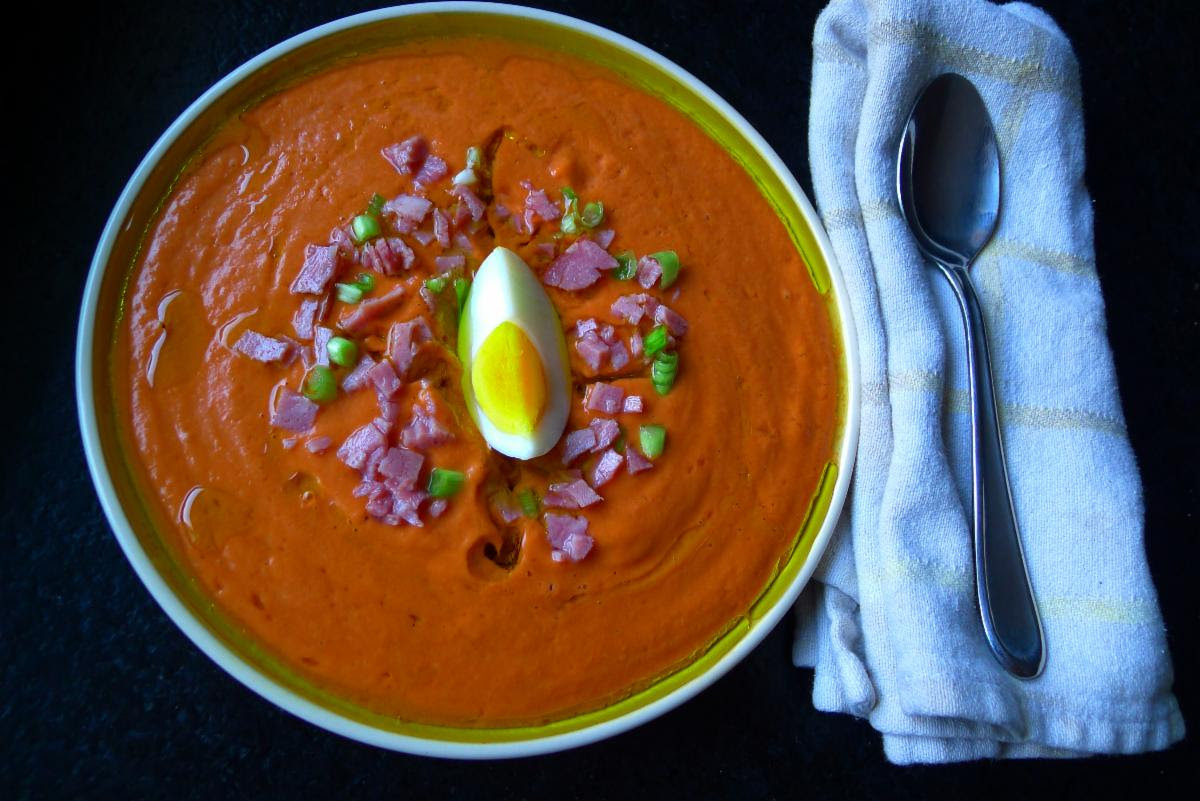
In the same way that locals prefer to drink Tinto de Verano while the tourists drink their overpriced sangria, salmorejo is more popular with the Andalusians, while gazpacho is more internationally known. It’s smooth and thick and usually lavishly garnished with boiled egg, chopped ham, olive oil, scallions, and herbs. When I returned home, I made it often, including with heirloom tomatoes, and was convinced that I had attained peak Andalusian tomato-based soup.
Until a few weeks ago, when a well-intentioned friend who was a lazy chopper made the chunkiest batch of gazpacho ever. Without the tarragon, paprika, cumin, or basil, its flavor lacked the complexity of the gazpacho of my youth, but the vegetables nonetheless combined into a wonderful flavor. When I tired of chewing the jawbreaking chunks of cucumber, pepper, onion, and celery, I found myself sipping quite pleasantly on the gazpacho’s watery broth. And then I got an idea.
With my friend’s permission, I drained the tomatoey liquid, fished out the tomato chunks, and used them as a base for a hybrid salmorejo, with homegrown garlic and the guts from a locally baked loaf of white sourdough. It had the smooth, elegant simplicity of a good salmorejo and a hint of complexity from its Andalusian cousin gazpacho. It was the perfect way to enjoy the tail end of tomato season.
Salmorejo à la Gazpacho
What follows is my base salmorejo recipe, to which I have added additional, parallel instructions in parentheses for those wishing to make it with a gazpacho twist. Be advised that making the gazpacho-flavored version involves lots of extra chopping and waiting overnight for the flavor to develop, which are probably the main reasons why Andalusian locals prefer salmorejo. But if you have the time, and a decent knife, you’ll surely appreciate the extra flavors of the gazpacho-ed version.
Serves 4
- 2 pounds tomatoes
- 1/2 cup of the inner, spongy part of a loaf of white bread, no crust
- 1 modest-sized clove of garlic, chopped
- 2 teaspoons sherry vinegar (more to taste if your tomatoes are low-acid)
- 1/2 teaspoon salt, plus more to taste
- 1/2 cup extra-virgin olive oil
For the Gazpacho Version
- 1 large cucumber, chopped
- 1 bell pepper, chopped
- 1/2 cup basil, chopped
- 1 yellow onion, chopped
- 1 teaspoon
For Garnish
- Hard-boiled egg
- Olive oil
- Chives
- Prosciutto, chopped (it’s the closest thing to Spanish ham you can easily find)
Boil a pot of salted water deep enough to submerge your tomatoes.
While the water heats, cut a cross into the bottom of each tomato to slice the skins. Then pull the guts from a loaf of bread.
Boil the tomatoes in the water for about 2 minutes, then immediately plunge them into an ice bath until they are completely cool. Remove the tomatoes and pull off the skins.
(If making the gazpacho version, cut the tomatoes into quarters and combine them with the chopped cucumber, bell pepper, basil, and onion, along with salt, and let sit overnight in the fridge. The next day, pull the tomatoes from this mixture, drain the juice, and use them in the remaining salmorejo instructions below.)
Liquefy the tomatoes (and gazpacho juice, if using) in a blender for about 30 seconds. Add the bread and liquefy again. Allow this blended bread to sit for about 5 minutes.
Add the garlic, vinegar, salt, and oil. If using low-acid heirloom tomatoes, you might need to add extra vinegar. Blend on high for a minute. Check the seasonings, and blend again if you made any adjustments.
Chill. Garnish with hard-boiled egg, a splash of olive oil, prosciutto, a sprinkle of fresh parsley, or any of the above to complete the dish.
Serve with a glass of Tinto de Verano and toast the end of another great season.
