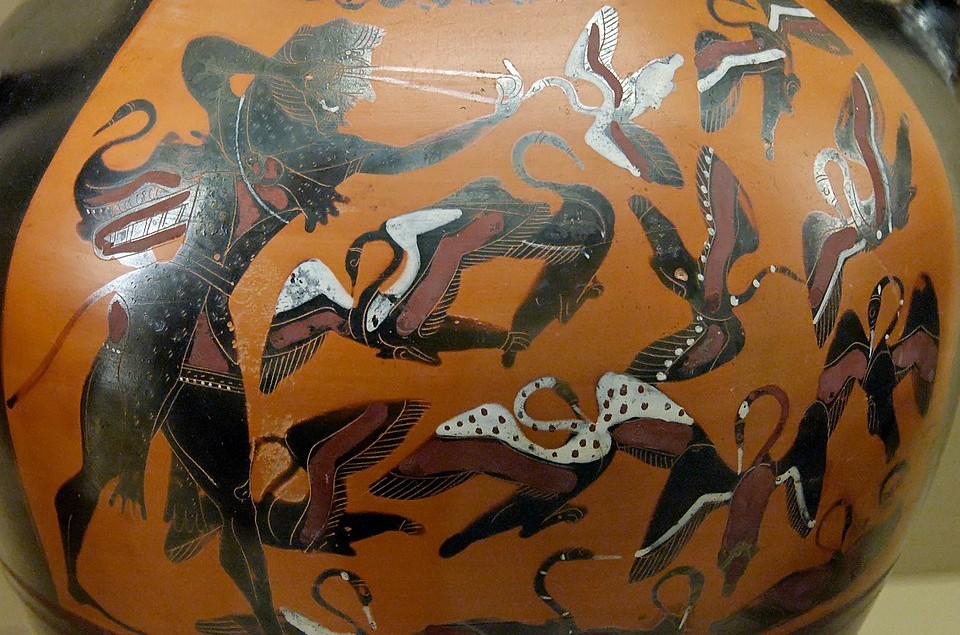
In my articles on Herakles, the greatest of the Greek heroes, we have considered three of his awesome 12 Labors: Herakles and the Hydra, Herakles’s conquest of the Nemean Lion, and Herakles’s cleansing of the Augean Stables. Now, we come to a lesser-known feat: his triumph over the Stymphalian Birds.
It’s important to know the promise that if Herakles can complete all 12 Labors, he is assured of immortality. Since death is the universal human lot, this is the deepest aspiration of the human soul. In Christian terms, it is like the promise of the Resurrection.
It’s also important to recognize that these stories aren’t just stories in the sense of being children’s fairy tales; they represent something much more profound in human psychology and spirituality. As author Paula Fox observed in “The Servant’s Tale”: “What is the difference between a story and a lie? I asked. ‘A lie hides the truth, a story tries to find it,’ Nana said, impatiently.”
These stories, therefore, are trying to find the truth.
The Stymphalian Birds
The sixth labor of Herakles takes place not in the depths of a swamp or the filth of neglected stables, but in the sky. In the marshes near Lake Stymphalia (in Arcadia) lived a flock of monstrous birds sacred to Ares: sharp-beaked, deadly, metallic-feathered creatures whose wings clashed like bronze and whose excrement was foul and toxic.
These were not ordinary beasts but living embodiments of discord, distortion, and dangerous noise, filling the air with chaos. No one could work the land below them, polluted as it was and dangerous for humans to inhabit. Even Herakles, the strongest of men, could not simply shoot them down. They were too numerous, too quick, and too disruptive.
The challenge was symbolic as much as physical. After confronting the Hydra (the darkness below), the Lion (the terror before), and the Augean Stables (the corruption around), Herakles is now required to purify the air above, for this is where they live.
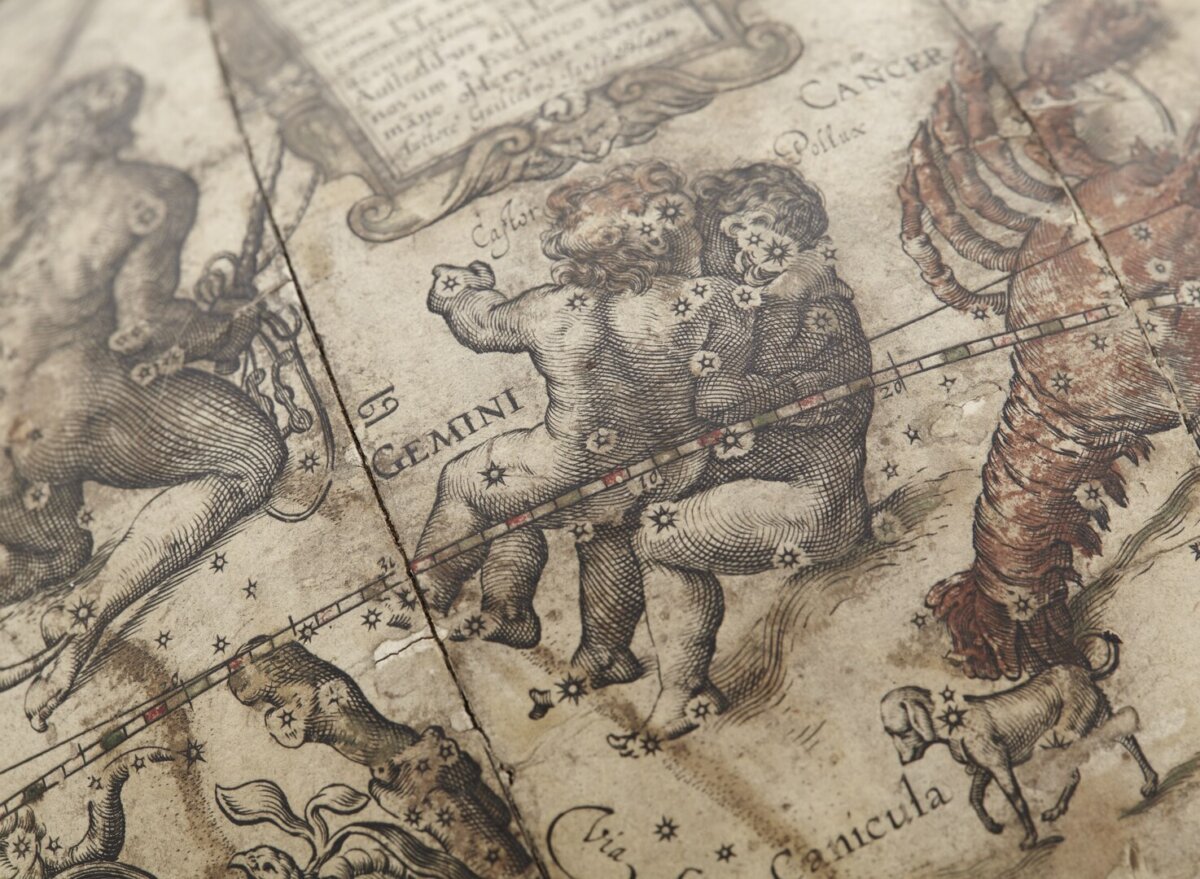
Some interpretations see a correspondence between the 12 Labors and the 12 zodiacal signs, the one related to the Stymphalian Birds is the sign of Gemini, the Twins. Gemini is an “air” sign, signifying the realm of thought, perception, and communication. In mythic logic, this labor addresses the pollution of the mind.
Symbolically, then, these birds with their metallic feathers and razor beaks suggest weaponized speech: harsh words, corrosive chatter, slanders and rumors, and destructive forms of communication. Their poisonous droppings evoke the fallout of such speech: polluted relationships, damaged reputations, confusion, and fear. Their ability to swarm, shriek, and overwhelm suggests the dangers of collective hysteria or mob thinking. As such, the Stymphalian Birds are the perfect myth for an age besieged by constant noise.
They represent the cluttered digital sky in which facts, fabrications, opinions, and agitations collide without meaningful order of importance—a vast, shrill flock of metallic wings. They symbolize a world in which the air itself seems thick with distraction, misinformation, and outrage.
Truth as a Weapon Against Chaos
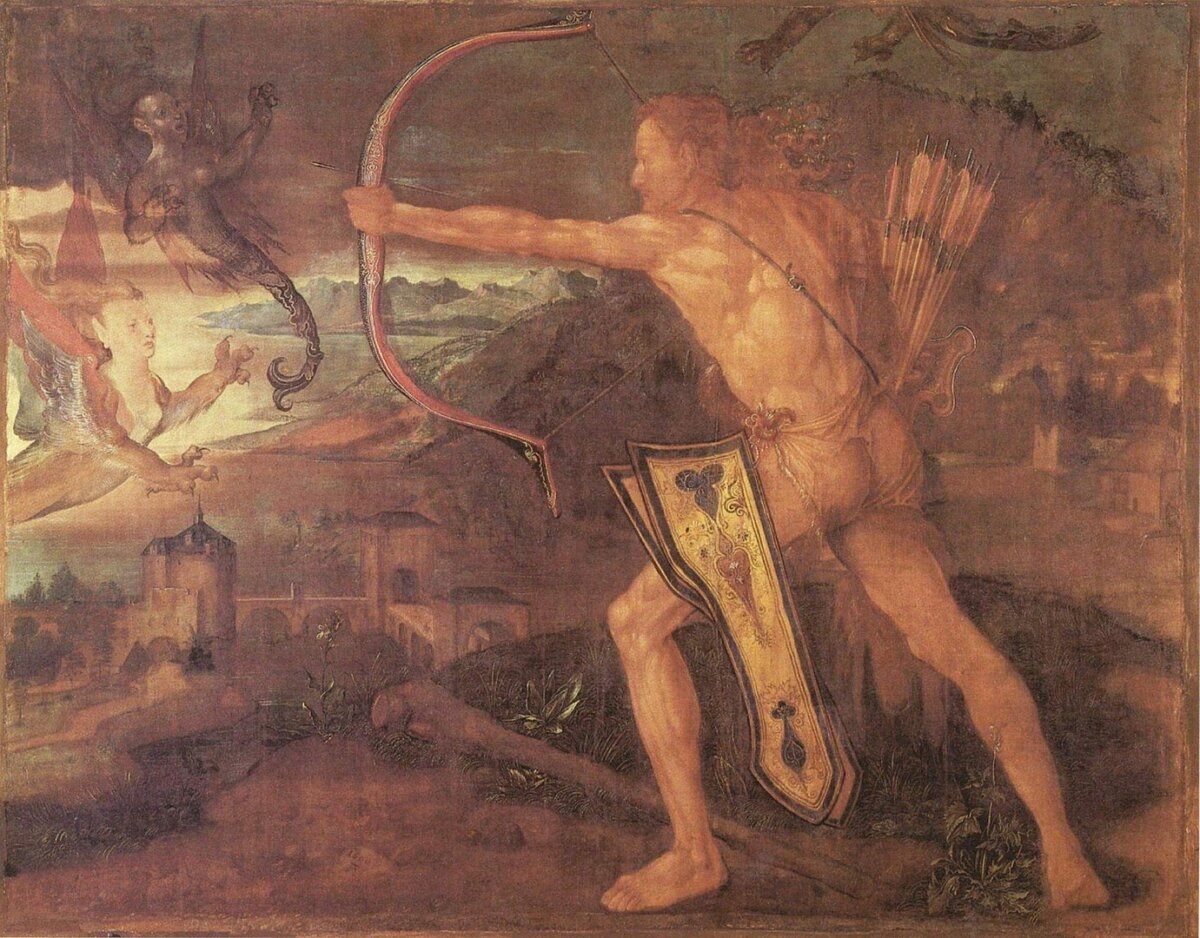
So how does Herakles cope with this massive barrage of noise and toxicity? He receives help from the goddess Athene. Her presence underscores the union of strength and wisdom. She gives him a curious tool: a bronze rattle forged by Hephaestus, the god of metallurgy and artisanship. With it, Herakles rattles the reeds of the marsh so furiously and unexpectedly that the entire flock takes to the air in panic. Only then, when their tight formation breaks and their overwhelming numbers disperse, can he shoot them down with arrows. The labor is therefore not achieved through violence alone but through disruption. A divine sound scatters the forces of toxic unity.
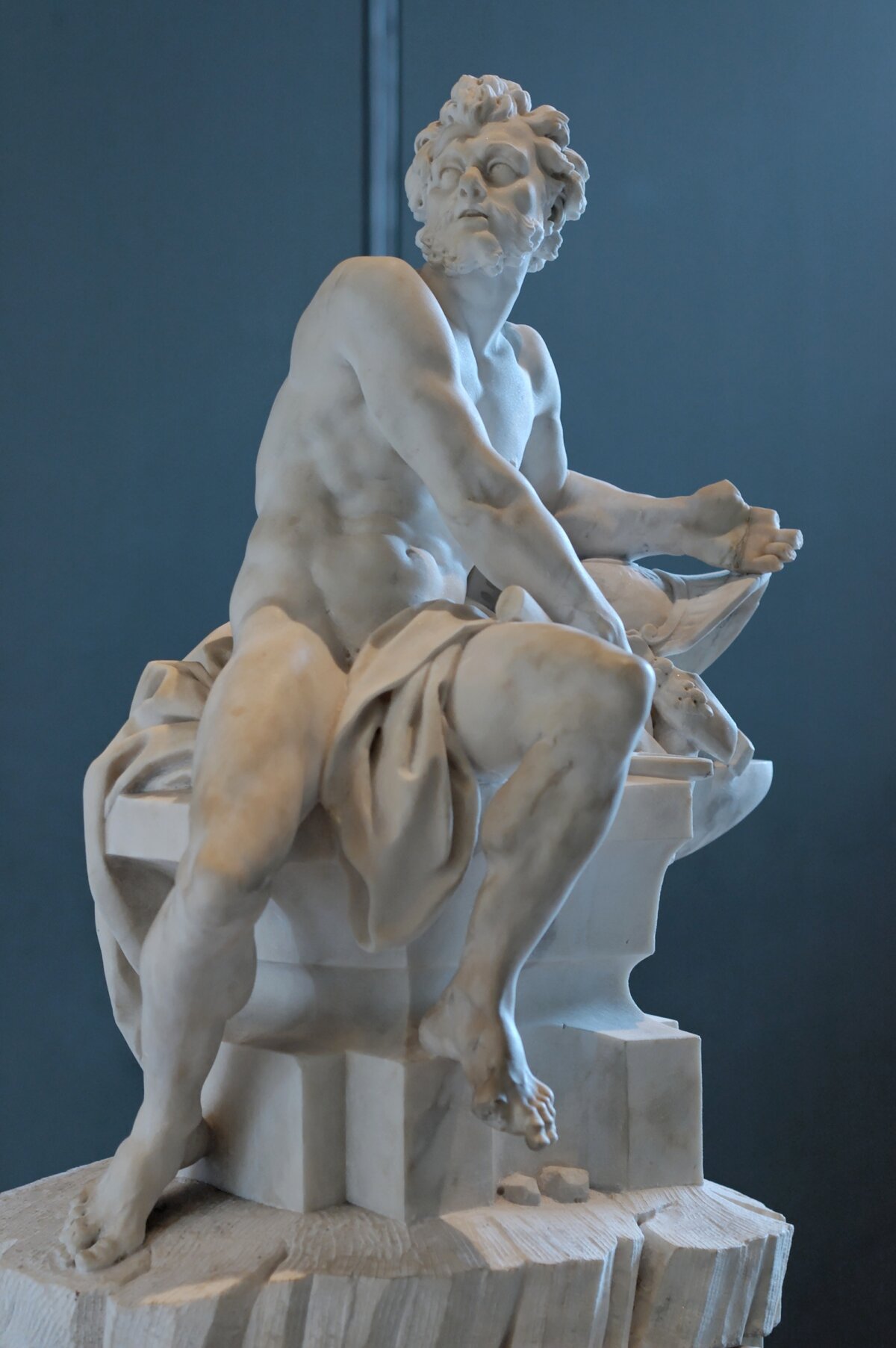
It is worth pointing out a couple of lesser-known features. First, the Stymphalian Birds were sacred to Ares, the god of war (or Mars in Latin). In war, the clash of metals, the shrill agitations and outrages, and the misinformation are necessary to enable offenses to occur. But the bronze rattle—the antidote—is forged by Hephaestus (Vulcan). What is the relationship between Hephaestus and Ares? Hephaestus is Ares’s cuckold! When Herakles wields a bronze instrument made by Hephaestus to drive away birds sacred to Ares, the story carries a subtle, almost mischievous undertone: The cuckold’s craftsmanship dispels the chaos of his wife’s seducer.
Secondly, somewhat ironically, the solution to the threat is homeopathic: Like is cured by like. The birds are creatures of metallic noise and poisonous sound, so Herakles confronts them not with silence but with a noise more resonant and more meaningful—the bronze rattle forged by Hephaestus. In this, the labor is deeply Gemini-like. Two sides of the same coin, twin forces meet, and the higher twin overcomes the lower.
Herakles, the divine son, defeats the children of Ares. He does this not by rejecting their nature but by elevating it, turning chaotic clangor into a clarifying vibration. The labor suggests that some forms of disorder can only be overcome by a transformed version of themselves: noise transmuted into music, confusion into signal, and multiplicity into meaning. It’s the Gemini paradox at its finest: the twin principle through which the immortal son eclipses the mortal impulse, using its own form to master it.
A Model for Today
Herakles’s solution offers a model for how to respond. He does not attempt to wade into the marsh and fight the birds on their own chaotic terms. He does not try to silence each one individually. Instead, he uses a single, resonant act—a clear sound that cuts through noise—to scatter them. The rattle is Athene’s, the goddess of wisdom. This implies that the solution to overwhelming noise is not more noise but a higher, purer vibration—the disruptive clarity of truth or reason.
The scattered birds are suddenly vulnerable. When no longer united in their cacophony, they can be addressed one by one, discerned from the larger confusion. Herakles’s arrows, traditionally symbols of precision and insight, suggest that clear thinking is only possible after the sky has been cleared of its chaos. One cannot reason in a storm of shrieking wings; one must first restore the air to calmness.
In this framework, the birds embody the distortions that cloud the intellect. Herakles’s labor symbolizes the purification of thought and the reclamation of clarity. This labor can be understood as the cleansing of the mind’s sky. Just as the Augean Stables required the redirection of rivers to wash away stagnation, this labor requires the introduction of a new kind of sound—a higher-minded resonance—to dispel collective confusion. It is a myth that speaks powerfully to our time, when the challenge is not merely to know the truth, but to be able to hear it amid the din.
In modern terms, Herakles offers a strategy for dealing with overwhelming information: Do not fight the noise on its own ground; introduce clarity, not counter-noise, and scatter distortion before aiming at truth.
Jason and his men realized that conventional weapons were useless, just as Herakles had discovered. Instead, they used shields and noise: banging weapons together to mimic the divine rattle originally forged for Herakles. This causes the birds to panic and scatter, allowing the Argonauts to land safely.
In this sense, the island of Ares becomes the spiritual homeland of toxic noise, a place where discord gathers strength. The birds do not reform after being scattered by Herakles; they find a new theater for their chaos. This is a profound mythic statement: Conflict and distortion, if not resolved, relocate. The air may clear in one region, but another will darken unless vigilance persists.
Jason metaphorically remembered Herakles’s approach and replicated it. So today, if we are to overcome the Stymphalian Birds that swarm around us, we, too, must remember to adopt what might be called a sonic strategy: sound, clarity, disruption. Put another way: We don’t stay quiet, our message is crafted and clear, and we contradict the false narratives that are out there. Surely, Herakles is a hero for our times
What arts and culture topics would you like us to cover? Please email ideas or feedback to features@epochtimes.nyc