



View the print-ready version of this recipe.
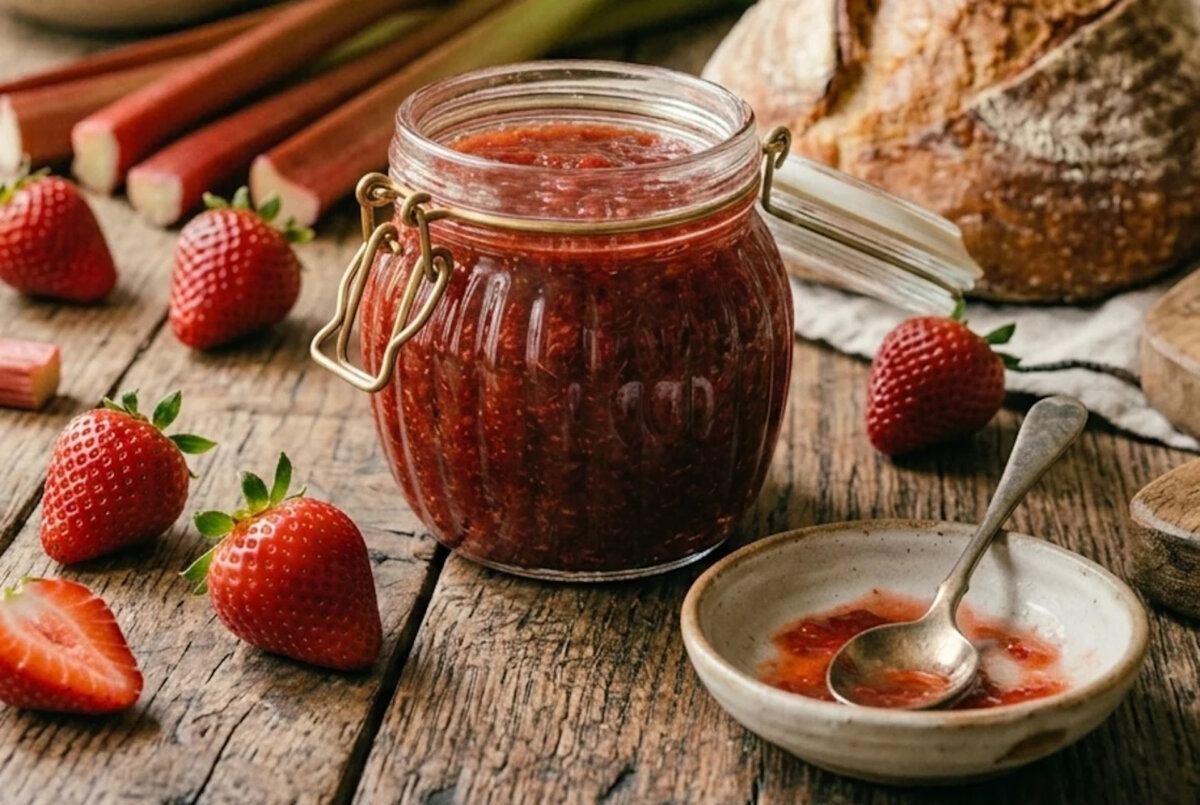
I’ve always loved the classic strawberry and rhubarb combo—it’s sweet, tart, and unmistakably spring. While my strawberry rhubarb crisp leans toward dessert, this small-batch strawberry rhubarb jam is a simple, everyday way to enjoy those same flavors. It’s easy to make (no pectin or canning required) and perfect for keeping on hand for toast, yogurt, or wherever you’d like to spoon a little.
What You’ll Need To Make Strawberry Rhubarb Jam
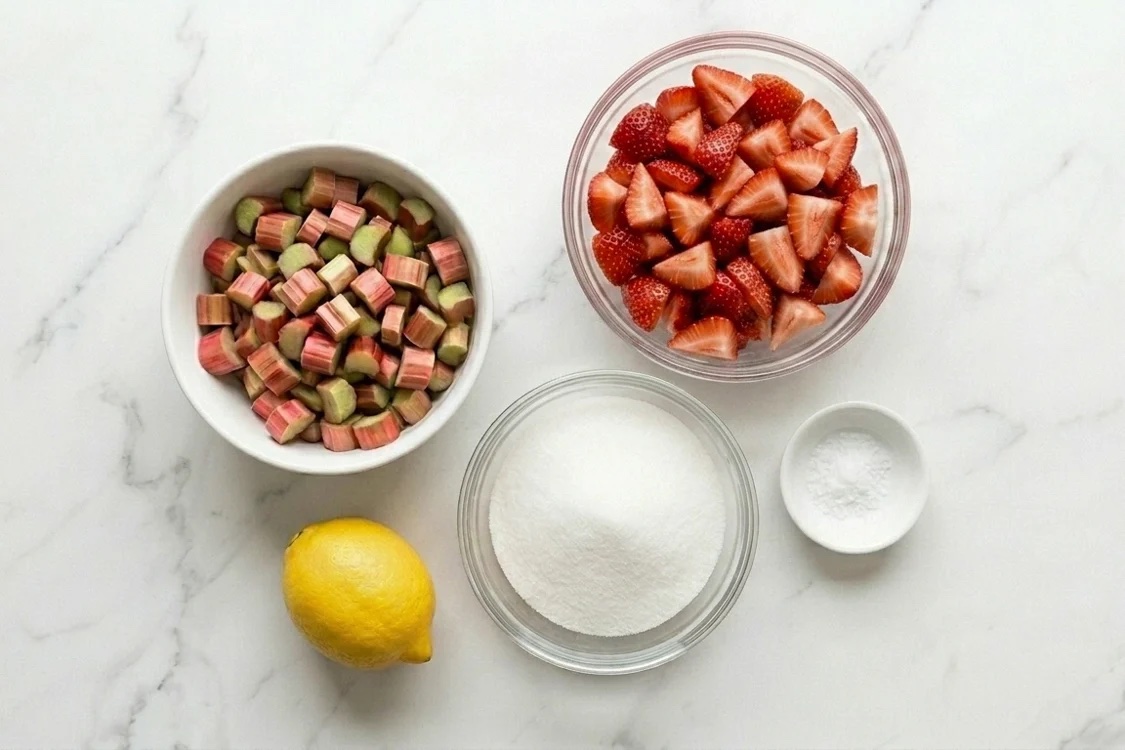
To make homemade strawberry rhubarb jam, you’ll need rhubarb, strawberries, a lemon, granulated sugar, and salt.
Step-by-Step Instructions
Step 1: Combine the ingredients. In a medium saucepan, combine the rhubarb, strawberries, sugar, lemon juice, and salt.
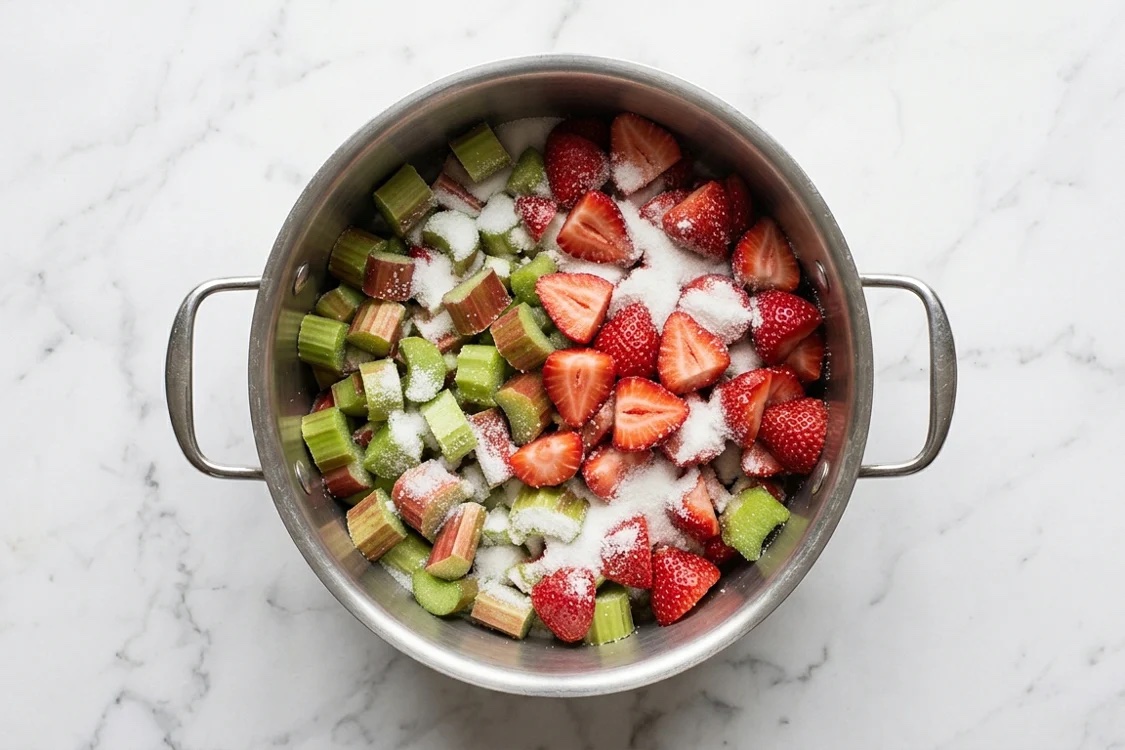
Step 2: Bring to a boil. Cook over medium heat, stirring now and then, until the sugar dissolves and the fruit starts to release its juices and get bubbly. Reduce the heat to a lively simmer.
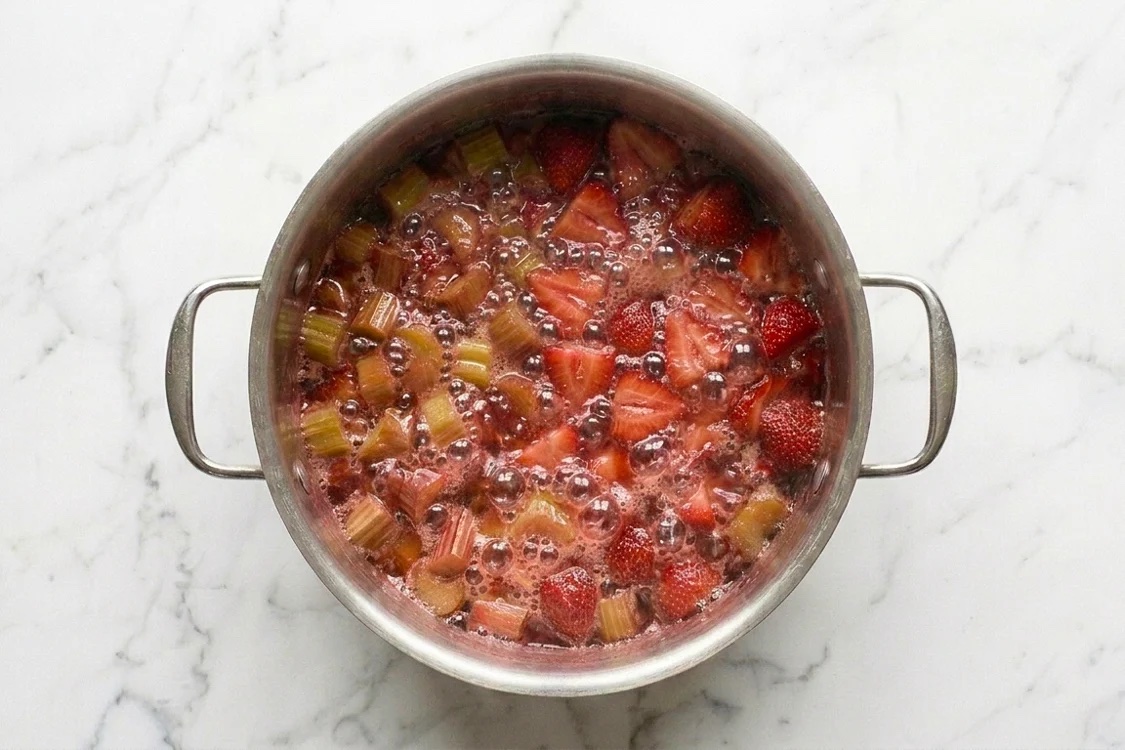
Step 3: Cook until thickened. Stir fairly often for about 25 to 30 minutes, until the fruit breaks down and the mixture thickens. As it cooks, mash the fruit with a spoon or potato masher to get the texture you like—chunky or smooth, up to you.
Spoon a little jam onto a chilled plate and let it sit for a few seconds. Run your finger through it—if the line holds and doesn’t run back together, you’re good to go. If it still looks loose, keep simmering for a few more minutes and test again (pop the plate back in the freezer to re-chill between tests).
Pro tip: If you like using a thermometer, you’re aiming for about 220 degrees F/104 degrees C.
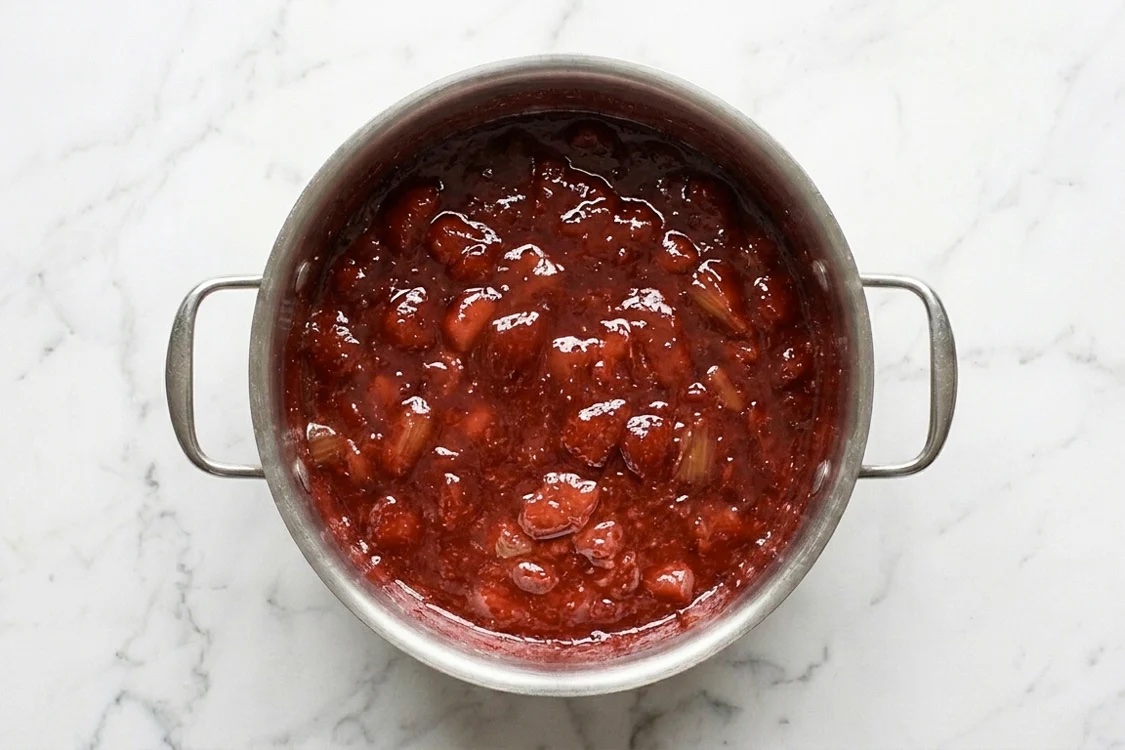
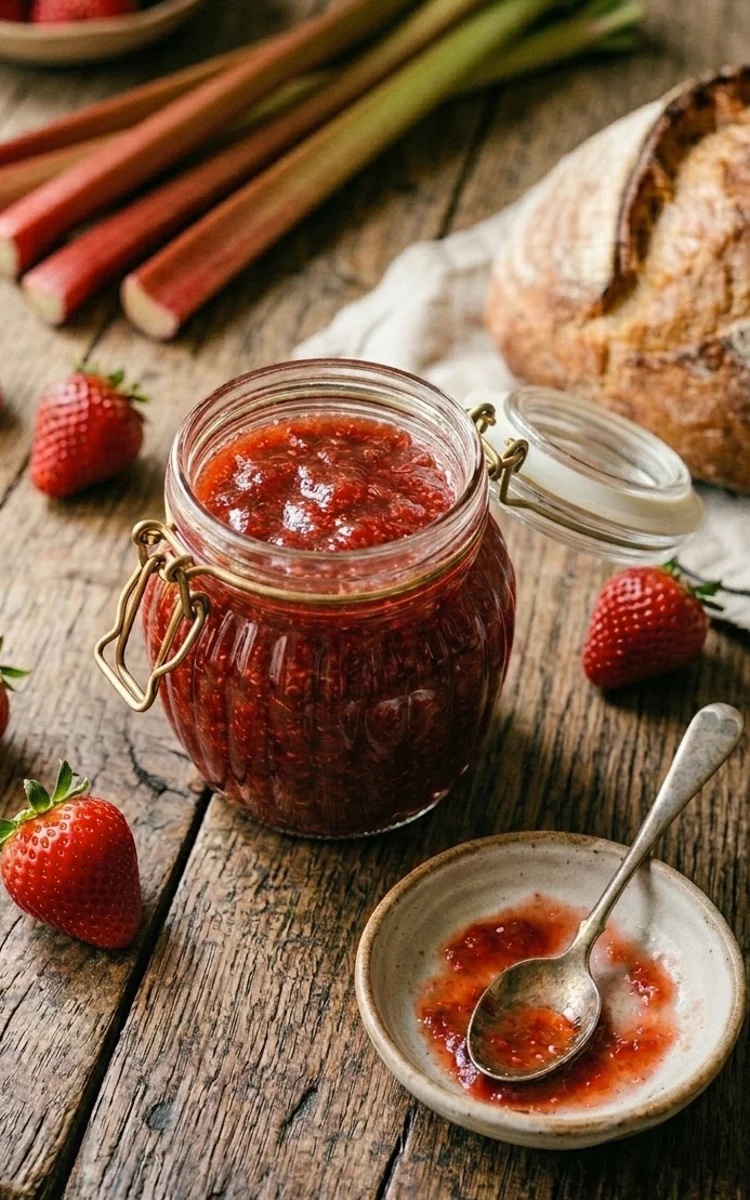
Step 4: Cool and store. Take the jam off the heat and let it cool for a bit—it will continue to thicken as it cools. Transfer to jars or an airtight container and refrigerate until set. It’ll keep in the fridge for up to 2 weeks, or freeze for up to 3 months.
Strawberry Rhubarb Jam
Serves 20 (2-tablespoon) (makes about 2 1/2 cups)
Prep Time: 15 minutes
Cook Time: 30 minutes
Total Time: 45 minutes
- 9 ounces (about 2 cups) chopped rhubarb, from 2 to 3 stalks
- 1 pound (about 3 cups) strawberries, hulled and quartered
- 1 1/2 cups sugar
- 1 tablespoon lemon juice, from one lemon
- Pinch salt
Before you begin, place a small plate in the freezer so it’s well chilled—you’ll use it later to test whether the jam is set.
In a medium saucepan, combine the rhubarb, strawberries, sugar, lemon juice, and salt. Bring to a boil over medium heat, stirring occasionally, until the sugar dissolves and the mixture becomes juicy and begins to bubble. Reduce the heat to maintain a steady simmer.
Cook, stirring frequently, until the berries have broken down and the mixture thickens, 25 to 30 minutes. As it cooks, use a spoon or potato masher to break up the fruit to your desired consistency.
To test for doneness, drop a small spoonful of jam onto the chilled plate and let it sit for a few seconds. If you can drag your finger through it and the line holds (instead of running back together), it’s ready. If it still seems loose, continue cooking for a few more minutes and test again, returning the plate to the freezer to chill between tests. (If you have a thermometer, the jam is done when it reaches 220 degrees F/104 degrees C.)
Skim any foam from the surface of the jam using a small spoon.
Remove from the heat and let cool slightly. Transfer to jars or an airtight container and refrigerate until set. Store in the refrigerator for up to 2 weeks.
Notes
Freezing Instructions: The jam can be frozen for up to 3 months; thaw in the refrigerator before using.
Nutrition Information
Per serving (20 servings) Calories: 68kcal, Carbohydrates: 17g, Sodium: 8mg, Fiber: 1g, Sugar: 16g
Gluten-Free Adaptable Note
To the best of my knowledge, all of the ingredients used in this recipe are gluten-free or widely available in gluten-free versions. There is hidden gluten in many foods; if you’re following a gluten-free diet or cooking for someone with gluten allergies, always read the labels of your ingredients to verify that they are gluten-free.
This article was originally published on OnceUponaChef.com. Follow on Instagram.
Dear Readers: We would love to hear from you. What topics would you like to read about? Please send your feedback and tips to features@epochtimes.nyc.
