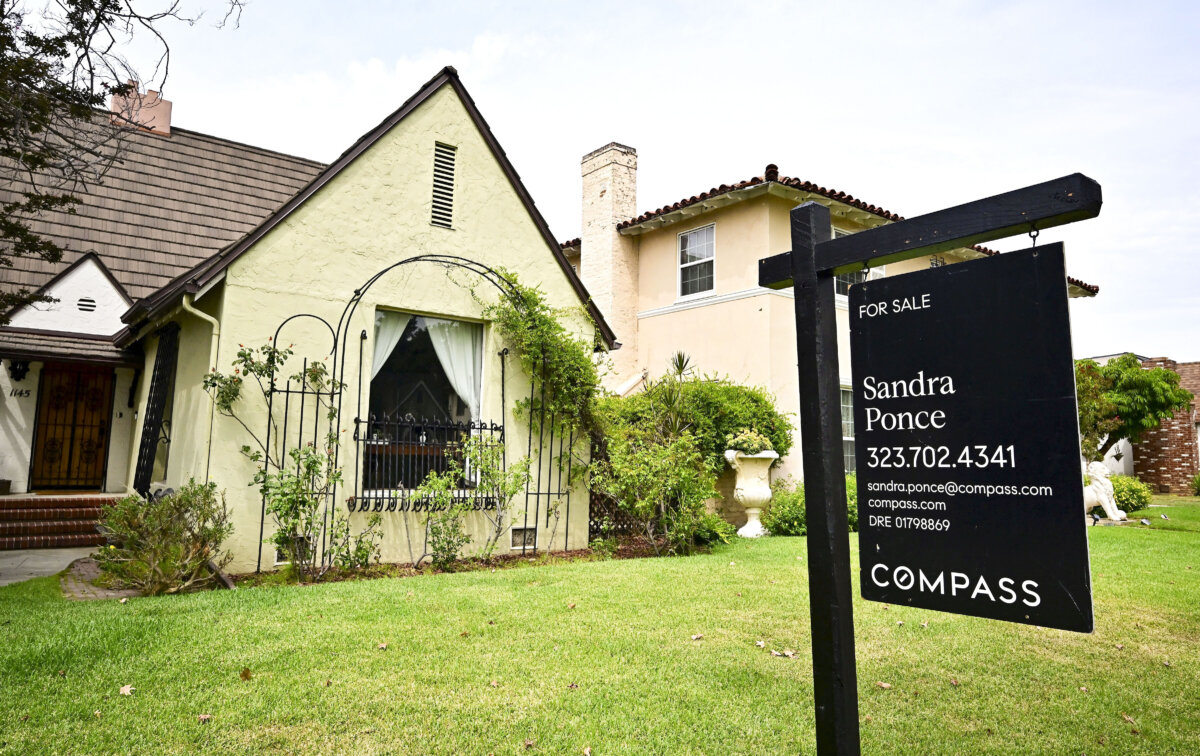

The average weekly rate on a 30-year fixed-rate mortgage hit 7.4 percent, according to a Oct. 8 update from Freddie Mac.
For the week ending Oct. 7, the 30-year fixed-rate mortgage hit the roughly 35-month high point, which is up from 7.28 percent a week ago and 6.3 percent a year back. Meanwhile, the 15-year fixed-rate mortgage hit 6.73 percent, up from 5.53 percent a year ago.
Since September 2022, the 30-year rate has consistently stayed over 6 percent.
“As market conditions continue to evolve, borrowers should remember that shopping around for a mortgage rate and getting multiple quotes can potentially save them thousands over the loan’s lifetime,” Sam Khater, Freddie Mac’s chief economist, said in an Oct. 8 statement.
A factor that has an impact on mortgage rates is bond rates. The 10-year Treasury yield has been rising since early March after the U.S.–Iran war began. Mortgage rates have also been rising since then.
Another influential factor is the Federal Reserve’s benchmark interest rate, with higher Fed rates often pushing up mortgage rates.
Last month, Federal Reserve officials voted to raise the benchmark interest rate for the first time in over three years, raising it by a quarter point to a new range of 3.75 to 4 percent. According to the minutes of the meeting released on Oct. 7, the Fed is expecting another rate hike before the end of the year.
According to data from the CME FedWatch tool, the majority of interest rate traders are expecting rates to hold at the current level in the next meeting in October and then rise to a range of 4 to 4.25 percent in the December meeting. Any significant jump in interest rates prior to December could contribute to a jump in mortgage rates.
Meanwhile, the median home sales price was recorded at $394,313 for the Aug. 31 to Sept. 27 period, up 1.3 percent year-over-year, according to data from real estate brokerage Redfin.
Active property listings were up 2.5 percent year-over-year. Properties stayed on the market for a median of 48 days, one day longer than a year earlier, according to Redfin.
Housing Market Forecast
According to an Oct. 7 report from real estate marketplace Zillow, the mortgage rate is predicted to be at 7.1 percent by the end of this year. By the end of 2027, rates are forecast to remain high at 6.5 percent.
While housing activity tends to gradually fall off by this time of the year, high mortgage rates have contributed to a steeper decline this time around, Zillow said, pointing to newly pending sales declining 8.5 percent on an annual basis in September. Newly pending sales are a leading indicator signaling future sales closings.
The Trump administration is taking action to tackle the issue of housing affordability.
On Oct. 7, the U.S. Department of Housing and Urban Development (HUD) announced its Next Generation Manufactured Housing Action Plan, facilitating new construction innovations and designs to support affordable, manufactured housing for Americans.
Specifically, the plan outlines how HUD will allow more manufacturers into the sector to increase housing supply and remove construction barriers by addressing the development of manufactured homes without a permanent chassis. Removing the permanent chassis “creates an opportunity to reconsider how manufactured homes are designed, transported, assembled, and regulated, so we can increase supply for first-time homebuyers,” Joe Gormley, who oversees the Office of Housing and the Federal Housing Administration, said in the statement.
In April, HUD and the Department of Agriculture rescinded a policy related to energy standards, the enforcement of which would have pushed up the costs of home construction by $20,000 to $31,000, according to HUD.
While high mortgage rates and sales prices are keeping housing costs elevated, these costs could return to normal in five to six years, according to an Oct. 8 report from Redfin.
If rates were to drop to 6 percent and home price growth is steady at around 2.1 percent, housing costs can get back to normal levels within five years, Redfin said. If rates remain at roughly 7.5 percent but home price growth flattens out, the recovery could take slightly longer at around six years. Redfin defined “normal” as when a typical homebuyer spends 30 percent of their household income on their monthly mortgage payment.
In a worst-case scenario, if mortgage rates remain between 7 and 8 percent and home prices keep rising at 2.1 percent per annum, it could take 10 years or more for housing costs to get back to normal, according to the brokerage.
Redfin Senior Economist Asad Khan said in the statement that “many house hunters feel stuck between two bad options: Stretch themselves to buy at today’s rates, or wait for lower rates only to see prices climb further out of reach.”
Khan advised prospective buyers not to time the market. For buyers and sellers, “the best time to make a move is when it makes sense for your finances and your life,” he said.
 Friends Read Free
Copy
Facebook
Tweet
Friends Read Free
Copy
Facebook
Tweet