
Artificial intelligence models are advancing rapidly, increasing the speed, scale, and affordability of cyberattacks and potentially putting the global financial system at risk, the Financial Stability Board warned G20 ministers and central bank governors in a letter.
The United States is hosting the G20 Finance Ministerial, a two-day meeting of central bank leaders, finance ministers, and top names from the world’s leading economies, in Asheville, North Carolina, this week. Officials are dealing with a heavy portfolio of issues, from global bond market volatility to stubborn price pressures, and AI could also be central to the talks.
“Frontier AI offers significant opportunities to strengthen cyber defence; but recent developments highlight the importance of ensuring that advances in capability are matched by resilience and preparedness,” the financial watchdog’s chair, Andrew Bailey, who is also Bank of England governor, wrote in the Aug. 28 letter.
“Recent developments have also highlighted to me that many jurisdictions do not have the protocols in place to manage the development, release, and deployment of advanced frontier AI models, heightening risks for the financial sector and beyond.”
Congress has debated AI regulations, but lawmakers have yet to pass any comprehensive legislation. White House officials have largely abstained from supporting a comprehensive regulatory framework at a time when AI is contributing significantly to economic growth.
It was announced this past spring that new AI tools, models, and capabilities from Big Tech firms—Google, Microsoft, and xAI, for example—would be tested by the Department of Commerce before being released to the public.
Commerce Secretary Howard Lutnick said in a June 3 statement that the process would not hamper innovation.
Over the past several weeks, cyberbreaches were carried out by models developed by Anthropic and OpenAI.
To potentially limit the financial damage from a significant cyberattack, Bailey recommended that financial institutions strengthen their recovery capabilities, including the ability to restore critical systems and data.
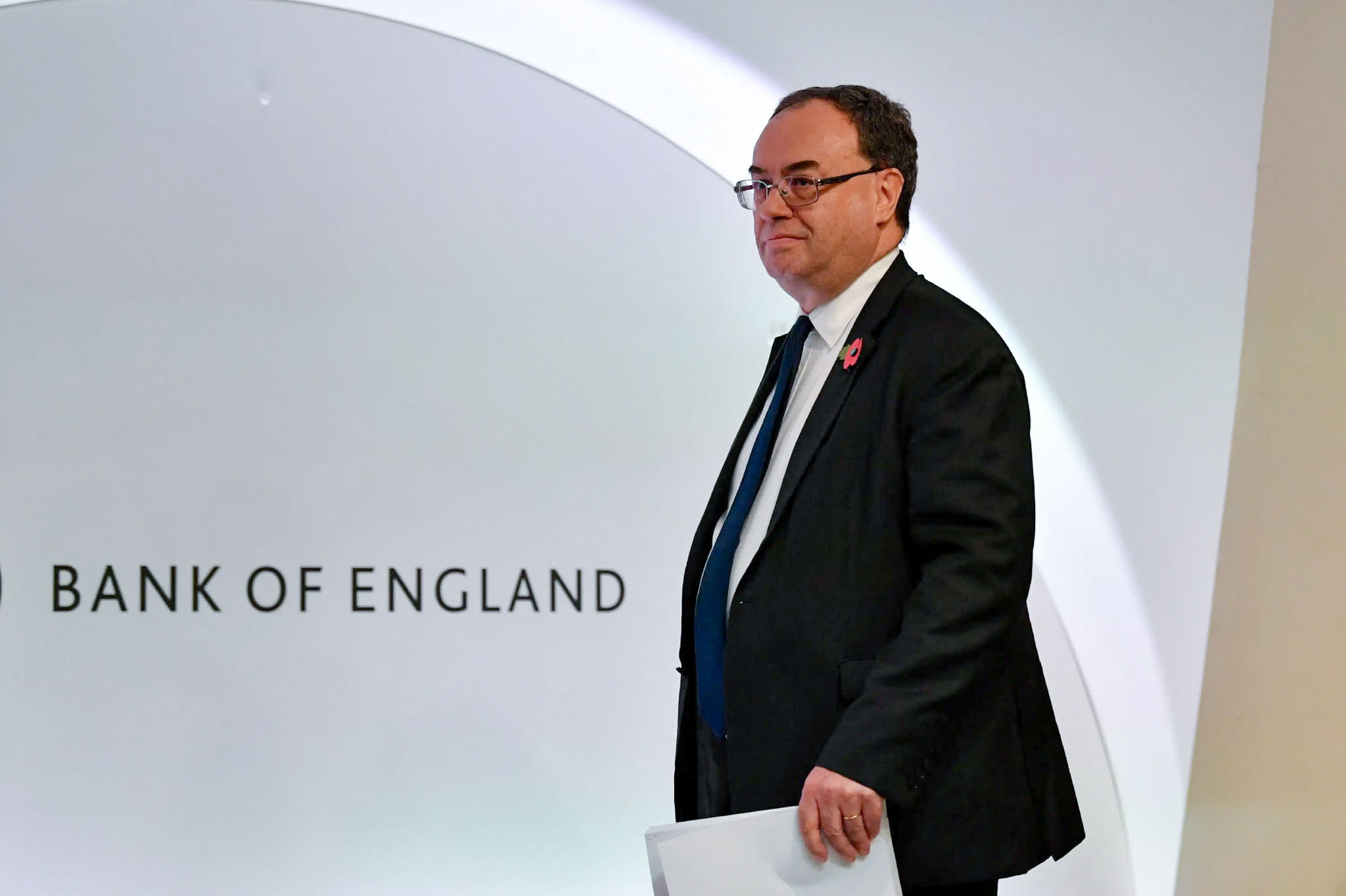 Governor of the Bank of England Andrew Bailey arrives to address the Monetary Policy Report press conference at the Bank of England in London on Nov. 4, 2021. (Justin Tallis/Pool via Reuters)
AI Footprint
Pushing countries to introduce controls, Bailey noted that AI’s footprint is evident across international financial markets, whether in rising interest rates or energy-driven inflation.
A chorus of AI hyperscalers—including Alphabet, Meta Platforms, Oracle, and SpaceX—has been issuing billions of dollars in corporate debt to help fund AI infrastructure investments. The Treasury Department is also competing with major tech companies for capital as the government expands its debt issuance.
In a sign that investors are demanding greater competition to hold long-dated bonds, the 30-year Treasury yield is hovering near its highest level since 2007. The benchmark 10-year Treasury yield is also at an 18-month high.
Technological disruptions could create a contagion event.
“Markets remain vulnerable to a potentially disorderly correction that could spread across borders,” Bailey said.
 An aerial view of a 49.5 megawatt three-level data center under construction in Vernon, Calif., on July 8, 2026. (Mario Tama/Getty Images)
Investors relying on leverage could bolster the odds of a financial crisis.
“As we have seen multiple times in the past, rising leverage is a feature of a maturing financial cycle,” he said.
Margin debt—the total amount of capital investors borrow from brokerage firms to purchase stocks—decelerated slightly in July from the previous month but remains close to an all-time high of $1.42 trillion.
These new technologies can present incredible economic opportunities, but they also “require continued vigilance and international cooperation,” Bailey said.
 Friends Read Free
Copy
Facebook
Tweet
Friends Read Free
Copy
Facebook
Tweet