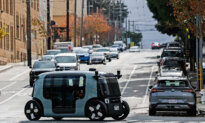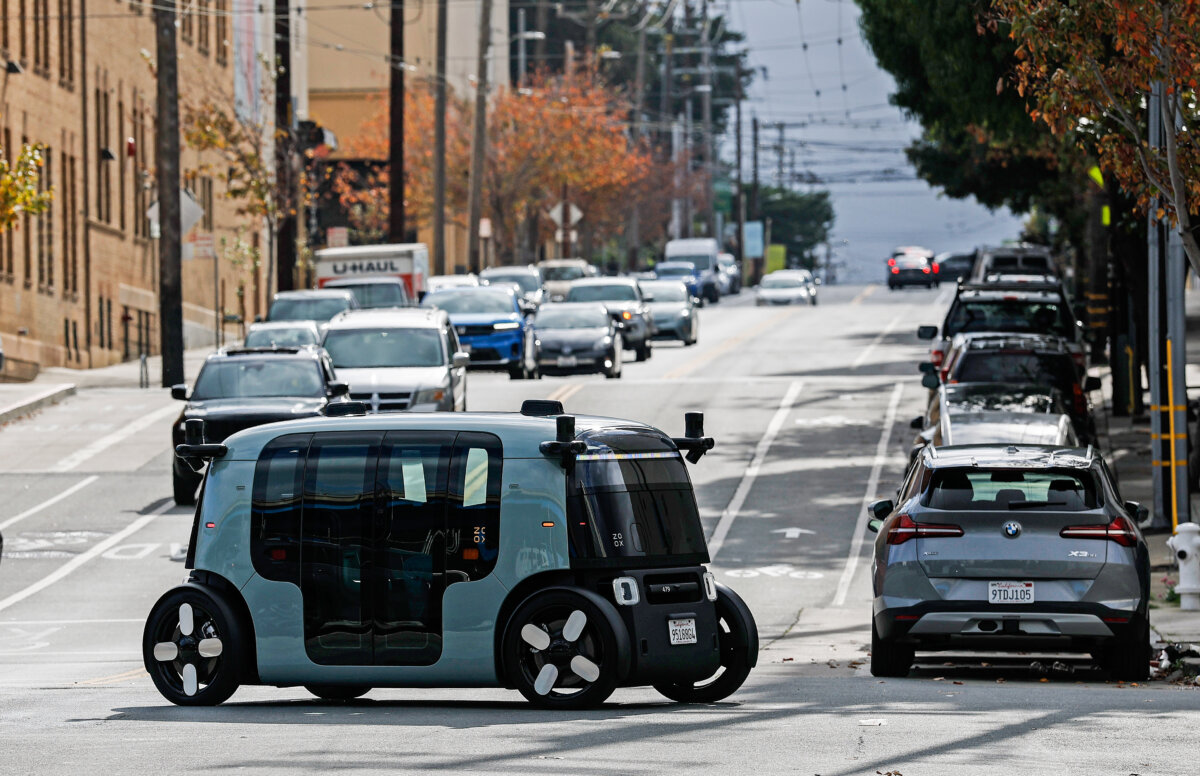

Amazon subsidiary Zoox on March 9 announced it was launching operations for its autonomous ride-sharing service in Phoenix, as well as expanding its robotaxi testing program to Dallas.
Zoox said it will also launch new depots in both cities, as well as a fusion center facility in Scottsdale, Arizona, that will handle a range of functions, including rider support and teleguidance to deliver real-time human oversight in complicated driving scenarios that the autonomous vehicles’ artificial intelligence may struggle with, such as construction zones or road closures.
Phoenix and Dallas are the ninth and 10th test markets for Zoox. Amazon in June 2020 acquired the autonomous driving startup that was founded in 2014 in a move intended to penetrate the self-driving vehicle market currently dominated by Waymo, a subsidiary of Mountain View, California-based Alphabet.
“Phoenix and Dallas are rapidly growing metropolitan areas with high demand for ride-hailing and first- and last-mile connections,” Zoox said.
“Expanding into these cities allows us to test in sprawling environments, differentiating this data from our testing in other dense metro areas like San Francisco.
“Expanding our testing fleet to Dallas and Phoenix reflects the strong momentum behind our business as we continue growing city by city,” the company said.
Zoox in May 2025 launched its robotaxi test program in Las Vegas, and later expanded to San Francisco. Zoox also has testing fleets deployed in Seattle, Miami, Atlanta, Los Angeles, the District of Columbia, and Austin, Texas. The company said its robotaxis have logged more than 1 million autonomous miles and have served more than 300,000 riders.
Zoox said it will be deploying retrofitted Toyota Highlander sport utility vehicles to both new markets to begin mapping city streets prior to initiating its autonomous driving test programs. Test fleet vehicles include safety drivers and have a distinct technology-laden roof module that compiles road geometry, traffic signals, and other data crucial for expanding its geofence (the area in which the vehicles can operate).
“These markets allow us to rigorously validate our technology’s resilience in diverse and challenging weather conditions,” Zoox said.
“In Phoenix, we have the opportunity to test our sensor and battery performance against extreme heat and dust on high-speed roads. Dallas provides a valuable testing ground to refine our AI against diverse weather and complex road networks.”
In August 2025, the National Highway Traffic Safety Administration (NHTSA) granted Zoox an exemption so it could test its driverless vehicles on public roadways. Zoox robotaxis feature carriage-style seating and don’t have any traditional driving controls, such as floor pedals or a steering wheel.
Zoox came under scrutiny in July 2022 by the NHTSA after self-certifying its “purpose-built” self-driving vehicles as compliant with all Federal Motor Vehicle Safety Standards (FMVSS). However, because the robotaxis don’t have any driving controls, the company required an exemption from certain of those standards, and had to remove any statements that the vehicles conform to all FMVSS, the NHTSA said.
 Friends Read Free
Copy
Facebook
Tweet
Friends Read Free
Copy
Facebook
Tweet