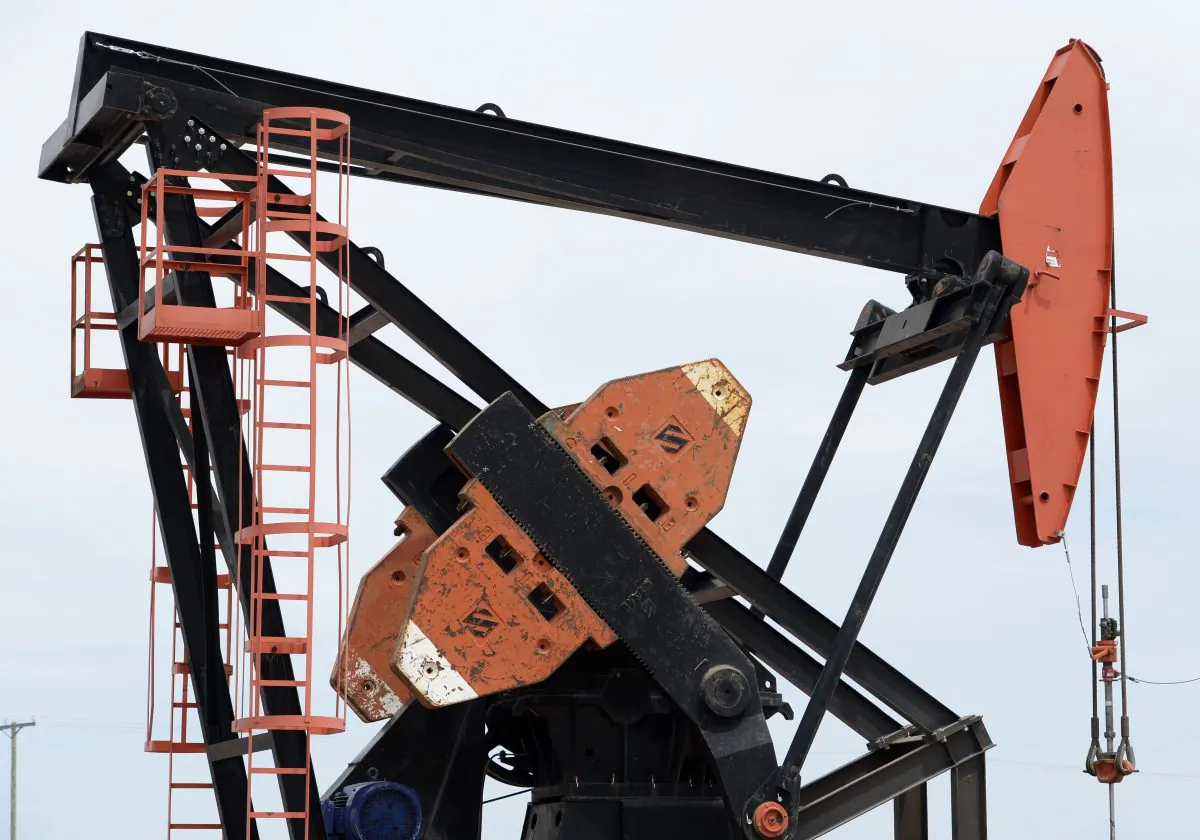

As Iran makes headlines for its attacks on oil shipments from Persian Gulf states, South America is quietly expanding its production of oil and gas, with longer-term prospects of supplanting a significant portion of oil from the Middle East.
The United States has already risen to become the leading producer of oil and gas, thanks in large part to the widespread implementation of fracking technology starting in the 1980s. But several South American nations, such as Brazil, Guyana, and Argentina, are steadily boosting their oil output in what analysts say could provide a welcome diversification for global energy markets.
“There is a strategic shift toward a more resilient Western Hemisphere energy bloc,” Steve Hanke, a Johns Hopkins University economist and adviser to countries recovering from centralized control, told The Epoch Times.
“The aim is not just domestic abundance but geopolitical leverage through tighter integration of production, refining, shipping, and supply chains across the U.S., Canada, Mexico, Brazil, and Guyana, with Venezuela as a possible supplementary source.”
However, Hanke said this is a longer-term prospect rather than a quick fix for the current constriction of supply from the Middle East.
“Infrastructure constraints, chronic underinvestment, and sanctions distortions mean the Americas can reduce vulnerability to Middle Eastern shocks, not eliminate it anytime soon,” he said.
Latin America Rising
Approximately 20 million barrels of oil are shipped daily through the Strait of Hormuz, the choke point between the Persian Gulf and the Gulf of Oman. Countries that ship oil through this passage include Saudi Arabia, Iran, Iraq, the United Arab Emirates, Kuwait, and Qatar, although Saudi Arabia and the UAE have constructed pipelines that can transport about 9 million barrels away from the strait.
By contrast, Hanke said, Latin America’s total oil output is projected to be at the level of 8.8 million barrels per day in 2026, a modest increase from 8.4 million barrels per day in 2025.
However, a March 11 report from Industrial Info Resources (IIR) states that South and Central American oil producers are “well-positioned to benefit from high prices and relative geopolitical stability compared to the Middle East.”
Brazil’s hydrocarbon output in January, for example, rose by more than 15 percent over the previous year with 574 oil and gas projects worth more than $42 billion in the works, the IIR report states. Its crude oil production is projected to average 4 million barrels per day in 2026, the U.S. Energy Information Administration (EIA) stated.
In addition, Argentina is developing a massive shale reservoir, known as Vaca Muerta, which contains the world’s second-largest reserves for shale gas and fourth-largest for shale oil. Argentina has also boosted its production of fossil fuels by more than 15 percent over the previous year while generating $11.77 billion in oil and petrochemical exports. Its oil output is projected to average more than 800,000 barrels per day in 2026, according to the EIA.
Another rising producer is Guyana, which increased its output tenfold between 2020 and 2025, reaching a level of 900,000 barrels per day in November 2025.
And there is also Venezuela, which holds the world’s largest known reserves of crude oil and, despite a dramatic decline under socialist rule from its peak production of 3 million barrels per day, still produces about 800,000 barrels per day, according to the Council on Foreign Relations.
“Venezuela remains a wild card,” Hanke said. “Despite vast reserves, its output gains will likely be modest—about 300,000 barrels per day—due to deep structural damage.”
Other regional oil and gas producers include Mexico, Colombia, Peru, and Ecuador.
The IIR reported that there are 1,908 oil and gas projects currently in the works throughout Latin America, with more than $120 billion invested. And unlike the Middle East, the geography of this region, together with multiple export locations on the Pacific and Atlantic coasts, means that it is much less vulnerable to “choke points” such as the Strait of Hormuz that can readily be shut down.
Hemispheric Self-Sufficiency
“The Western Hemisphere has the resources to be energy independent from the rest of the world,” Sam Romain, chairman of Americans for Energy Dominance, told The Epoch Times.
“The U.S., Canada, Brazil, Guyana, and potentially Argentina together represent an enormous base of production, and we are closer to hemispheric energy self-sufficiency than most people realize. But this has to start with leadership from the United States.”
American leadership would entail approving new pipelines, fast-tracking permits, building liquified natural gas export terminals, and other efforts underway or proposed by the Trump administration to ease the path for American producers to get product to market, Romain said.
However, analysts say, increasing production in Central and South America does not always benefit the United States.
Much of Latin America’s oil and gas output is currently going to Asia, and specifically to China. The IIR reported that China is currently the largest buyer of Brazilian crude, which makes up 8 percent of China’s oil imports. Guyana, which once exported primarily to the United States and Europe, is now shifting more of its output toward Asia, according to the EIA.
The United States is currently working to redirect some of that output back to Western markets. The most prominent example is the U.S. takeover of Venezuelan production in January, which analysts predict will reroute Venezuela’s exports from China to America’s Gulf Coast refineries.
And although Latin America provides diversification away from Middle Eastern oil, experts say the best strategic solution for U.S. energy independence lies with domestic production.
“We have spent decades sending American dollars to regimes that do not share our values and in many cases actively work against our interests,” Romain said.
“The answer to Middle East dependence is not to swap one set of foreign producers for another; it is to stop being dependent on any of them.
“The United States is sitting on more recoverable oil and natural gas than almost any country on earth. We have the technology, the workforce, and the infrastructure. What we have lacked, until recently, is the political will to let American energy producers do what they do best.”
Correction: A previous version of this article gave an incorrect name for Industrial Info Resources. The Epoch Times regrets the error.
 Friends Read Free
Copy
Facebook
Tweet
Friends Read Free
Copy
Facebook
Tweet