

Bitcoin prices declined about 4 percent on Nov. 21, briefly falling below $82,000, and continuing the broader cryptocurrency market rout.
After bitcoin reached a record high of $126,000 in early October, prices have declined approximately 30 percent since, wiping out 2025’s gains and touching levels not seen since April.
Year-to-date, bitcoin is down about 12 percent.
But bitcoin’s sharp selloff is also dragging down the wider crypto sector, erasing more than $1 trillion in market capitalization.
Ether, the second-largest crypto, is down nearly 20 percent this year, trading at around $2,700.
Smaller cryptocurrencies are also getting hammered, from payment tokens to meme coins.
As a result, market watchers are paying attention to a potential crypto winter forming, comparable to what happened in early 2022.
At the time, a combination of rising interest rates and exchange failures weighed on the crypto industry.
This time, the decline could stem from traditional supply-demand factors and tightening liquidity conditions in the global financial system, says Tom Essaye, president and co-founder of the Sevens Research Report.
Investors are likely liquidating positions to free up cash for other funding needs or to meet institutional risk‑management requirements, he noted.
“Trend followers are also likely to be selling into the recent bearish momentum, while long-term cryptocurrency investors and short-term speculators alike are undoubtedly beginning to feel some discomfort with Bitcoin down nearly 30 percent from all-time highs and notably trading comfortably below the psychological $100,000 level,” Essaye said in a note emailed to The Epoch Times.
Bitcoin may be in search of its next catalyst after pricing in the administration’s pro-crypto stance this past summer.
Ultimately, strategists at Fisher Investments say, its movements reaffirm that “bitcoin remains a speculative commodity, with demand largely dependent on feelings, or in Gen Z parlance, the vibes.”
“For bitcoin, as far as we can tell, the primary thesis to buy these days is the ‘greater fools’ theory, i.e., however much you pay, you will be able to find someone to buy it from you later at a higher price,” they wrote in a Nov. 20 note.
“A ‘greater fool’ than you, if you will. That is a pure guess on fickle human behavior, not something one can reliably forecast or predict, as the last month’s slide shows.”
Temporary Panic on the Street
Bitcoin’s downward trend over the past several weeks has followed intensifying pressure in the U.S. stock market.
This has led traders to potentially rotate out of the AI trade and into defensive positions, such as consumer staples, health care, and haven assets like gold and U.S. Treasury securities.
Pharmaceutical giant Eli Lilly reached a market value of $1 trillion, a first for the health care company.
Walmart shares soared more than 6 percent on Nov. 20 following a solid earnings report.
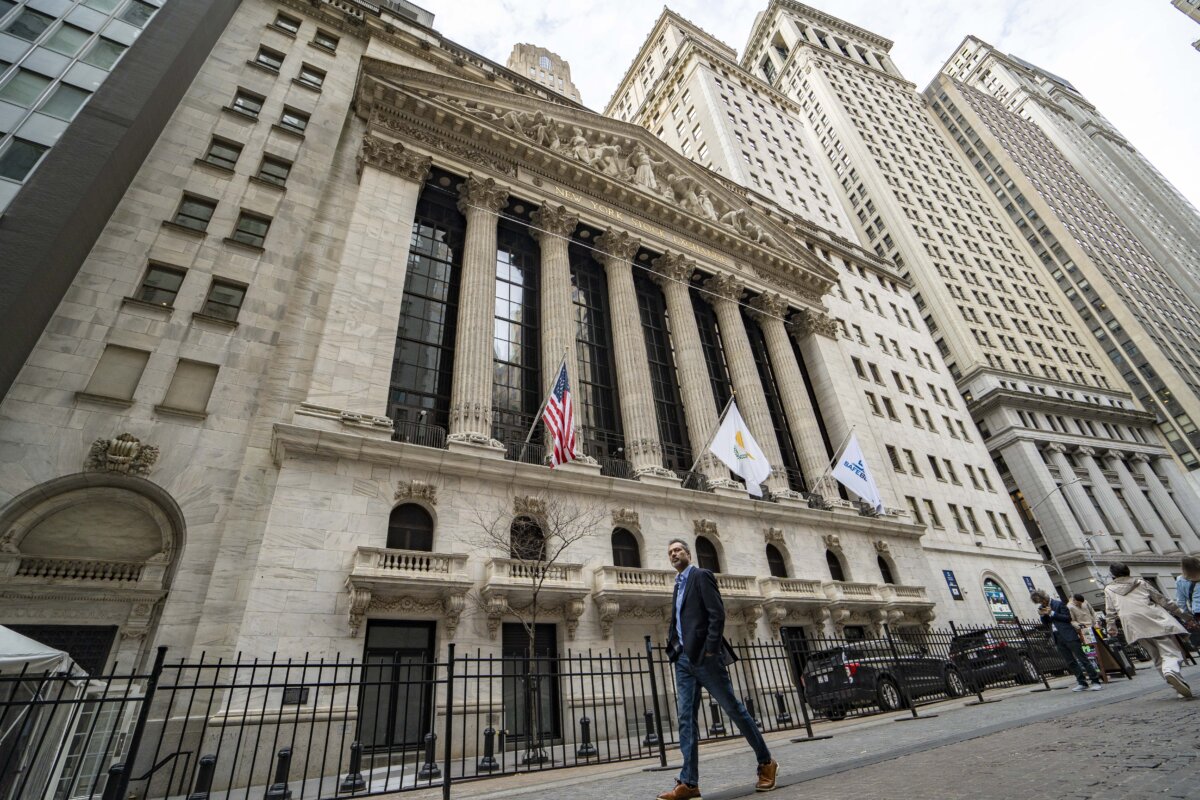
Wall Street was drowning in red ink on Nov. 20—and many analysts have provided different theories for what drove the decline.
One idea is that the odds of a Federal Reserve interest rate cut in December have tumbled.
After pricing in a 66 percent chance of a quarter-point rate cut last week, expectations dropped to 49 percent.
However, according to the CME FedWatch Tool, traders are now fully penciling in a 70 percent chance of a 25-basis-point reduction to the benchmark federal funds rate.
Despite government economic data now flowing again, monetary policymakers remain in a blackout.
Employment and inflation figures for November will be released after the Federal Open Market Committee’s Dec. 9 and Dec. 10 meeting.
The Department of Labor also confirmed that the consumer price index and jobs reports for October will be canceled.
Still, a day later, U.S. stocks are attempting to bounce back heading into the weekend.
The blue-chip Dow Jones Industrial Average climbed 1 percent, while the tech-driven Nasdaq Composite Index increased by 0.5 percent.
The broader S&P 500 edged up 0.7 percent.
“Despite broad optimism, risk assets like Bitcoin remain soft and range-bound, reflecting persistent caution around the global job market and trade uncertainty,” Joe Tigay, portfolio manager of the Rational Equity Armor Fund, said in a note emailed to The Epoch Times.
“With equity valuations elevated, maintaining a balanced position—long stocks but also long volatility—remains a key strategy.”
 Friends Read Free
Copy
Facebook
Tweet
Friends Read Free
Copy
Facebook
Tweet