Client withdrawals surged at Blackstone’s flagship private credit fund in the first quarter, adding to growing caution among investors in the private credit space.
The New York private‑investments giant reported that clients pulled $3.7 billion from its $82 billion BCRED fund in the January–March quarter, according to a March 2 filing with the Securities and Exchange Commission.
Redemption requests totaled nearly 8 percent of the fund, pushing Blackstone to increase its withdrawal cap to 7 percent from its typical 5 percent. The company and its team also deposited $400 million into the fund to ensure all redemptions were honored.
But Blackstone dismissed liquidity fears.
“This approach was driven by the tender offer structure, not by any constraints on BCRED’s liquidity,” the company said in the filing.
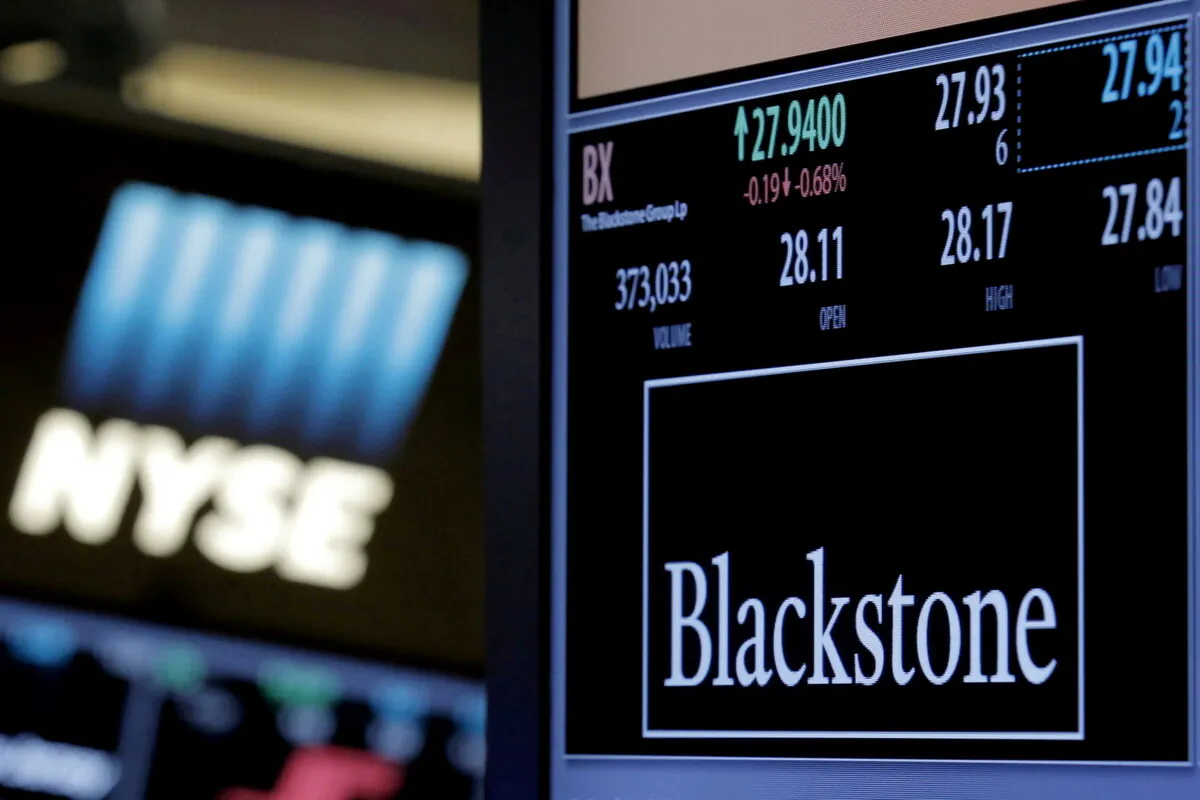
Shares of Blackstone fell about 8 percent during the March 3 trading session, joining the broader market selloff.
Jon Gray, president of Blackstone, attributed the drawdown to “noise” in the financial markets.
“We’ve had a ton of noise,” Gray told CNBC on March 3. “As you guys know better than anybody in the press, this has become a story.”
“There’s a constant spin cycle, and so when that’s happening, it’s not a surprise that investors can get nervous,” he continued. “Financial advisers can say, ‘Hey, I want to redeem.’”
The $2 trillion private credit market has been rattled in recent weeks amid a barrage of concerns ranging from sector-specific shocks to shrinking liquidity volumes.
“Private credit is entering a new phase. Not because returns are disappearing, but because liquidity, timing and capital control matter more than ever,” BNP Paribas strategists said in a March 2 research note.
Blue Owl Capital, a New York-based investment firm, restricted investor withdrawals from its debut private retail fund last month.
It sold $1.4 billion of assets in its loan portfolio across three of its private debt funds. Thirteen percent of the loans were centered on software and internet businesses.
The asset manager plans to use the proceeds to pay down debt and return capital to shareholders of OBDC II fund—the company’s inaugural semi‑liquid private credit vehicle for U.S. retail investors. As a result, Blue Owl suspended its quarterly payments to investors.
The stock has plunged 18 percent over the past month.
Other companies in the industry tanked on March 3, including Apollo Global Management (negative 6 percent), Ares Management (negative 5 percent), and KKR & Co. (negative 5 percent).
‘Software Scare’
Fears of a wider structural problem are warranted, says Tom Essaye, president and co-founder of the Sevens Research Report.
The sector has experienced substantial growth over the past decade as financial institutions limited their exposure to non-traditional lending and the Federal Reserve lowered interest rates to historically low levels. Private credit firms stepped in to provide loans at high interest rates, offering investors fixed-income returns.
Lending by private credit firms in emerging markets has also ballooned, reaching record levels in 2025.
While this corner of the lending market has typically been reserved for affluent investors, more companies began offering this product to retail investors in the past few years.
“This influx of capital had to find a home to produce a return (hard to justify private credit management fees with money sitting in cash) and that’s spurred fears that private credit has made shaky investments simply to generate returns for investors,” Essaye said in a note emailed to The Epoch Times.
Software was among the primary beneficiaries of the explosive growth in the private credit market.
But the “software scare”—the dramatic decline in software companies amid the acceleration of artificial intelligence (AI) and its threat to business models—could be building and exacerbating investor anxiety.
Because a sizable share of private credit’s exposure is linked to software, private credit could be one of the biggest victims of AI disruption.
UBS estimated last week that private credit defaults could surge by as much as 15 percent.
“As those fears get repriced, investors are reassessing assets and applying greater scrutiny to their underlying exposures,” Christian Hoffmann, head of fixed income at Thornburg Investment Management, said in a note emailed to The Epoch Times.
While it is not a doom-and-gloom baseline scenario, “it’s a classic situation where there can be a good business paired with a bad balance sheet,” he said.
“It’s not clear that things have fundamentally changed, but there’s an idea that there’s a technology risk that may not have been fully priced in or contemplated as recently as three, six, or twelve months ago,” Hoffmann added.
This past fall, JPMorgan Chase CEO Jamie Dimon warned of more “cockroaches” emerging in the aftermath of the failures of subprime auto lender Tricolor and auto parts supplier First Brands.
Tricolor filed for Chapter 7 bankruptcy in September 2025. Two weeks later, First Brands filed for Chapter 11. The two events cast a spotlight on fragilities in non-bank lending.
“My antenna goes up when things like that happen,” Dimon told analysts during an October conference call. “I probably shouldn’t say this but when you see one cockroach, there’s probably more. And so everyone should be forewarned at this point.”
The White House has taken notice, but it is not worried.
“If there’s a problem, it won’t be passed on to individual investors,” Treasury Secretary Scott Bessent said at an event hosted by the Economic Club of Dallas on Feb. 20.
Panos Mourdoukoutas contributed to this report.
 Friends Read Free
Copy
Facebook
Tweet
Friends Read Free
Copy
Facebook
Tweet