President Donald Trump has prioritized the development of reactor technologies by accelerating momentum established under 2024’s ADVANCE Act with four May 2025 executive orders that shorten licensing timelines, trim regulations, and streamline reviews in a drive to quadruple the nation’s nuclear energy capacity by 2050.
But the reality of safely achieving that goal was questioned during an April 22 House hearing on the Trump administration’s Nuclear Regulatory Commission (NRC) spending request, which clips allocations by 8 percent and staffing by 7 percent while pushing full-throttle to meet the president’s aim to license 10 new reactors by 2030, including three by July 4, 2026.
The administration’s $892.3 million fiscal year 2027 proposed budget is $79 million less than this year’s outlay. Its largest component—$460.7 million for reactor research and testing—is 8.3 percent below 2026 enacted allocations, and its $132.4 million for nuclear materials and waste safety is 6.4 percent lower than last year’s amount.
Democrats and two of the commission’s five members—all of whom testified before the House Energy and Commerce Committee’s Energy Subcommittee during a nearly four-hour hearing—said the agency is undermanned, its reviews are rushed, and Trump’s executive order 14300, which mandates that all nuclear energy rulemaking be conducted by a newly created White House office, is raising transparency concerns and safety fears.
Republicans and NRC Chair Ho Nieh, chosen by Trump to lead the commission in January, countered that efficiencies gained through deregulation, “one-step” permitting, and industry incentives are reducing costs and driving innovation.
“NRC’s regulatory process is not going to be an impediment for deployment of nuclear technologies,” he testified. “Regulatory uncertainty is capital risk—and capital will go elsewhere if risk is too high. The NRC is making major structural changes to how we oversee and license nuclear facilities.”
Nieh, who worked at the commission for more than 20 years before leaving in 2021, outlined three priorities “to meet this moment: first, core mission–delivery with safety, efficiency, and speed; second, leadership and operational excellence; third, sustainable performance through a culture of continuous improvement.”
Douglas Weaver, the newest commissioner, appointed in December 2025, in his testimony also laid out three priorities: modernization of the regulatory framework, “risk-informed and performance-based decision-making, and accountability and transparency to the American public.”
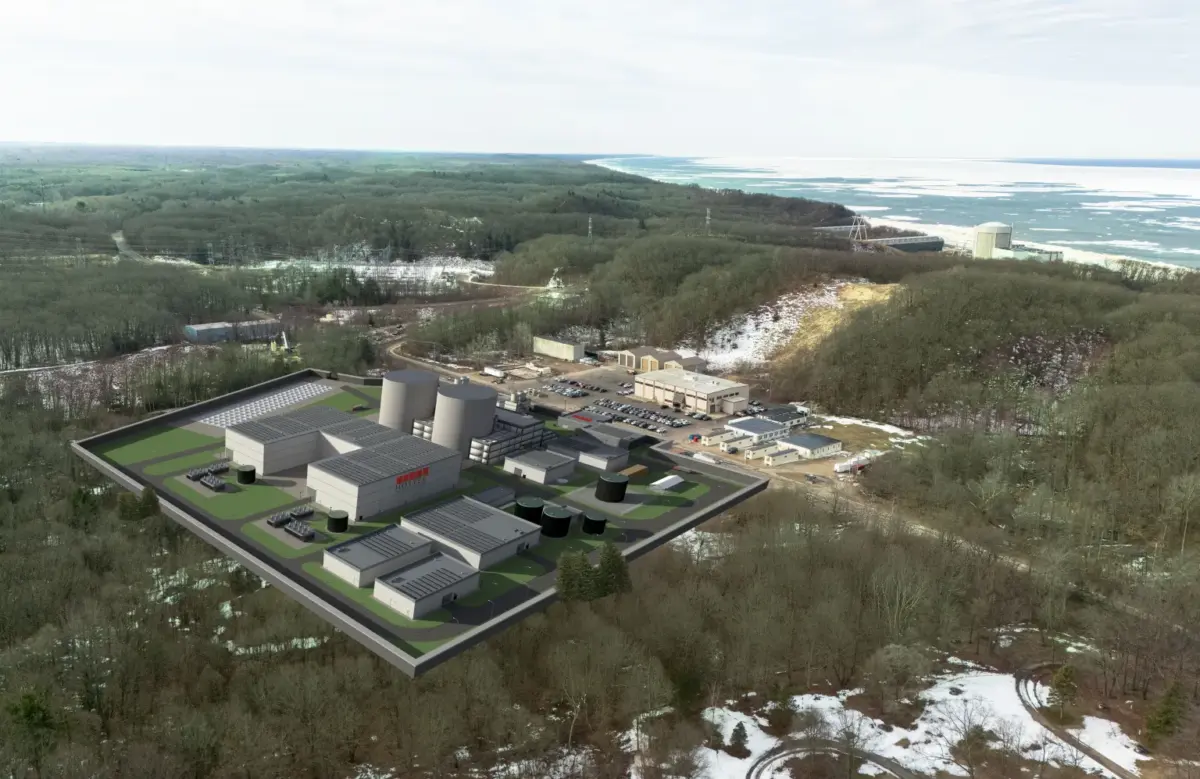
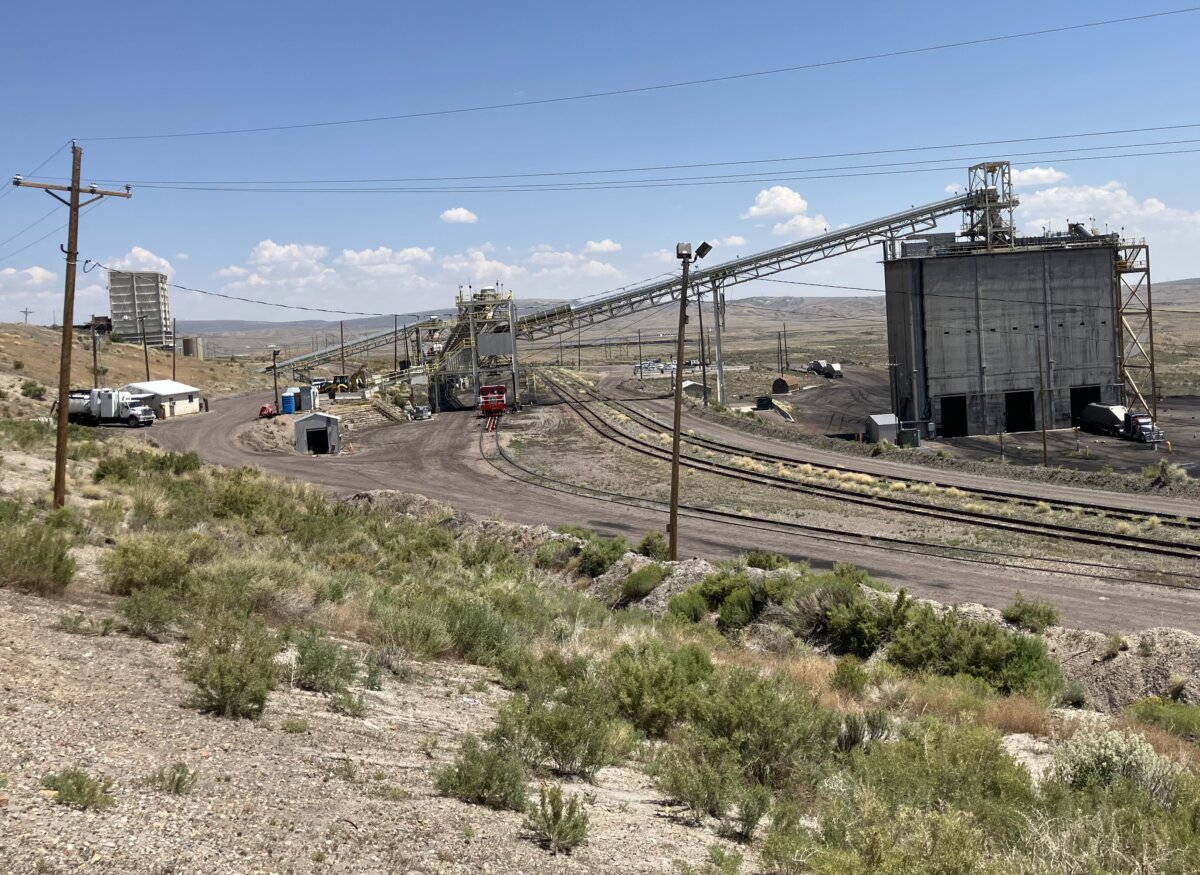
He praised commission achievements under the Trump administration, including the swift relicensing of the Palisades nuclear power plant in Michigan, the accelerated review of the Crane Clean Energy Center in Pennsylvania, and the greenlighting of TerraPower’s Natrium reactor in Wyoming.
‘One-Step Licensing’
Commissioners said the March implementation of its Part 53 rule—the first major update to reactor licensing standards since 1989—is among the reasons they can do more faster with less money and staff.
“Our regulations were built decades ago when we didn’t know as much as we know today,” Nieh said. “So we are fundamentally looking at our regulatory licensing frameworks to deliver credible safety decisions and working smarter, not harder.”
“In the past, rulemaking has often been overly burdensome and lengthy,” Commissioner Matthew Marzano testified. “Multi-year rulemakings with extensive layers of internal review can create uncertainty, consume resources, and delay benefits without proportionate gains in safety.”
Rep. Rick Allen (R-Ga.) said the revisions, Trump’s executive orders, and ADVANCE Act initiatives are making “the promise of one-step licensing” a reality for reactor designs already vetted, approved, and in operation.
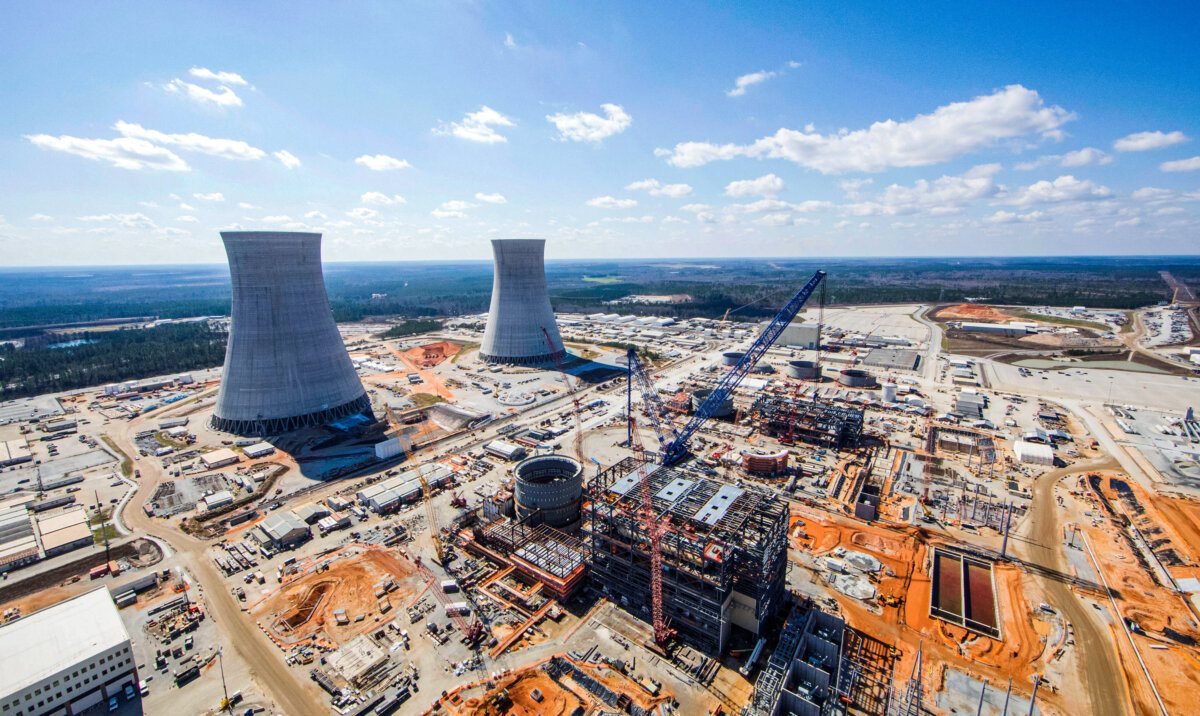
For instance, he said, Southern Nuclear Operating Company’s Vogtle 3 and 4 plants—the only two nuclear plants built in the United States since 1990—feature Westinghouse AP 1000 reactors, similar to many of the 94 reactors operated by 21 power companies at 54 sites across 28 states that produce nearly 20 percent of the nation’s electricity.
Westinghouse has updated AP 1000 designs based on Vogtle 4, Allen said, so under the new regulatory regime, those seeking to build a Westinghouse reactor should see savings in swifter reviews and build-outs.
“NRC learned a lot from the Vogtle 3 and 4 experience,” Nieh said.
“Many of those lessons are being brought into broader rulemaking activities we are pursuing.”
“We’re not looking at things we haven’t seen before, so an applicant can expect significant improvements to the timeliness of a licensing decision,” he said.
Marzano cautioned: “But I would also emphasize, modernization must be approached with care and discipline. Moving too quickly, or without sufficient technical grounding, risks undermining the very goals we are trying to achieve.”
New Faces in New Places
Reps. Kathy Castor (D-Fla.) and Frank Pallone (D-N.J.) said Trump’s executive order 14300 has made the independent commission into a “rubber stamp,” and the administration is rushing critical safety reviews, undermining bipartisan support.
Since January 2025, more than “500 professional staffers have left with only 65 arrivals, about a 15 percent decrease” in workforce, including 40 percent in reactor oversight, Castor said.
“NRC has lost 400 professionals, particularly in offices handling safety. That’s concerning,” she said.
Commissioner Bradley Crowell testified that the staffing shortfall keeps him “awake at night.”
“The agency is being directed to do more with less despite a growing workload and aggressive new timeframes for licensing and oversight,” he said. “This is an unsustainable dynamic.”
The commission has “recently filled out many spots,” he said, but he also said: “We now have many new faces in new places, many of whom are assuming new roles as first-time senior leaders and agency executives.”
Crowell and Marzano said they do not fear retribution for questioning policy, and both noted a president can rescind an appointment at will, but they said they were uncertain what would happen should commissioners or staff raise objections to a project the White House supports.
Pallone said his concerns are rooted in the Department of Energy, not the commission, praising Nieh and his staff as “a model for transparency” in ensuring panelists “are thoroughly briefed on the many changes … to NRC rules to license nuclear reactors more efficiently, more effectively.”
Nieh acknowledged that 2025 was “a very difficult year in some ways.”
But he said, “[The commission is] implementing a human capital strategy to ensure we’re recruiting and retaining key skill sets we need to deliver safety and our mission effectively.”
The commission has roughly 120 fewer people than it has requested in its fiscal year 2027 budget, he said.
“We feel very confident we can fill those vacancies,” Nieh said.
Correction: A previous version of this article misspelled the name of NRC Commissioner Matthew Marzano. The Epoch Times regrets the error.
 Friends Read Free
Copy
Facebook
Tweet
Friends Read Free
Copy
Facebook
Tweet