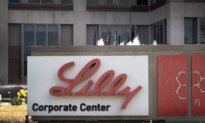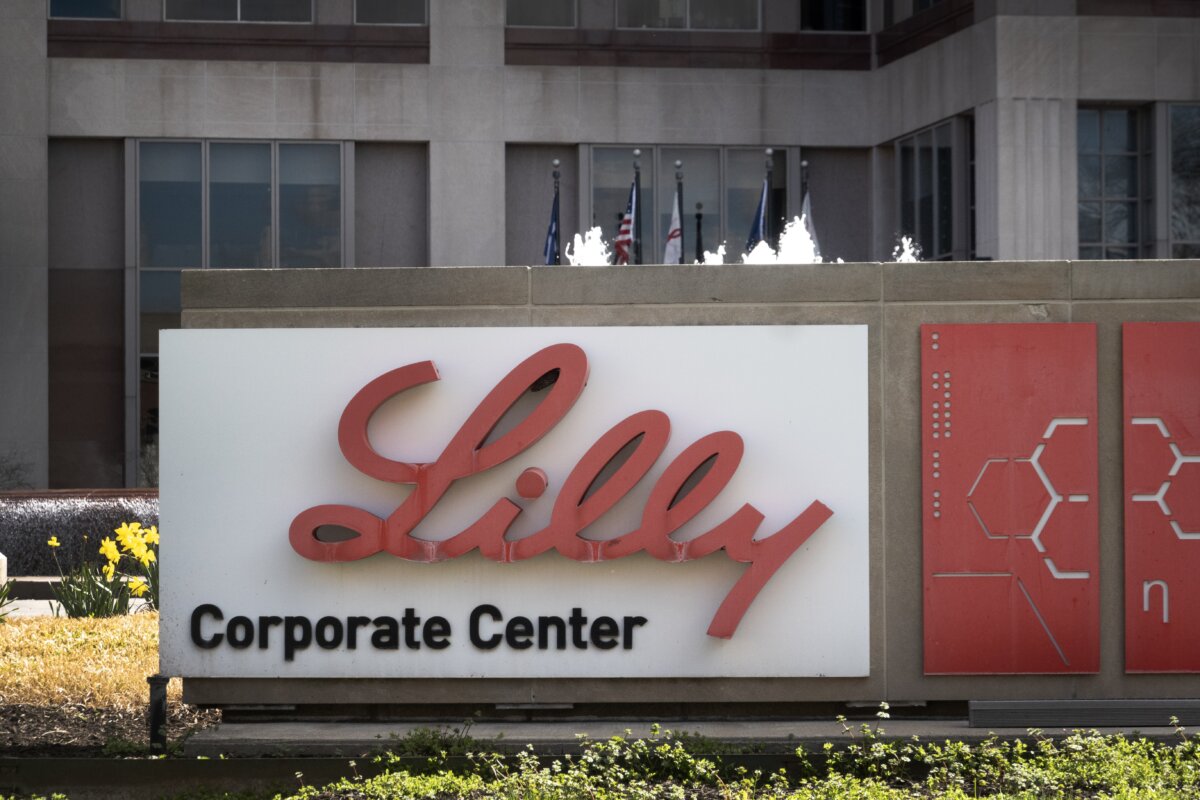

Pharmaceutical giant Eli Lilly and Company on May 6 announced it would invest an additional $4.5 billion in its manufacturing sites in Lebanon, Indiana.
Indianapolis, Indiana-based Lilly said in a statement that its evolving drug pipeline and increasing demand for existing medicines spurred the additional capital commitment. Its newest facility, Lilly Lebanon Advanced Therapies, opened on the same day and will support clinical and commercial production of advanced therapies targeting genetic diseases, from initial research to commercial production.
Lebanon Advanced Therapies is the first of three new facilities at the Lebanon complex, which also includes Lilly Lebanon API (active pharmaceutical ingredient) and Lilly Medicine Foundry.
In May 2024, Lilly said it would commit $9 billion to its Lebanon manufacturing site to boost production of popular injectable weight-loss drugs Zepbound and Mounjaro. The expansion is also earmarked to increase production of Lilly’s new oral weight-loss pill, Foundayo.
Since 2020, Lilly has committed more than $21 billion in capital to expand manufacturing capacity at its Lebanon complex, which includes the 600-acre Lilly Lebanon Project campus spread across two manufacturing sites.
“With this investment in Lebanon and across the state, Indiana is reinforcing its position as a prime destination for life sciences and advanced manufacturing, spanning innovation, production and global distribution,” Indiana Gov. Mike Braun said in a statement, referring to the latest investment.
Fluor Corporation is overseeing construction on the initial phase on the northeast portion of the site, which is slated for 10 buildings to house administrative offices, lab space, and pharmaceutical manufacturing. The Lebanon API facility is expected to come online in 2027.
“When our Lebanon API site opens in 2027, it will be the largest API production site in U.S. history, a commitment we chose to build here, at home,” Lilly CEO David A. Ricks said.
Lilly’s investments in the state of Indiana are part of a larger $50 billion in domestic investments. In September 2025, Lilly announced a $5 billion investment to build a new manufacturing facility in Goochland County, Virginia. The facility will produce ingredients for targeted cancer treatments and autoimmune diseases.
Lilly is just one of many drugmakers scrambling to bolster U.S. production capacity following President Donald Trump’s push to onshore production of medicines and lower costs for prescription drugs.
On April 2, the White House announced it would impose 100 percent tariffs on patented pharmaceutical products and ingredients imported into the United States. The tariffs are scheduled to kick in for large drugmakers in 120 days, while smaller companies have 180 days.
The proposed tariffs can be reduced to between zero and 20 percent through Jan. 20, 2029, for countries that enter into trade agreements with the Department of Health and Human Services and the Department of Commerce, the White House stated.
In September 2025, Pfizer announced a deal with the Trump administration to slash prices on many of its most popular drugs, as well as $70 billion in spending for domestic capital projects and research.
AstraZeneca in July 2025 said it would commit $50 billion in U.S. investments by 2030. Johnson & Johnson in March 2025 said it would earmark more than $55 billion in U.S. investments over the next four years.
 Friends Read Free
Copy
Facebook
Tweet
Friends Read Free
Copy
Facebook
Tweet