
The Federal Reserve’s preferred inflation measure will be released this week and could either support further interest rate hikes or suggest the Fed made a policy error.
On Sept. 30, the Bureau of Economic Analysis will publish August’s Personal Consumption Expenditures (PCE) Price Index.
Monetary policymakers place more weight on PCE than the Consumer Price Index (CPI) because it is broader and updates more frequently, better aligning with economic conditions.
Despite hinting in prior months that the Fed could alter its inflation targets, Chairman Kevin Warsh highlighted to reporters that PCE remains the central bank’s focus.
In its widely watched Inflation Nowcasting Model, the Cleveland Fed estimates the annual headline PCE inflation rate will come in at 3.8 percent, up from 3.7 percent in July.
The 12-month core inflation rate, which strips out the volatile energy and food categories, is projected to edge higher to 3.4 percent, from 3.3 percent.
Energy-related components will be higher as the war in Iran continues to upend global oil and gas markets.
Instead, investors may focus on any signs that second- or third-order effects of higher oil and fuel prices are filtering through the broader economy.
“A core increase of roughly 0.2 percent would be manageable, while 0.3 percent or higher on top of sticky housing and service prices would strengthen the case for another rate hike following September’s quarter-point increase,” Jay Woods, chief market strategist at Freedom Capital Markets, said in a note emailed to The Epoch Times.
Truflation, a popular private-sector inflation tracker that uses a treasure trove of components, anticipates PCE will be sticky, coming in at 3.3 percent.
Looking ahead, September PCE inflation has a “modest upside inflation risk.”
“Inflation remains elevated, but it is not yet clearly broadening into generalized demand-driven inflation. Energy and tariffs remain the principal upside risks, while cooling core and trimmed mean inflation suggest underlying price pressure is beginning to moderate,” Truflation said in a report shared with The Epoch Times.
For now, investors are betting the Fed will follow through with another quarter-point rate hike at next month’s policy meeting, according to CME FedWatch futures market data.
But the potential wild card in the upcoming PCE inflation data could be methodology.
PCE Changes Coming
The bureau is rolling out a methodology update to both the PCE and the core PCE price index, effective from Sept. 30. It will also be retroactive to the first quarter of 2021.
The goal is to better capture real pricing trends in sectors where the previous method was causing distortions.
Additionally, officials plan to rely on data not available for earlier readings, including federal government budget numbers, IRS income data, and the Census Bureau Annual Integrated Economic Survey figures.
These adjustments will affect various categories, including computer software and accessories, legal services, and portfolio management and investment advice services.
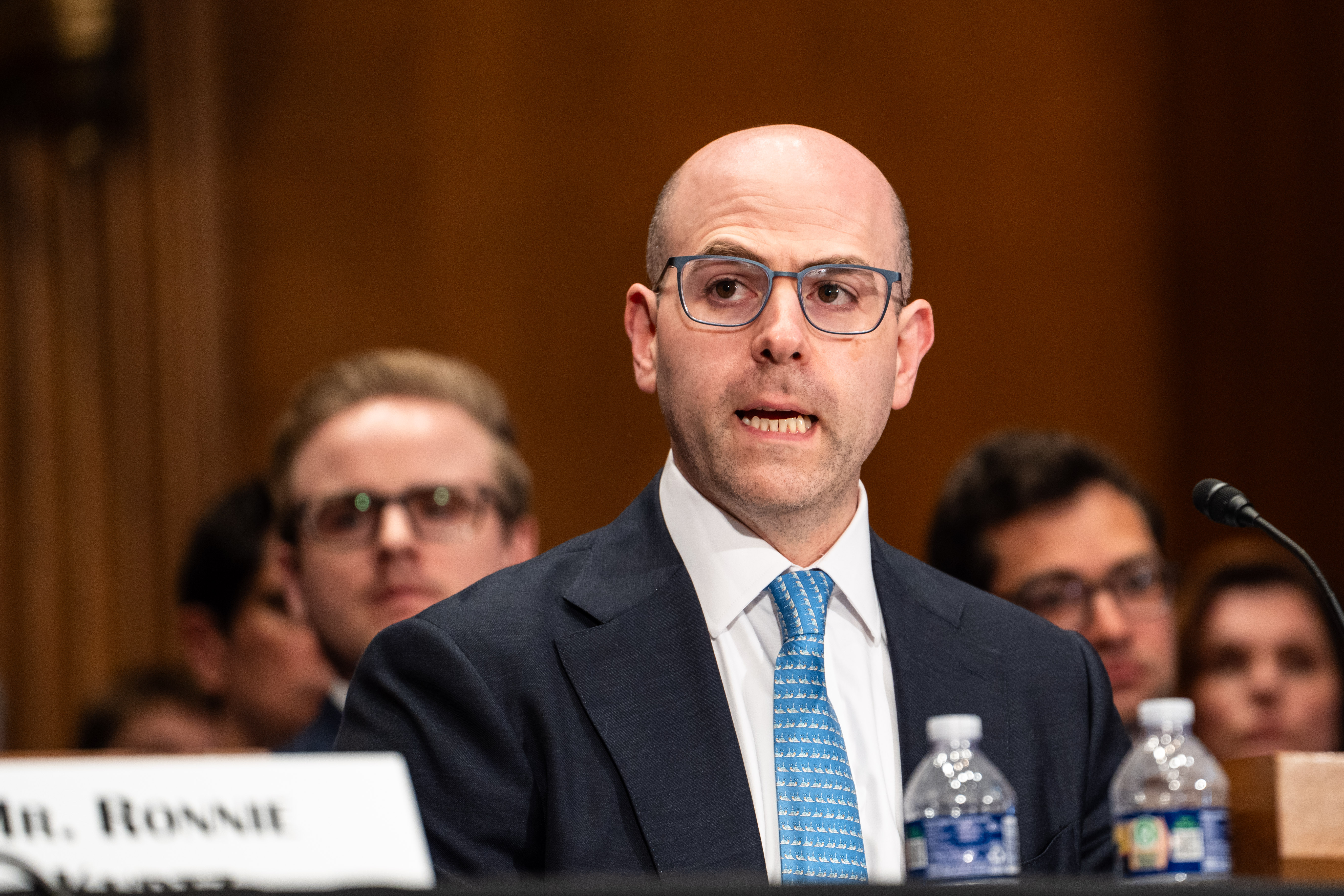 Stephen Miran, nominee for the Federal Reserve Board of Governors, testifies before the Committee on Banking, Housing, and Urban Affairs on Capitol Hill in Washington on Sept. 4, 2025. (Madalina Kilroy/The Epoch Times)
“Going forward, if the rapid growth of the ‘Computer Software and Accessories’ CPI index proves to be persistent, the potential sources of bias explored in this note may become even more relevant to policymakers and statistical agencies,” they wrote.
Estimates vary, but economists forecast the methodological adjustment could reduce annual core PCE inflation by as much as 40 basis points. This would slow the year-over-year core PCE inflation rate to as low as 2.9 percent.
At the same time, a lower point should not be interpreted as a “sign of disinflation ahead,” RBC Economics economists said in a Sept. 24 research note.
But Tom Lee, managing partner and head of research at Fundstrat Global Advisors, argued that a lower inflation reading could force the central bank to “walk back some of that hawkishness” that occurred this month.
“If inflation starts to decline, this is not because of the Fed hikes that happened last week. It’s because of the policy that’s already in place,” Lee said in a Sept. 25 interview with CNBC.
The Fed unanimously raised the benchmark federal funds rate by 25 basis points for the first time in more than three years at the Sept. 15 to Sept. 16 meeting.
 Friends Read Free
Copy
Facebook
Tweet
Friends Read Free
Copy
Facebook
Tweet