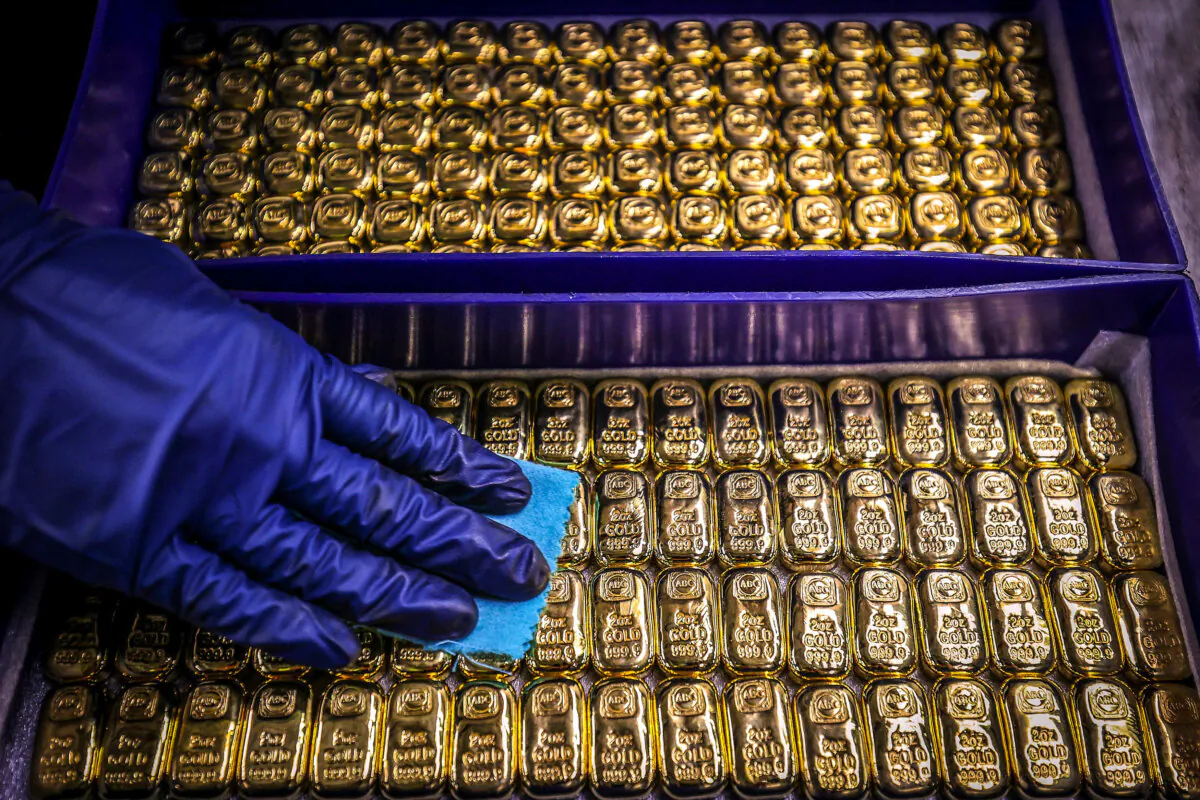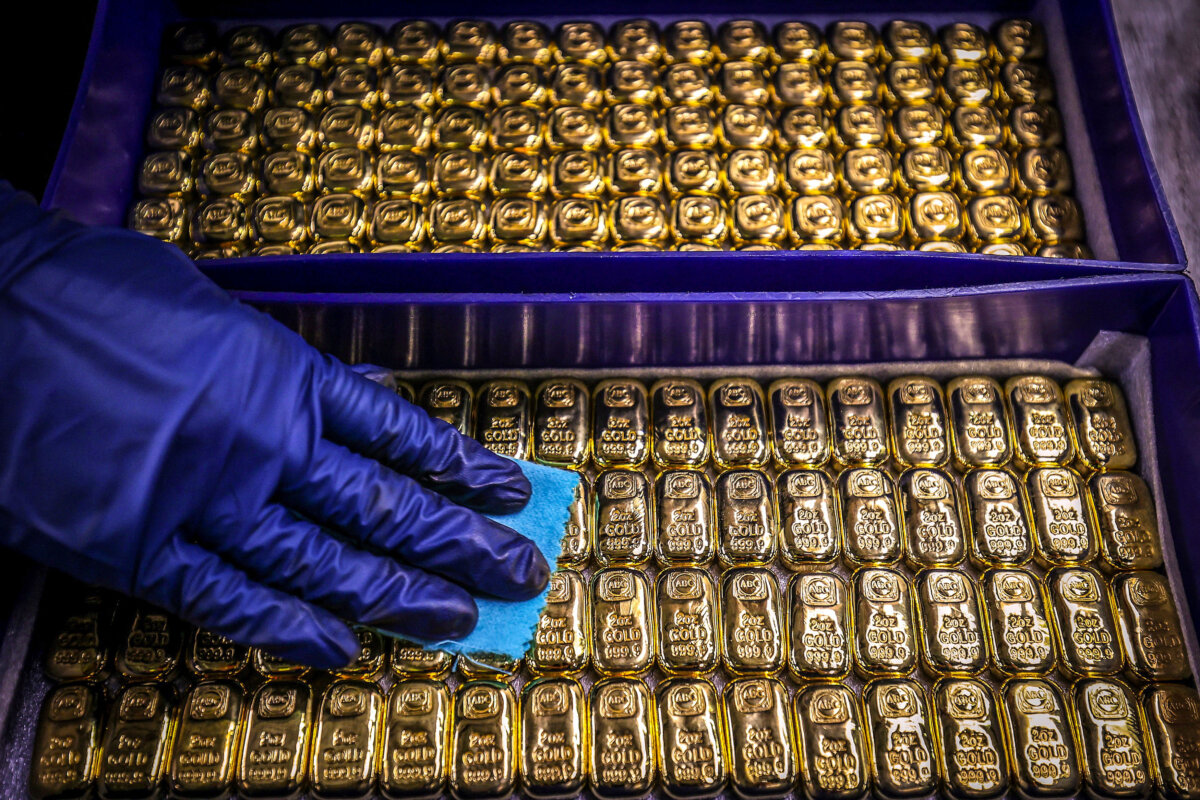

Gold prices reached $4,000 for the first time on Oct. 7 as investors navigated economic and geopolitical turbulence, seeking shelter in the safe-haven asset.
Gold futures surged to an intraday record high of $4,014.60 per ounce on the COMEX division of the New York Mercantile Exchange. The yellow metal has soared almost 52 percent this year.
Silver, the sister commodity to gold, reversed its meteoric ascent and slipped nearly 2 percent to below $48 an ounce. Still, prices for the white metal have advanced about 62 percent this year.
A broad array of factors has influenced the metals market in 2025, including a weaker U.S. dollar and expectations of lower interest rates.
The U.S. Dollar Index (DXY), a measure of the greenback against a weighted basket of currencies, has declined more than 9 percent year-to-date. A weaker buck makes it cheaper for foreign investors to purchase dollar-denominated commodities.
The Federal Reserve restarted its easing cycle last month, implementing a quarter-point reduction to the central bank’s key policy rate. While policymakers have signaled a more conservative outlook, officials still plan to cut interest rates two more times this year and follow through on another cut in 2026.
Unlike the last time the Fed started cutting interest rates in September 2024, yields on U.S. Treasury securities have yet to diverge. The 10-year Treasury yield has fallen from its 2025 high of 4.803 percent, dropping below 4.12 percent on Oct. 7. Lower rates erode the opportunity cost of holding non-yielding bullion.
But the metal’s historic run is more than just a technical fundamental, suggests one market expert.
“General worries about the economy, developed economies’ fiscal situations, inflation, and most recently the government shutdown news have all been bullish influences on gold,” Tom Essaye, co-founder and president of the Sevens Research Report, said in an email to The Epoch Times.
While previous government shutdowns have not significantly impacted the U.S. economy, the longer it lasts, it could make a dent in growth prospects.
National Economic Council Director Kevin Hassett, in an interview with CNBC’s “Squawk Box” on Oct. 6, cited an internal White House memo projecting that a government shutdown could cost the economy approximately $15 billion a week.
“And so if the shutdown continues for a long time, then there are going to be a lot of things that don’t happen, and it will show up in the GDP number,” he said.
The Atlanta Federal Reserve’s widely watched GDPNow Model—a running estimate of economic growth—suggests that the GDP growth rate will be 3.8 percent in the third quarter, mirroring the expansion seen in the second quarter.
The global fiscal situation, meanwhile, remains lackluster.
The International Monetary Fund (IMF) released its Fiscal Monitor Report on Oct. 7, citing anemic worldwide growth and elevated public debt.
“Global growth remains lackluster, and public debt is high and rising, with increasing defense spending, aging populations, and higher interest rates putting additional strain on public finances,” IMF economists said in the report. “Governments should take decisive action to strengthen economic growth and rationalize public spending to improve living standards and alleviate fiscal pressures.”
While fiscal and monetary policymakers grapple with enormous red ink and debt-servicing costs, central banks are also adding to their gold inventories.
New World Gold Council data show that central banks added a net 15 tons to international gold reserves in August.
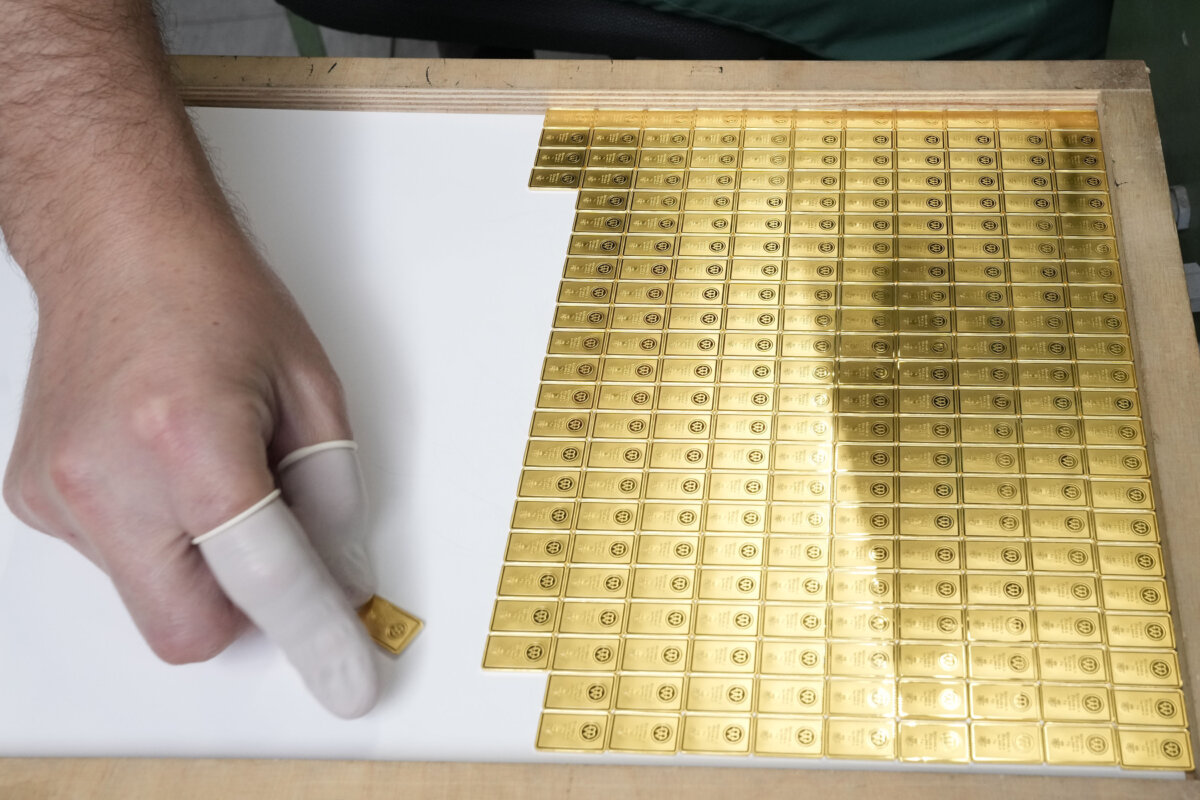
Additionally, a July study by the European Central Bank concluded that global holdings of gold by central banks stand at 36,000 tons—slightly below the all-time high of 38,000 tons in 1965.
According to Tavi Costa, macro strategist at Crescat Capital, foreign central banks hold more gold than U.S. Treasury securities as a percentage of foreign reserves—the first time since 1996.
“If you think this buying streak is ending, just look at what happened in the 1970s,” Costa said on X in August. “This is likely the beginning of one of the most significant global rebalancings we’ve experienced in recent history, in my view.”
Catching the Bullion Bull Run
With prices soaring to all-time highs, notable gold bugs have championed the importance of including the yellow metal in investment portfolios.
Speaking at the Greenwich Economic Forum in Greenwich, Connecticut, Bridgewater Associates founder Ray Dalio described gold as “a very excellent diversifier in the portfolio.” He recommended making gold about 15 percent of your portfolio “because it is one asset that does very well when the typical parts of the portfolio go down.”
“It’s very much like the early ’70s … where do you put your money in?” he said. “When you are holding money and you put it in a debt instrument, and when there’s such a supply of debt and debt instruments, it’s not an effective storehold of wealth.”
Investors have been adding gold exchange-traded funds (ETFs) at a breakneck speed.
Ewa Manthey, commodities strategist at ING, says total gold-backed ETFs have reached their highest level since September 2022.
“There is still room for further additions, given the current total remains shy of the peak hit in 2020. More inflows could push gold even higher,” Manthey said in an Oct. 7 note.
Others are urging investors to be cautious before employing the FOMO (fear of missing out) strategy.
“While LPL Research’s Strategic and Tactical Asset Allocation Committee (STAAC) maintains a positive view on precious metals, we recommend adding exposure on weakness given the degree of overbought conditions,” Adam Turnquist, chief technical strategist for LPL Financial, said in a note emailed to The Epoch Times.
Gold’s Relative Strength Index (RXI) has surged past 80, signaling strong overbought conditions. The RSI, a commonly used momentum indicator among institutional and retail traders, suggests assets above 70 may be due for a pullback.
Other metal commodities have performed exceptionally well this year.
Copper rose more than 1 percent to $5.10 per pound, bringing its year-to-date gain to 27 percent. Platinum tumbled about 0.7 percent to $1,648, but the industrial metal remains up 81 percent in 2025. Palladium, another industrial metal, advanced 2 percent and has rallied by 52 percent.
 Friends Read Free
Copy
Facebook
Tweet
Friends Read Free
Copy
Facebook
Tweet