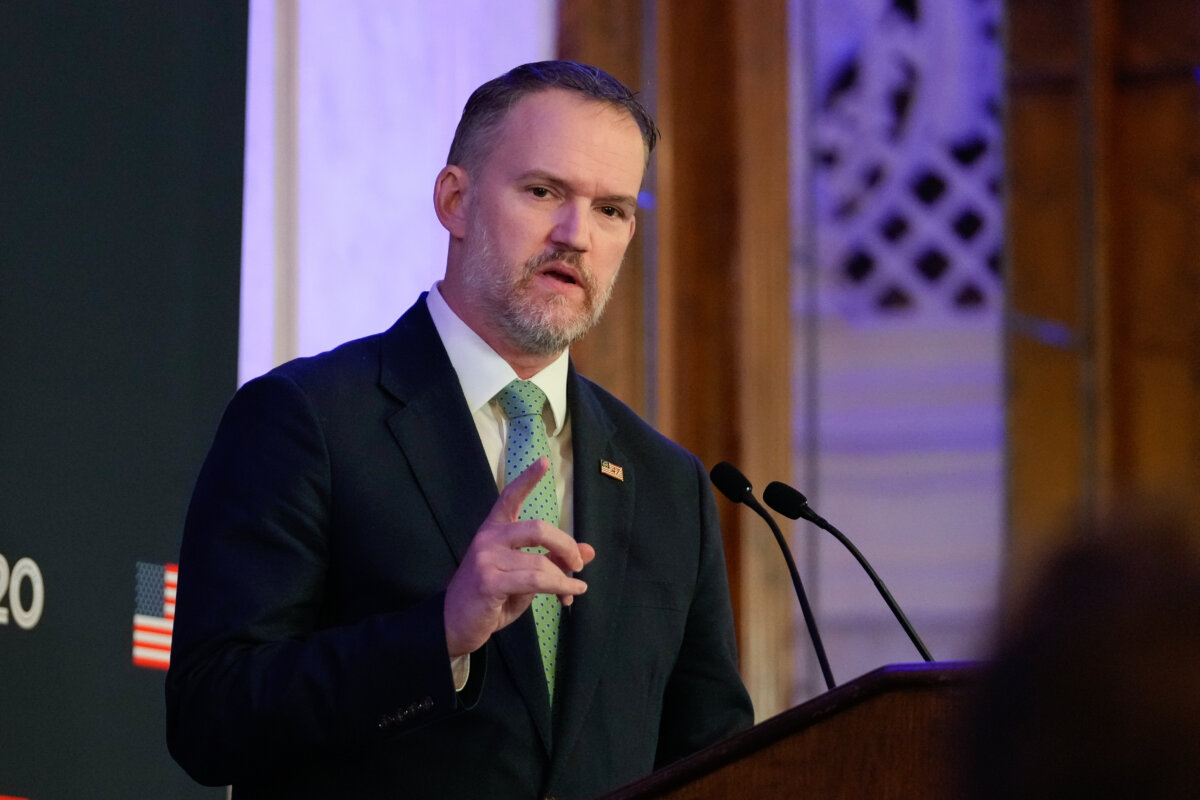

Trade ministers from the Group of 20 nations agreed to denounce food trade coercion but were divided over excess industrial capacity and forced labor in supply chains, U.S. Trade Representative Jamieson Greer said on Oct. 1.
Speaking to reporters following a two-day trade ministerial meeting in Milwaukee, Greer said some ministers had raised concerns about excess industrial capacity, potentially putting downward pressure on product prices, but failed to agree on how to address it.
“Nearly all countries agree that this is an issue that requires action, and nearly all countries agree that our current system of trade remedies or responses is inadequate to solve this problem,” he said.
Greer said the United States will continue working with like-minded trading partners to address overcapacity, noting that it has taken unilateral tariff measures to protect American industries.
Another issue on which G20 trade ministers could not reach a consensus is related to measures to address forced labor in global supply chains, Greer said.
The United States in July imposed tariffs ranging from 10 percent to 12.5 percent on 60 trading partners over their alleged failure to prevent imports made with forced labor.
European Trade Commissioner Maros Sefcovic said on Oct. 1 that he supports holding discussions on concentrated measures to tackle excess industrial capacity, which he said has become concerning as Chinese exports threaten key industries in Europe, including autos and steel.
“Now we are at the stage where, because of these overcapacities and turbulence on the global market, [it] can create such flooding of the markets that whole sectors could be put in danger within a couple weeks or months,” he told reporters.
The G20 is an international forum for economic and financial cooperation that consists of 19 of the world’s advanced and emerging economies, the European Union, and the African Union.
China, a G20 member, has rejected claims that its industrial policies have created excess capacity and accused Western countries of using the issue to justify protectionist measures.
Previously, on July 17, Greer told Fox News that the U.S. government had launched an investigation under Section 301 of the Trade Act of 1974 targeting excess industrial capacity in countries such as China, which could lead to additional tariffs.
“They have industrial policies to give subsidies to their companies, so they don’t have to make a profit, and they can sell and dump manufactured goods in the U.S.,” Greer said.
Reuters contributed to this report.
 Friends Read Free
Copy
Facebook
Tweet