
News Analysis
The Federal Reserve’s monetary policymaking playbook recommends looking past the initial impact of a global energy price shock and examining underlying inflation instead.
Headline inflation—at home and broad—has accelerated since the outbreak of war in the Middle East three months ago as businesses and households are paying more for energy.
Although the price of a barrel of crude oil has fallen below $90, U.S. motorists are paying a national average of $4 per gallon.
In the United States, the annual inflation rate has risen to its highest level since May 2023.
Recent indicators suggest that fallout from the war in Iran could be filtering through the rest of the marketplace.
It is now up to the Federal Reserve to determine whether there will be persistent inflation risks that could threaten the price stability side of the century-old institution’s dual mandate.
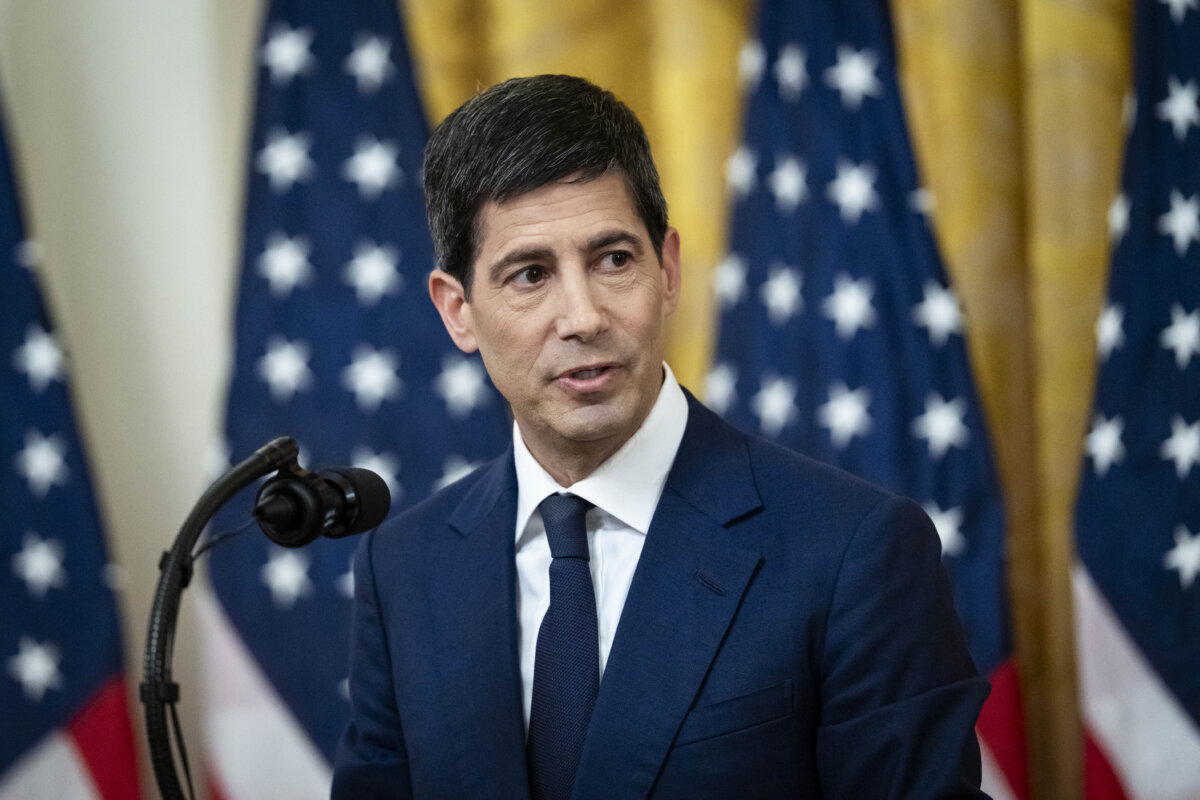
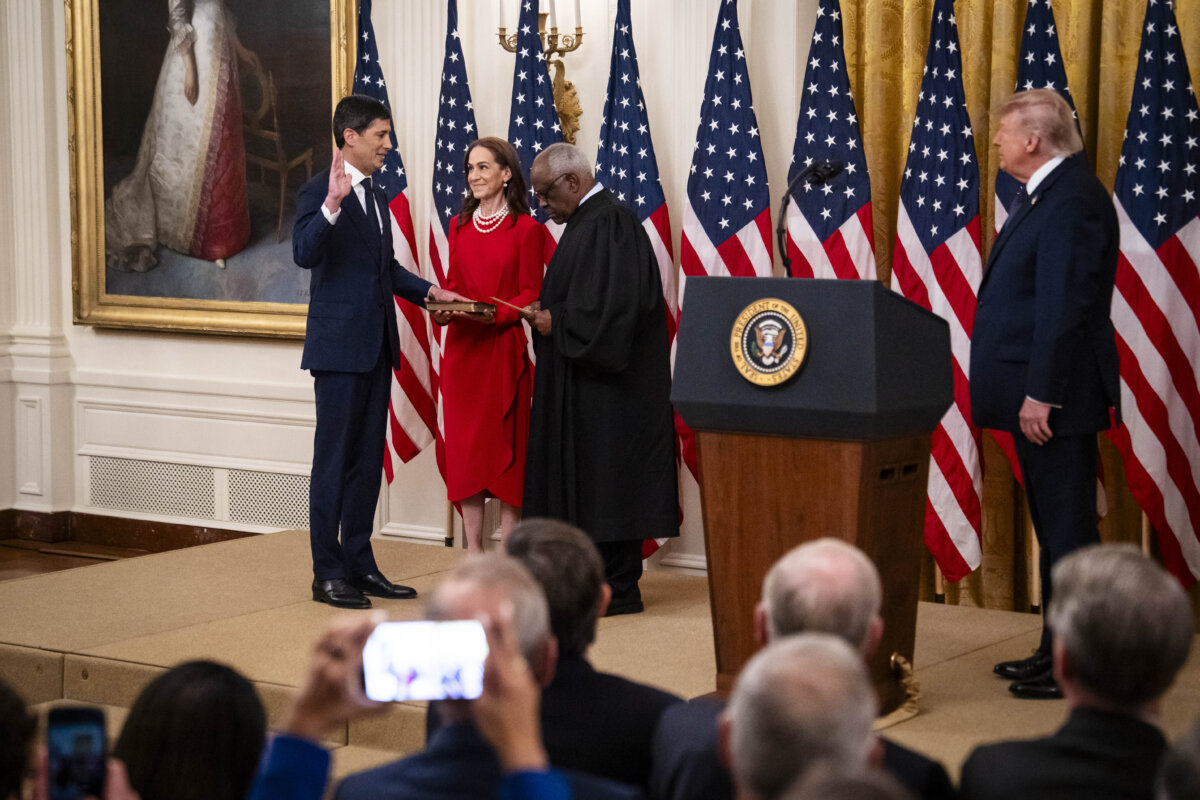
For a central bank presumably under political pressure to lower interest rates, the initial few months on the job could be challenging for new Fed Chairman Kevin Warsh.
Markets are pricing in a rate hike by the fall at the earliest, a complete reversal from several months ago, when investors had been forecasting one or two interest rate cuts.
Warsh has adopted a hybrid dovish-hawkish stance on monetary policy over the past two years.
On the one hand, he has expressed sympathy for President Donald Trump’s call to lower interest rates amid the artificial intelligence boom.
On the other hand, Warsh wants to tighten the balance sheet, which currently sits slightly below $7 trillion.
Should Warsh support reducing the benchmark federal funds rate—a key policy rate that influences borrowing costs for businesses and consumers—he will have to assure markets that this is the right course of action, said Jim Bianco, president of Bianco Research.
“He’s got to convince the market that the right policy is to cut rates when the market is thinking the right policy might be to raise rates,” Bianco said in a recent interview with Siyamak Khorrami, host of EpochTV’s “Markets Insider.”
Signals or expectations could be found in the U.S. bond market.
Yields on long-dated Treasury securities have pushed higher as of late.
The 30-year yield, for example, touched nearly 5.2 percent—the highest level since the global financial crisis—although it has returned below 5 percent on hopes of a resolution to the U.S.–Iran conflict.
The 10-year also reached a one-year high after firming above 4.6 percent for the first time since last summer.
This signals that bond investors expect inflation and higher interest rates.
“President Trump is fully expecting Kevin [Warsh] to be full on gas: cut interest rates aggressively and quickly—and that is not what the market wants,” Bianco said.
“So, he’s got a tough job there now. Should they be raising rates? I think that I’ll go with the market.”
Investors have made a quarter-point rate hike their base-case scenario for later this year.
But Warsh would also have to convince 11 other members of the Federal Open Market Committee to adopt an easing stance at a time when near-term inflation pressures are building.
This could be another obstacle for Warsh if he aims to lower rates.
Fed board member Christopher Waller made a hawkish pivot on May 22, arguing that it is not a time to signal rate cuts with inflation firmly above the central bank’s 2 percent target.
“It’s just kind of crazy to say you could start talking about rate cuts in the near future,” Waller said.
“You just can’t look at this data and say, ‘Yeah, we could cut rates by September or something.’ You can’t be serious as a central banker and talk like that.”
Although he said he believes that it is “too soon” to predict the next policy action, Minneapolis Fed President Neel Kashkari agreed that the “inflationary shockwave” from the war will force the institution to focus on containing inflation.
“We’ve had high inflation all around the world for five years now, with the conflict in Iran pushing up energy and related prices,” he told Reuters. “It’s affecting virtually every economy around the world.”
Minutes from the April meeting suggest that many officials believed that the next decision could be a rate hike, if inflation were to remain above the 2 percent goal.
For now, markets widely expect the Fed to maintain the current target rate in the 3.5 percent to 3.75 percent range heading into the summer.
Global Money Supply
The U.S. money supply reached an all-time high of $22.8 trillion in March, rising every month since January 2024.
But it is not only the Federal Reserve that has been running the printing press.
The international money supply recently reached a record $122 trillion.
For a growing chorus of economic observers, the fear is that central banks and governments will continue to accelerate their monetary base to ensure that the public can withstand higher costs.
“They want to get more money to give to their populations to try and offset these higher prices,” Bianco said.
“So, most of these governments around the world think what they’re doing with the expanding money supply is fixing the affordability problem—they’re creating a bigger one.”
A Warsh-led Fed could head in the opposite direction by shrinking its monetary footprint.
In a November 2025 op-ed published in The Wall Street Journal, Warsh reaffirmed what the eminent economist Milton Friedman argued: Inflation is caused by too much spending and printing.
“The Fed should re-examine its great mistakes that led to the great inflation,” Warsh wrote.
“It should abandon the dogma that inflation is caused when the economy grows too much and workers get paid too much.
“Inflation is caused when government spends too much and prints too much money.
“Money on Wall Street is too easy, and credit on Main Street is too tight.”
 Friends Read Free
Copy
Facebook
Tweet
Friends Read Free
Copy
Facebook
Tweet