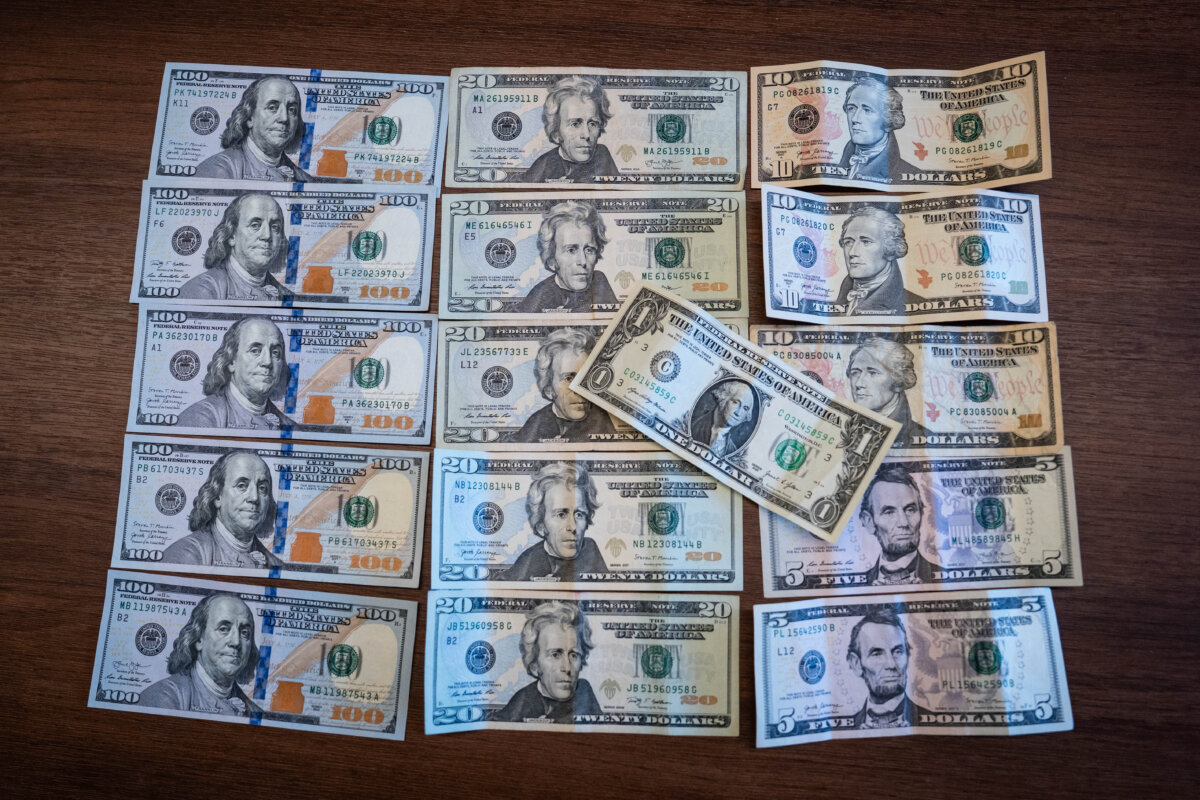

The global dollar-denominated money supply recently reached a record $122 trillion in March.
The money supply measures the amount of money circulating in the economy and the liquidity available to businesses and households to spend or invest.
Over the past two years, central banks have injected approximately $17 trillion into the financial system, based on data gathered by Otavio Costa, founder and CEO of Azuria Capital.
Advanced economies, whether Europe or Asia, have been running the printing press to bolster growth prospects after years of anemic expansions.
Other central banks, including the European Central Bank and the Federal Reserve, have also been engaged in an easing campaign by lowering interest rates and adding to their balance sheets.
The Fed, for example, has expanded the domestic M2 money supply by almost $2 trillion since March 2024, bringing it to an all-time high of $22.69 trillion.
While global inflation pressures are picking up amid the 12-week-old war in Iran, soaring global money supply growth is renewing concerns about persistent inflation threats worldwide, says top economist Daniel Lacalle.
“We have seen [a] drastic increase in the last months, and it’s rising at the fastest pace since 2021 and that obviously is one of the elements that raises concerns about both markets, but also persistent inflation,” Lacalle said in an interview with Siyamak Khorrami, host of EpochTV’s “Markets Insider.”
In China and the eurozone, for instance, money-supply growth is running close to 9 percent and 6 percent, respectively, he said.
“At the same time, the global economy is under quite a severe strain,” Lacalle said. “We see that most developed nations are stagnant and that global economic growth is likely to be, in 2026, lower than initial estimates, and moving around 2.2 to 2.3 percent.”
Comparable to what occurred in the pandemic, when the money supply grows faster than real GDP, the long-run tendency is toward higher inflation: too much money is chasing too few goods, pushing up the average price of goods in the marketplace.
‘Keynesian Way of Thinking’
In its World Economic Outlook, the International Monetary Fund (IMF) downgraded its global growth forecast to 3.1 percent this year and 3.2 percent in 2027.
The estimates, the IMF said, are “below recent outcomes and well under pre-pandemic averages.”
The United States is forecast to grow more than 2 percent. The euro area is projected to expand by around 1 percent. China and Japan are expected to register GDP growth of 4.4 percent and 0.7 percent, respectively.
IMF data show international nominal (non-inflation-adjusted) gross domestic product (GDP) was $118 trillion last year.
The U.S. annual inflation rate climbed to 3.8 percent in April, the highest level in nearly three years. The 12-month inflation rates in the euro area and the U.K. are above 3 percent.
Economists have attributed these renewed inflationary pressures to Middle East tensions. Many have also lifted their inflation forecasts due to the conflict.
The Cleveland Federal Reserve estimates next month’s U.S. annual inflation rate will top 4 percent.
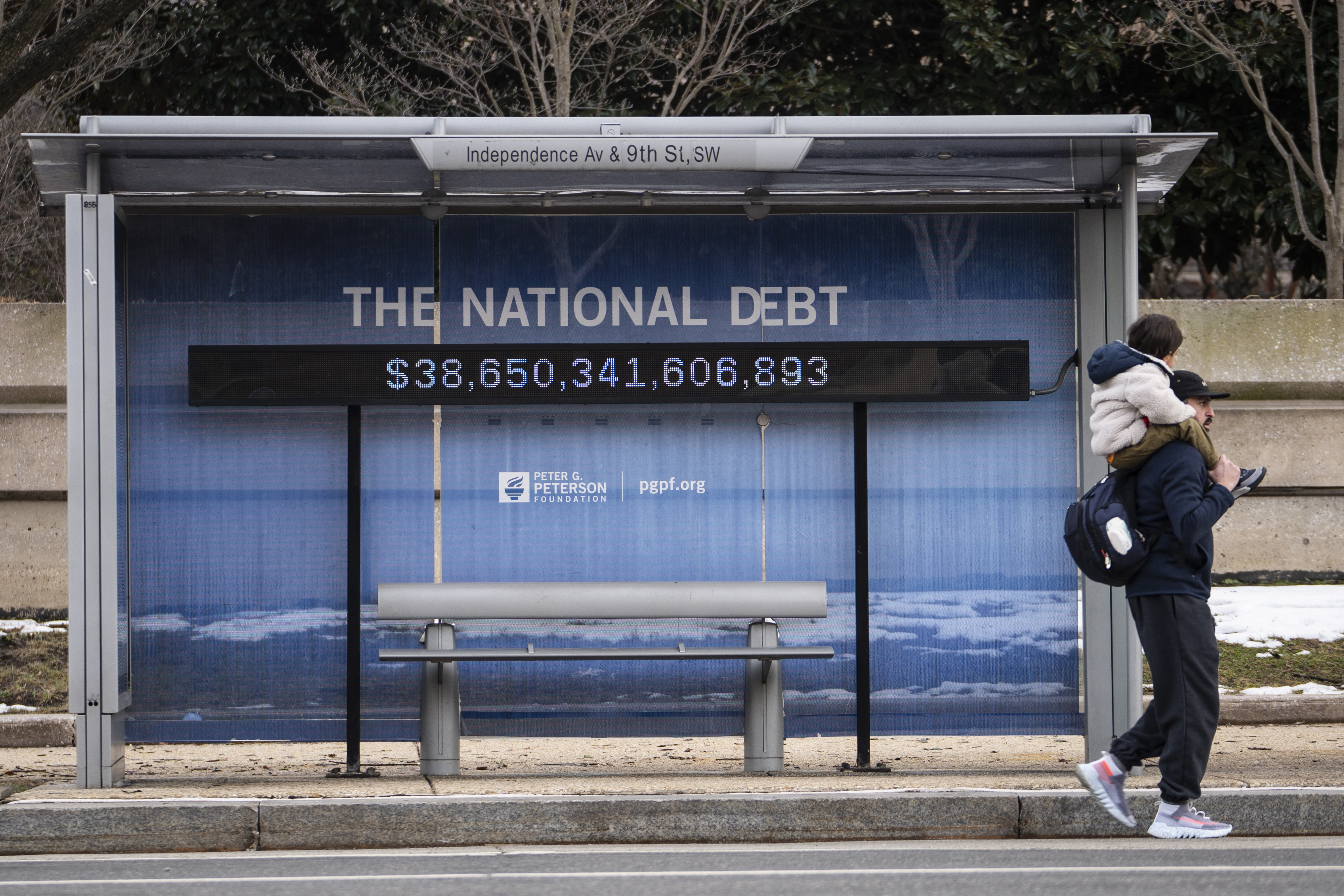
But Lacalle argues that nations have been contending with vast government spending programs, persistent budget deficits, enormous debt loads, and economic stagnation for a while. These factors will likely further fuel money supply growth this year, prolonging stubborn inflation and exacerbating debt levels.
“It’s the Keynesian way of thinking,” Lacalle said.
“It’s the idea that if the private sector is not growing, if consumers are not spending as expected, if investment in the productive sector is not growing, then it has to be somehow offset by much higher levels of government spending.”
If this were the recipe for success, then a country like France “would be a global economic leader,” he said.
While the velocity of money can increase the cost per unit of goods produced at any given time, it can also fuel asset bubbles.
When newly created money enters the economy, it tends to disproportionately flow through various channels, often first appearing in investment markets and speculative assets. A surge in demand for stocks can then push asset prices higher even before the underlying increase in the money supply is fully reflected in the data.
The issue is that those who receive the new money first capture most of the benefit. By the time money circulates through the economy and loses value, the people and businesses furthest from the initial injection bear the greatest cost.
This is known as the Cantillon Effect, named after 18th-century French economist Richard Cantillon.
With global stock markets at all-time highs, analysts are questioning whether a bubble is forming or whether the rally is based on solid fundamentals.
Either way, it is imperative that the public own assets—whether gold or stocks—to protect their purchasing power, Lacalle says.
“Once we understand that this increase in money supply growth is inevitable and that we are going to continue to see the erosion of the purchasing power of currencies, the worst thing that one can do is to rely on a salary and deposit savings,” he said.
 Friends Read Free
Copy
Facebook
Tweet
Friends Read Free
Copy
Facebook
Tweet