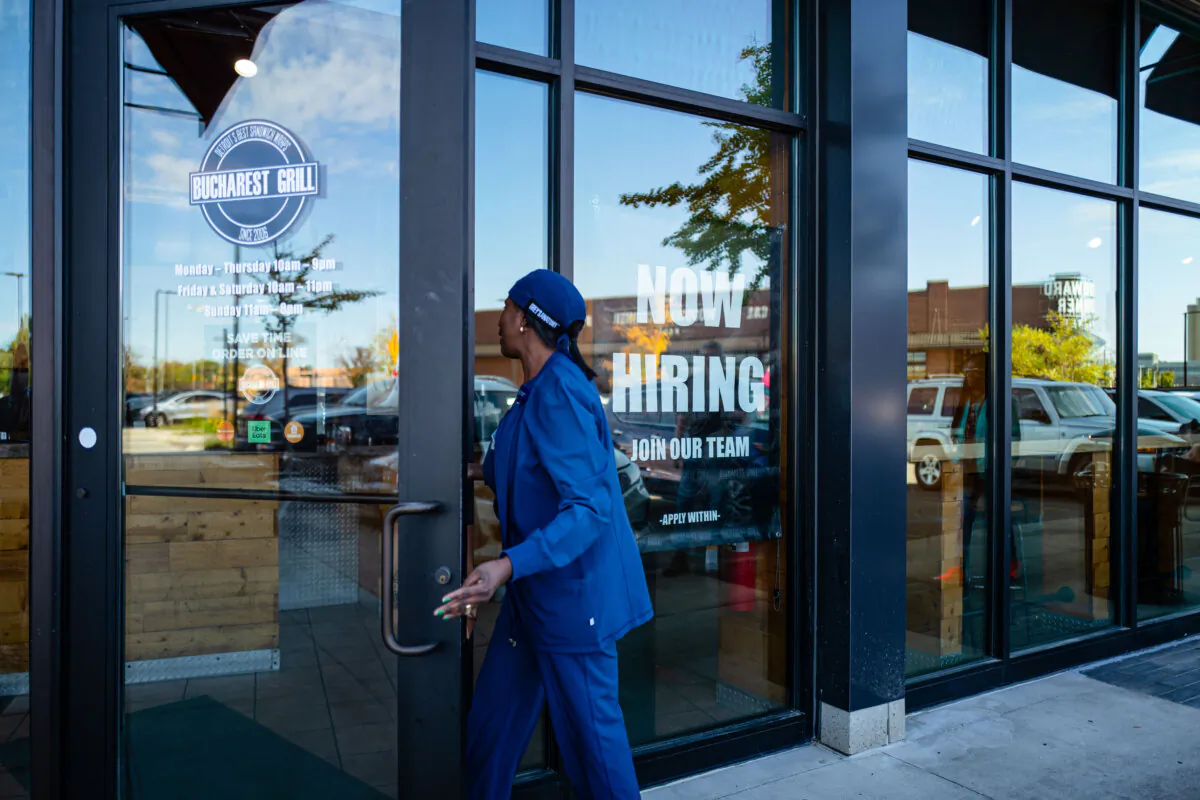

Initial jobless claims edged higher for the second straight week after last month reaching their lowest level since 1969.
The number of Americans filing applications for unemployment benefits rose by 12,000 to 211,000 for the week ending May 9, according to the Department of Labor.
Last week’s reading was revised slightly lower to 199,000.
This came in above economists’ expectations of 205,000.
The four-week average, which strips out week-to-week volatility, stayed below 204,000.
Jobless claims have hovered around historically low levels for the past three months, signaling the U.S. labor market’s continued resilience.
Even as the U.S. economy faces renewed price pressures amid Middle East tensions, the employment arena remains resilient.
Job growth totaled 115,000 in April—beating market estimates—and the unemployment rate held steady at 4.3 percent.
A further sign that hiring could be improving is the data surrounding continuing jobless claims, which measures the number of individuals currently receiving unemployment benefits.
For the week ending May 2, recurring claims edged up to a lower-than-expected 1.782 million, from 1.76 million in the prior week, the Department of Labor reported.
This gauge has been on a downward trend since peaking at 1.96 million in late October 2025.
Economists use continuing claims as a barometer for job seekers and the difficulty they may have in finding employment.
At the same time, it could also be due to people exhausting their benefits, since many states cap eligibility at 26 weeks.
Meanwhile, private employers added an average of 33,000 jobs per week in the four weeks ending April 25, according to payroll processor ADP.
Indeed’s job postings have also bumped along the bottom, ticking up over the past month.
Labor Market Strength
These numbers could help further “assuage any fears that conditions have continued to cool,” says Thomas Feltmate, senior economist at TD Bank.
“Job growth appears to have picked up from its anemic pace at the end of last year and is now running reasonably close to its breakeven rate—holding the unemployment rate steady,” Feltmate said in a May 8 note.
Economists estimate that the breakeven rate—the number of new jobs needed to keep unemployment low—is close to zero due to changes in immigration flows and labor force participation.
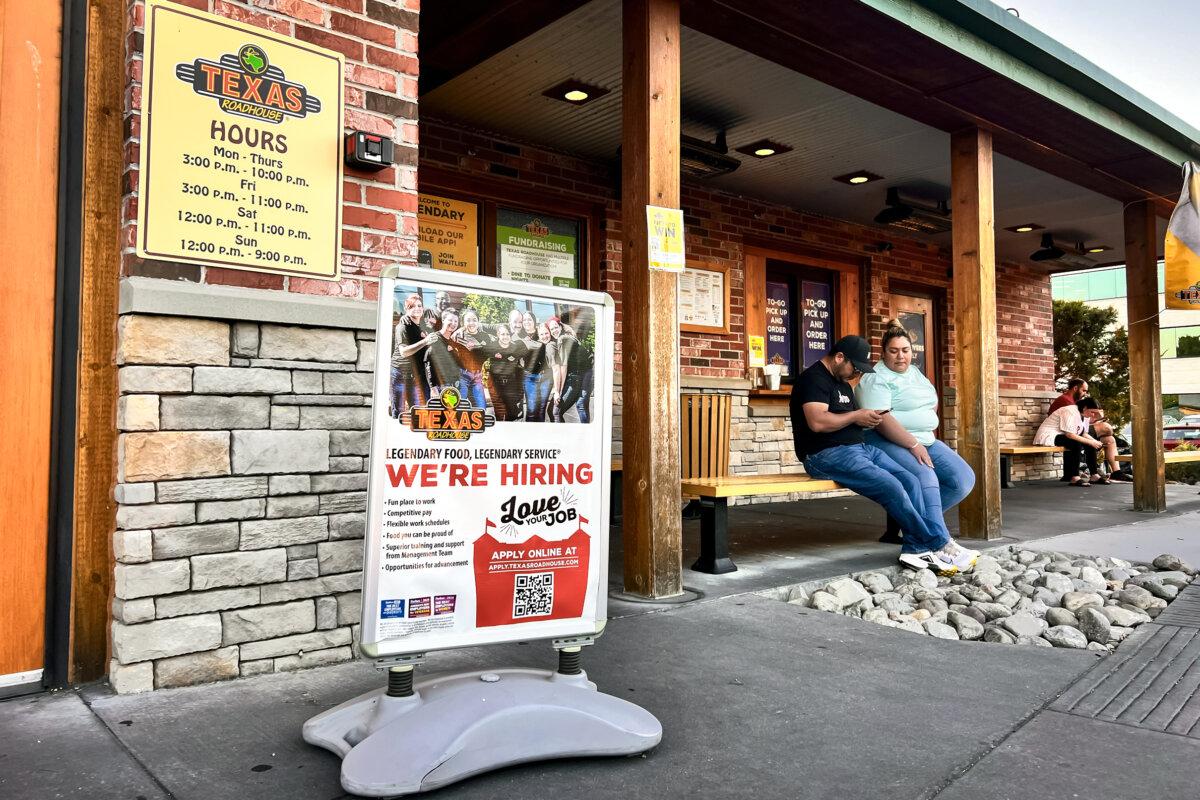
A modest job expansion in the monthly nonfarm payrolls report could be enough to support the jobless rate at its current level.
Over the past year, one of the chief concerns among economic observers and monetary policymakers has been that health care is at the center of the new jobs.
While market watchers do not expect this trend to change, the April jobs report showed broad-based employment gains across retail, leisure and hospitality, and transportation and warehousing.
“Consumer-reliant sectors reflect a consumer backdrop that is not succumbing to demand destruction as a result of higher gas prices,” economists at RBC Economics said in a May 8 note.
“It’s hard to bet against the consumer and the U.S. economy.”
Consumers have struggled with higher gasoline prices since the outbreak of war in the Middle East.
Gasoline prices have surged by more than 50 percent over the past two months, with the national average topping $4.50 per gallon.
Still, Americans are opening their wallets, even as they maintain a downbeat view of the economy and worry that renewed price pressures could harm their personal finances.
Excluding gasoline and automobiles, April retail sales jumped 0.5 percent, according to new Census Bureau data.
Additionally, Bank of America data show total household card spending—removing gas station volumes—climbed 4 percent year over year last month.
Combining the labor market’s resilience and the economy’s strength, this could give the Federal Reserve some room before acting on interest rates.
The Fed is widely expected to leave the benchmark federal funds rate—a key policy rate that influences business and consumer borrowing costs—in the current target range of 3.5 percent to 3.75 percent for the rest of the year.
However, the odds are growing that the central bank will raise rates sometime next year, with investors pricing in a 50 percent chance of a March 2027 hike.
 Friends Read Free
Copy
Facebook
Tweet
Friends Read Free
Copy
Facebook
Tweet