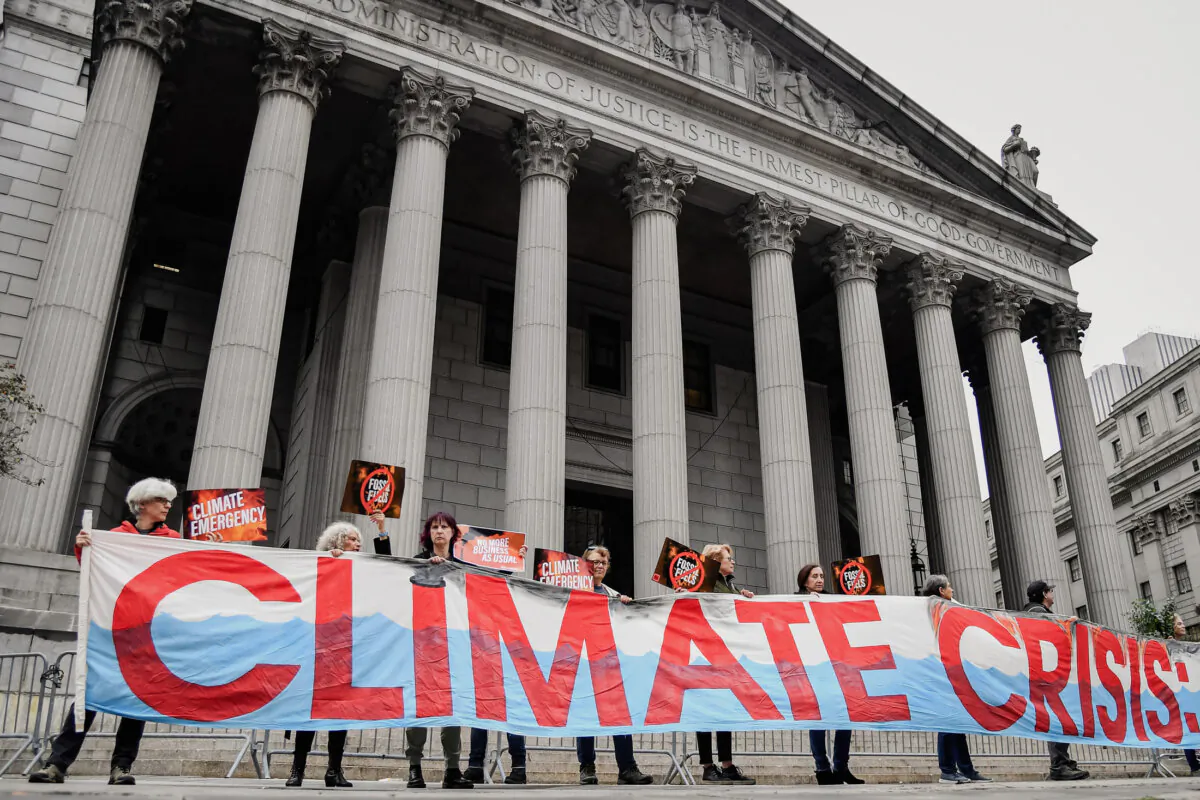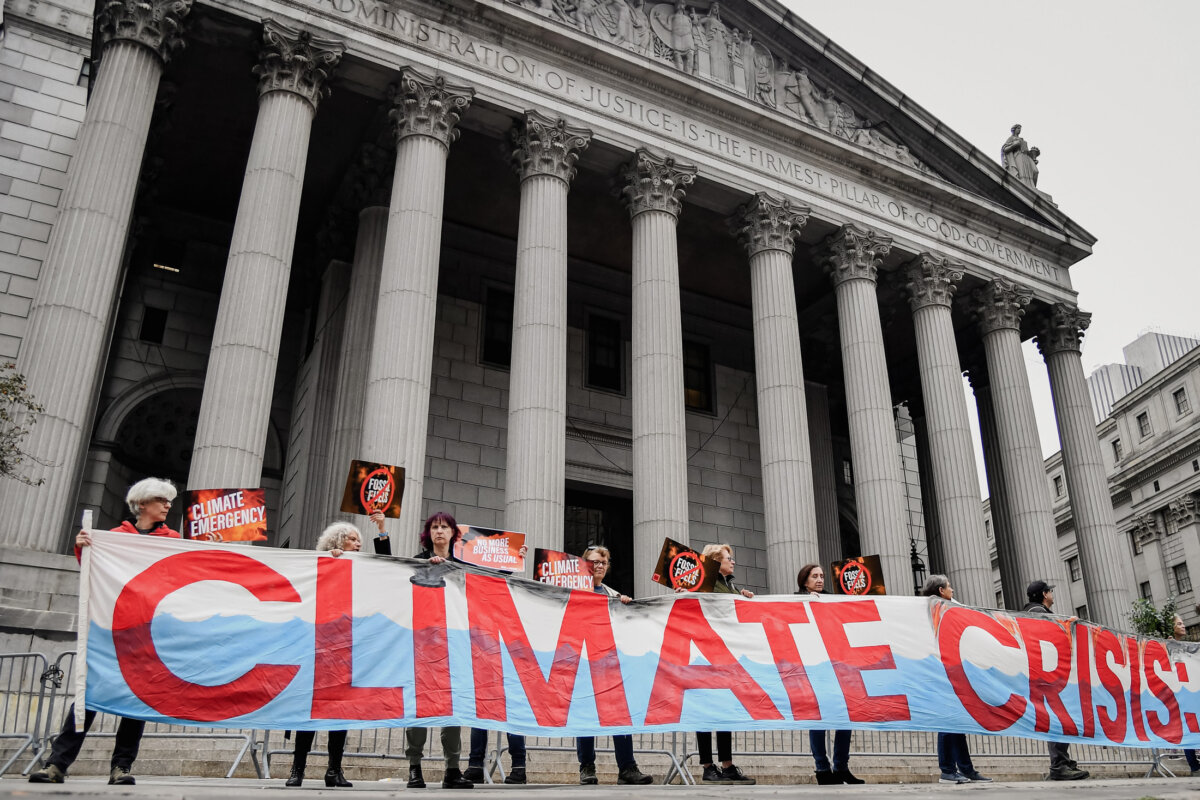

Maryland’s supreme court rejected several local climate lawsuits on March 24, upholding the view of lower state courts that the suits were a thinly veiled attempt to circumvent the legislative process and the voting public, and craft national energy policy through litigation.
The lawsuits were filed against 26 oil and gas companies, including BP and Chevron, by the cities of Baltimore and Annapolis, as well as Anne Arundel County. They charged that the defendants had created a nuisance and failed to warn Marylanders that products made from fossil fuels caused global warming, rising sea levels, and bad weather.
In dismissing these claims, Maryland’s supreme court stated that “the notion that a local government such as Baltimore, Annapolis, or Anne Arundel County may pursue state law nuisance claims against the Defendants—seeking injunctive relief to abate injuries arising from global greenhouse effects arising from worldwide conduct—is so far afield from any area of traditional state or local responsibility that it cannot be seriously contemplated.”
There are currently more than 30 similar lawsuits against energy companies that have been brought by states, counties, and cities across the United States. One such suit, Suncor Energy v. County Commissioners of Boulder County, was allowed to proceed by the Colorado supreme court in 2025 and is under review by the U.S. Supreme Court in what will likely be a pivotal decision for climate litigation.
In 2023, Hawaii’s supreme court likewise rejected a motion to dismiss by defendants in a series of climate lawsuits by the city and county of Honolulu against Chevron, Shell, Sunoco, and others. One of the central issues in these cases is whether local tort laws for nuisance and failure to warn are an appropriate means to effectively set nationwide energy policy, given that the suits will likely cost tens or hundreds of billions of dollars if local courts rule against energy companies.
Lawyers for the plaintiffs in the Maryland lawsuits denied that they were seeking to regulate the oil and gas industry, and argued instead that they merely wanted to recover damages for local residents.
“It does not involve capping, regulating, or limiting emissions by the defendants or anybody,” attorney Victor Sher told the Maryland supreme court in October 2025. “It doesn’t involve changing pollution control measures or installing equipment, or anything like that by these defendants or anyone else.”
But attorney David Bookbinder, who represented Colorado in its municipal lawsuit, stated that climate litigation did in fact have a regulatory goal.
“Tort liability is an indirect carbon tax,” Bookbinder told attendees at an Oct. 10 Federalist Society webinar on climate litigation. “You sue an oil company, an oil company is liable, the oil company then passes that liability on to the people who are buying its products. In some sense, it is the most efficient way—the people who buy those products are now going to be paying for the cost imposed by those products.”
Ruling against the Maryland plaintiffs in 2024, Baltimore City Circuit Court Judge Videtta Brown concurred with Bookbinder’s point of view, stating that federal law governs cases involving interstate or global emissions and that “the explanation by Baltimore that it only seeks to … hold Defendants accountable for a deceptive misinformation campaign is simply a way to get in the back door what they cannot get in the front door.”
Legal analysts who are critical of climate lawsuits hailed the ruling.
“The Maryland Supreme Court got it right,” Michael Toth, director of research at the Civitas Institute at the University of Texas–Austin, said in a statement emailed to The Epoch Times.
“The decision sets up a conflict with the activist rulings from Colorado and Hawaii, putting the issue squarely before the U.S. Supreme Court when it hears the nearly identical Colorado climate case later this year,” Toth said. “The stakes are clear: America’s adversaries won’t need to prevail on the battlefield if domestic policy choices undermine our energy security first.”
The Maryland lawsuits had previously been dismissed by the Circuit Court for Baltimore City and the Circuit Court for Anne Arundel County, but plaintiffs appealed the decision. The Maryland supreme court stated in its ruling that it “affirmed the judgments of the lower courts dismissing the complaints.”
Although plaintiffs in climate litigation have typically not cited specific figures for alleged damages, a 2023 climate lawsuit out of Multnomah County, Oregon, charged that energy companies owe the county $50 million for harm already caused, $1.5 billion in future damages, and another $50 billion to establish an abatement.
 Friends Read Free
Copy
Facebook
Tweet
Friends Read Free
Copy
Facebook
Tweet