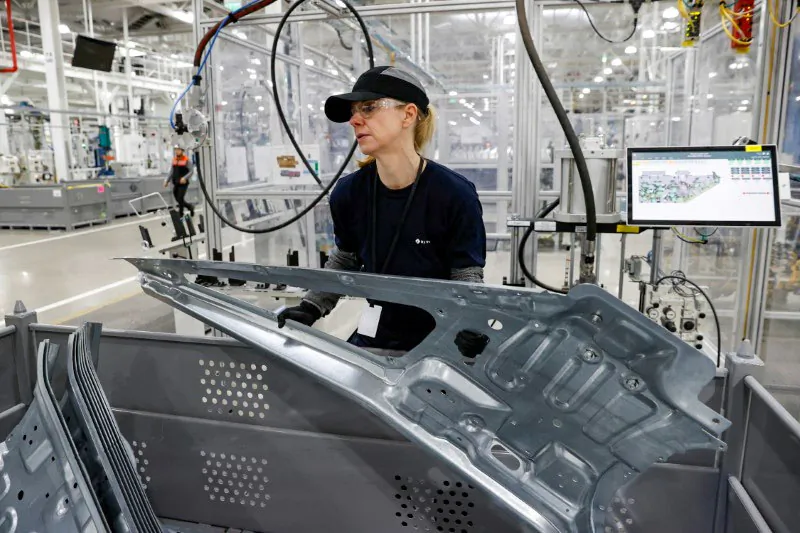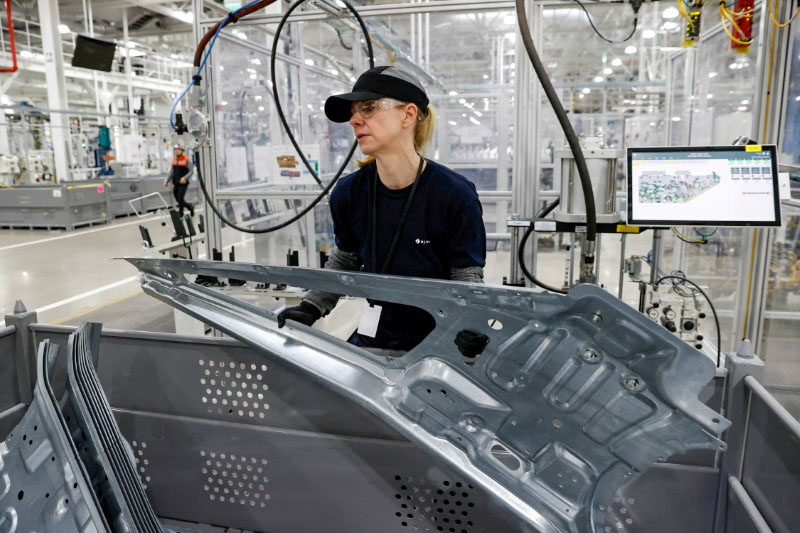

The producer price index (PPI)—a measure of prices paid by businesses for goods and services—rose less than expected in May, signaling that tariff-related inflation effects have yet to materialize.
According to the Bureau of Labor Statistics, the PPI increased by 0.1 percent in May, following an upwardly revised 0.2 percent decline in April. Goods inflation jumped by 0.2 percent, while services rose by 0.1 percent.
Core producer prices, which strip out the volatile energy and food components, also rose by 0.1 percent in May.
Both readings came in below economists’ expectations.
On a 12-month basis, PPI inflation inched higher, to 2.6 percent from 2.5 percent in April. Core PPI inflation slowed to a lower-than-expected 3 percent from 3.2 percent.
The PPI excluding food, energy, and trade services also edged up by 0.1 percent last month.
Market watchers monitor the PPI because it can serve as a precursor to future consumer inflation, as it occurs early in the supply chain.
New PPI numbers follow a tepid 0.1 percent increase in the consumer price index (CPI) in May, falling short of expectations. Meanwhile, the headline annual inflation rate edged up to 2.4 percent, slightly below the projected 2.5 percent.
Eric Teal, chief investment officer at Comerica Wealth Management, suggested that the lack of inflation may depend on the “absorption rate” of businesses and foreign suppliers.
“We believe that the majority of the tariffs will eventually get passed to the consumer, but companies are cautious at this juncture about passing along the price increase,” Teal said in a note emailed to The Epoch Times.
This pattern mirrors the dynamics observed during President Donald Trump’s first term. Despite a sharp rise in wholesale prices in 2018 and 2019, consumer prices remained stable, indicating that U.S. businesses absorbed the increased costs rather than passing them on to consumers.
Will this time be different? Business surveys indicate that companies have been passing tariff-related costs to customers.
The Federal Reserve’s latest Beige Book—a periodic report summarizing economic conditions across the central bank’s 12 districts—revealed a moderate increase in prices, with businesses anticipating that inflationary pressures will “rise at a faster rate going forward.”
“A few Districts described these expected cost increases as strong, significant, or substantial,” the report states. “All District reports indicated that higher tariff rates were putting upward pressure on costs and prices.”
In addition, companies identified different response mechanisms, such as trimming profit margins, adding temporary fees or surcharges, and increasing prices for affected products.
Eyeing the Federal Reserve
Last month’s producer prices data add to the case for monetary policymakers to remain patient, experts said.
According to the CME FedWatch Tool, the Fed is overwhelmingly expected to leave interest rates unchanged at the policy meeting of the Federal Open Market Committee from June 17 to June 18. Investors do not anticipate that there will be any policy action until the committee meeting in September.
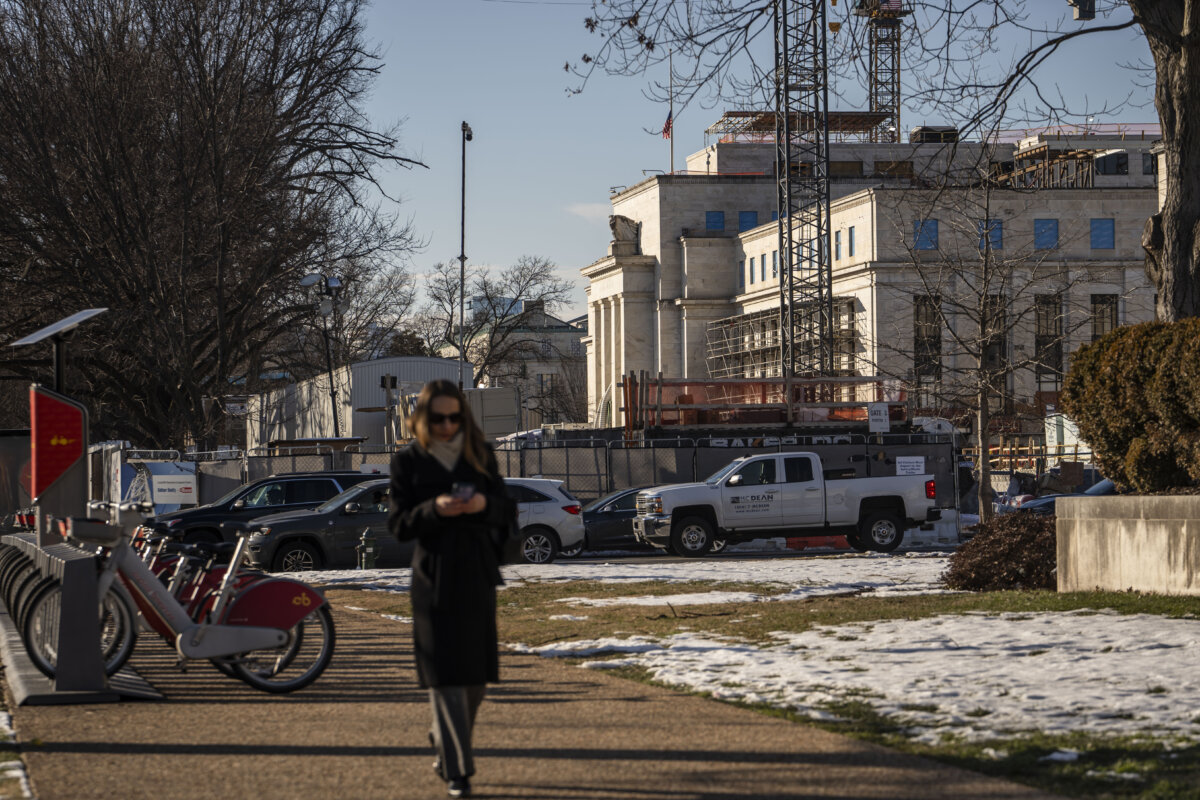
“For the second day in a row, inflation data came in lower than expected, and this gives the Fed room to sit on their hands,” Chris Zaccarelli, chief investment officer for Northlight Asset Management, said in a note emailed to The Epoch Times.
“As long as inflation isn’t increasing—or even better, is decreasing—the Fed can be patient and wait for more information on how the new tariffs and trade negotiations are going to impact the price stability part of their dual mandate later this year.”
Solid employment conditions are further evidence that the Fed will unlikely rush to restart the easing cycle that began in September 2024 anytime soon, Zaccarelli said.
That said, cracks may be forming in the U.S. labor market.
Initial jobless claims—a gauge of the number of individuals filing for first-time unemployment benefits—were flat last week but came in higher than expected. In addition, continuing jobless claims—a metric of individuals currently receiving unemployment benefits and unable to find work—surged to a higher-than-expected 1.96 million, the highest since November 2021.
Still, the May nonfarm payrolls report revealed that the U.S. economy added a higher-than-expected 139,000 jobs, and the unemployment rate held steady at 4.2 percent.
The president has been pressing Fed Chairman Jerome Powell to lower interest rates.
“Fed should lower one full point,” Trump said in a Truth Social post shortly after the CPI report was released on June 11. “Would pay much less interest on debt coming due. So important!”
Meanwhile, the next notable inflation figures will be import and export prices for May. Early estimates, according to Trading Economics, indicate that they will be little changed.
In April, import and export prices rose by just 0.1 percent.
At the end of the month, the Fed’s preferred inflation gauge, the personal consumption expenditures price index, will be released. The Federal Reserve Bank of Cleveland’s Inflation Nowcasting model signals a slight increase, to 2.3 percent from 2.1 percent.
Many of the risks that were present in April have receded, but Zaccarelli said he remains “cautious” as the CPI and PPI remain above 2 percent.
 Friends Read Free
Copy
Facebook
Tweet
Friends Read Free
Copy
Facebook
Tweet