
Elon Musk is taking SpaceX public, filing paperwork for an initial public offering that would put one of the world’s most valuable private companies on the stock market.
The May 20 filing with the U.S. Securities and Exchange Commission says SpaceX plans to trade under the ticker “SPCX” on Nasdaq and Musk is expected to retain control through special voting shares.
SpaceX reported $18.6 billion in revenue in 2025 but also acknowledged significant operating losses as it poured billions into artificial intelligence (AI) infrastructure.
Musk founded SpaceX in 2002. The company designs, manufactures, launches, and operates rockets, spacecraft, and satellite networks. It operates the Starlink internet system, has launched hundreds of orbital missions, and recently expanded into AI through its acquisition of xAI. SpaceX says its long-term mission is to make life “multiplanetary.”
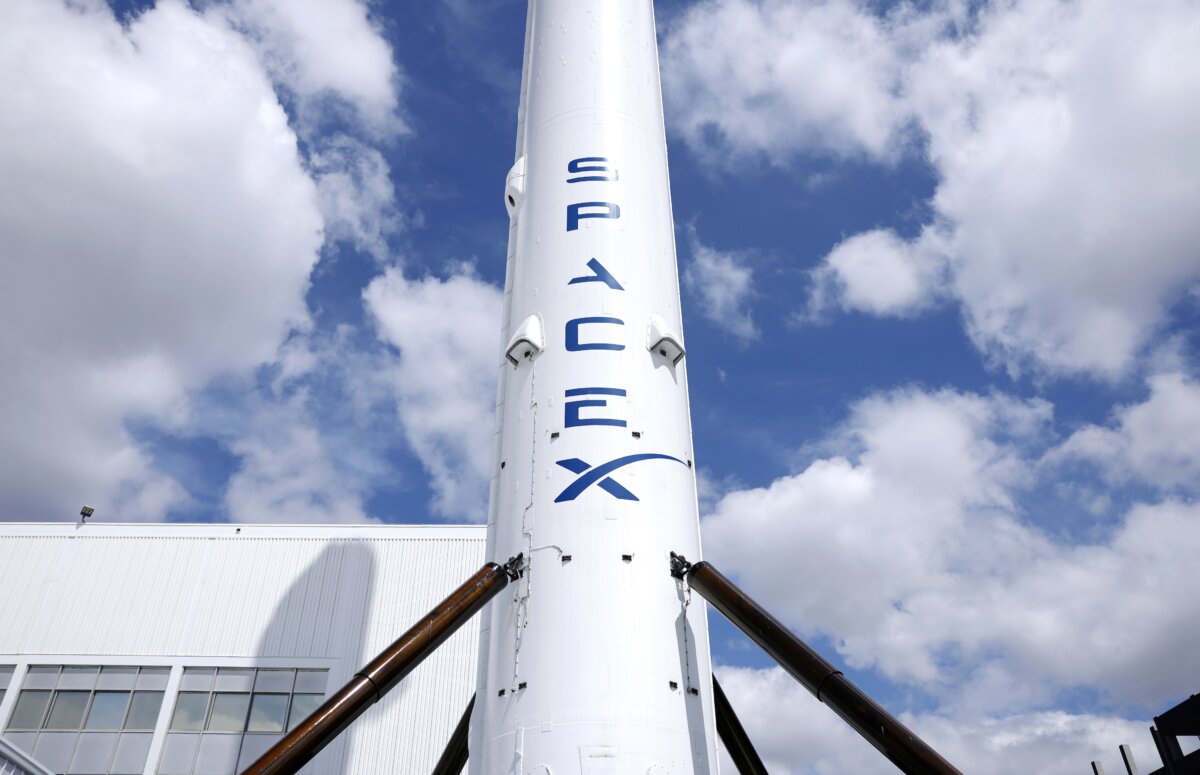
SpaceX said it sells launch services to commercial, international, and government customers using its Falcon 9 and Falcon Heavy rockets for satellite, cargo, and crew missions. The company described itself as the primary launch provider for the U.S. government, saying it handled 11 of 12 national security launches in 2025 and all NASA crew and cargo missions to the International Space Station that year.
As of March 31, 2026, SpaceX said it had launched about 7,400 metric tons into orbit with a mission success rate of more than 99 percent for its Falcon rockets. The company said it had completed about 650 orbital launches, including more than 540 missions using previously flown Falcon boosters.
In its SEC filing, SpaceX talks about its ambitions to “harness the Sun” to power a “truth-seeking” AI and has visions of building a base on the moon and cities on other planets.
“We believe that our current space efforts will catalyze transformative breakthroughs that could reshape terrestrial industries and lead to the emergence of new trillion-dollar markets on the Moon, Mars, and beyond,” the filing stated.
The filing reveals that AI is both a major expense and a growing business opportunity. Its AI division generated $3.2 billion in revenue in 2025 but posted a $6.3 billion operating loss as the company expanded data centers, computing infrastructure, and development of its Grok AI platform.
SpaceX said it plans to continue heavy investment in AI, including large-scale computing systems and future orbital AI data centers powered by satellites.
The filing describes AI as a long-term growth engine tied to SpaceX’s Starlink network, xAI operations, and X, the social media platform acquired by Musk.
SpaceX said it plans to use its Starship rocket system to create new industries and expand economic activity beyond Earth. It intends to transport passengers and cargo to the moon and Mars to help establish permanent human settlements.
The company said future opportunities could include ultra-fast point-to-point travel between cities on Earth, space tourism, and manufacturing facilities operating in orbit under microgravity conditions.
The filing said the company eventually hopes to develop large-scale solar energy production on the moon and Mars to power habitats, manufacturing, and future infrastructure. SpaceX described its ability to launch large amounts of cargo into space as the foundation for creating entirely new commercial markets and long-term growth opportunities.
 Friends Read Free
Copy
Facebook
Tweet
Friends Read Free
Copy
Facebook
Tweet