
Commentary
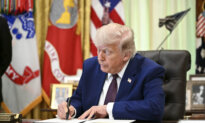
Last week’s Federal Open Market Committee (FOMC) meeting was overshadowed by President Trump’s announcement nominating Kevin Warsh to be the next Chairman of the Fed. Since Senate confirmation is required for this post, I suspect there will be a big debate about inflation. In this context, I’d say Warsh was a great pick, and likely a safe pick to clear confirmation as a well-respected independent thinker.
Warsh has been a long-time Fed critic and is expected to be especially critical of quantitative easing and the management of the Fed’s balance sheet. As far as future interest rate cuts are concerned, Warsh will likely cite labor market weakness as one reason the Fed should cut, but I suspect he will play it safe in his Senate confirmation hearing by not calling for multiple Fed cuts (yet), so I expect he will be confirmed.
As for Wednesday’s FOMC meeting, they did what nearly everyone expected – leaving interest rates alone – but both Christopher Waller and Stephen Miran dissented by advocating interest rate cuts. The FOMC statement talked about economic uncertainty, which probably refers to Tuesday’s announcement from the Conference Board, saying consumer confidence plunged nearly 10 points in January to 84.5, down from an upwardly revised 94.2 in December.
Something is obviously bothering consumers, other than just the cold weather. Dana Peterson, Chief Economist of the Conference Board, said, “All five components of the Index deteriorated, driving the overall Index to its lowest level since May 2014 (82.2), surpassing its COVID-19 pandemic depths.” This was a shocking report, and I hope it gains attention at the FOMC.
Here are the most important developments recently and what they mean:
– The recent consolidation in gold and silver should just be the pause that refreshes. What you will find if you try to buy gold, especially at Costco, it is frequently sold out. Silver is much more sensitive to industrial demand and should also firm up after consolidation. The primary reason that gold was up 64% in 2025 and was also appreciating this year is that there remains a lack of confidence in both central banks and governments.
– January lived up to its reputation as a seasonally strong month. Fortunately, as January goes, the year goes. Even better, small-cap stocks beat large-cap stocks, so there is definitely a shift underway to more domestic stocks versus the multi-international stocks that dominate the S&P 500. There is no doubt that since the U.S. economy is now leading global GDP growth, institutional money is being increasingly diverted to domestic stocks, which in turn is helping to boost small and mid-cap stocks.
– The analyst community is expecting double-digit earnings growth this year for the S&P 500. We are still in the midst of the fourth quarter announcement season, so we still have wave after wave of positive announcements that will propel stocks higher. Our best defense remains a strong offense. Some profit taking is expected as earnings announcements wind down, but this year is expected to have great appreciation due to the strong forecasted earnings, so any pullbacks should be viewed as a buying opportunity.
– There have been a lot of high-profile corporate layoffs announced recently. There is no doubt that AI is now promoting layoffs, especially as warehouses become increasingly automated. This may explain why the Conference Board’s consumer confidence index recently hit a 12-year low, since job security remains uncertain. Due to the Fed’s unemployment mandate, I am expecting at least three additional Fed cuts in 2026.
– It appeared that in the fourth quarter, the U.S. was on pace to experience over 5% annual GDP growth until that latest trade data was announced, so GDP estimates were lowered to a bit over a 4% annual pace. There is no doubt that the Trump Administration’s shifting tariff polices may have impacted the trade deficit, but now that the tariffs are largely finalized, except for South Korea, we should be getting more reliable trade data in the upcoming months.
– The good news, as far as GDP growth is concerned, is that the Institute of Supply Management (ISM) announced that its manufacturing index surged to 52.6 in January, up from 47.9 in December. Since any reading under 50 signals a recession, the manufacturing recession is over after being below 50 for 12 consecutive months. The new orders component surged to 57.1 in January, up from 47.4 in December. Also impressive is that the production component surged to 55.9 in January, up from 50.7 in December. Overall, this is the best ISM manufacturing reading since 2022 and very encouraging for improving GDP growth.
In summary, the U.S. continues to lead the world with its domestic GDP growth, and now that Kevin Warsh has been nominated to be the next Fed Chairman, the U.S. dollar is expected to continue to firm up. There is no doubt that AI is boosting productivity and also reducing jobs in corporate America, so the Fed will be cutting key interest rates at least three times this year due to persistent unemployment concerns. Hopefully, these key interest rate cuts will also boost consumer confidence in the upcoming months. In the meantime, I am expecting that my growth stocks will appreciate at least 60% this year due to their forecasted earnings, plus the anticipation of more Fed rate cuts. We remain in the midst of a powerful bull market for stocks, especially for domestic small and mid-capitalization stocks.
*Views expressed in this article are opinions of the author and do not necessarily reflect the views of The Epoch Times.
 Friends Read Free
Copy
Facebook
Tweet
Friends Read Free
Copy
Facebook
Tweet