
Some new homeowners across the United States may find their property tax bills are double or triple those of their neighbors, according to a new report.
In its recently released annual property tax comparison of all 50 states, the Lincoln Institute of Land Policy and Minnesota Center for Fiscal Excellence documented the wide range of property taxes in more than 100 cities. The report noted that property-tax reliance, property values, local government spending levels, and classification (residential versus other property types) all contribute to variations in property taxes.
The report, reviewing the 2025 tax year, shows that assessment limits continued to contribute to property tax inequities. Typically, these limits restrict how quickly a property’s taxable value can increase from year to year.
However, when a home is sold, the taxable value usually resets to its current market value. As a result, new buyers can face the full tax burden, while their neighbors living in comparable homes may be paying taxes on just a fraction of the actual market value.
According to the report, the longer a homeowner remains in the house and the faster the home values rise, the wider the property tax gaps grow.
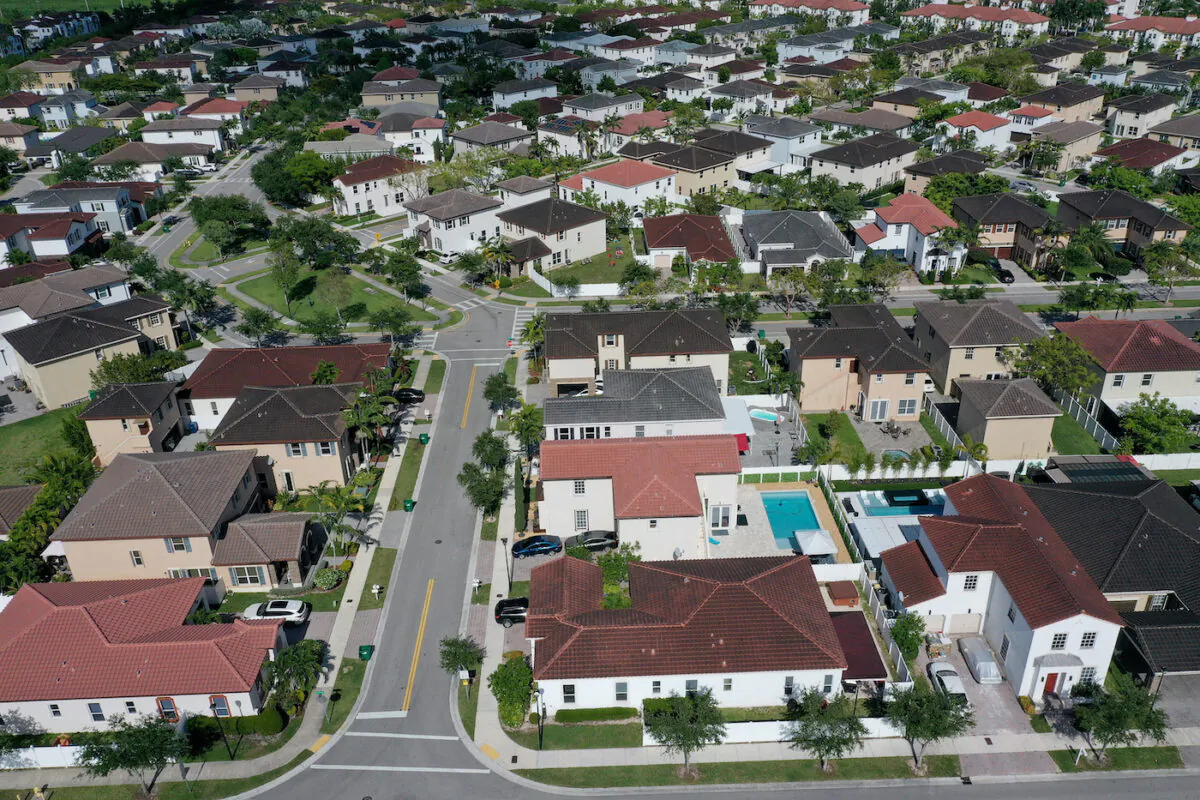
For example, in hot real estate markets such as Miami, the new owner of a median-value home could face a tax bill up to 3.2 times higher than a homeowner living in a similarly valued home since 2012. In that case, the new homeowner could be paying more than $10,000, while the longtime homeowner pays just a little above $3,100.
“Assessment limits are often presented as straightforward tax relief, but our annual analysis continues to show that assessment limits have a number of negative consequences—they create large disparities in tax bills for similar homes and shift the burden to new homeowners,” Adam H. Langley, associate director of Tax Policy at the Lincoln Institute of Land Policy, said in the report.
“As more states look to adopt these policies, our data shows clearly what the trade-offs are and who ends up paying the price.”
In analyzing the largest cities in each state, the report indicated that the average effective tax rate on a median-valued home was 1.213 percent in 2025. Using this rate, a home valued at $200,000 would incur $2,426 in property taxes.
New homeowners in Detroit, Aurora, Illinois, and Portland, Oregon, tend to pay tax rates that are at least twice the average. Conversely, Honolulu; Billings, Montana; and Denver have tax rates that are half of or less than the average listed in the report.
Commercial properties are also feeling the pressure of increased property taxes. The report’s analysis of the largest cities in the country indicates that these properties can experience tax rates that are 82 percent higher than those for residential owners.
“What stands out year after year is how much the design of the property tax system matters,” Mark Haveman, executive director at the Minnesota Center for Fiscal Excellence, said in the report.
“These choices have real consequences for housing affordability, business competitiveness, and fiscal equity, and understanding each of these factors is the first step toward improving them.”
 Friends Read Free
Copy
Facebook
Tweet
Friends Read Free
Copy
Facebook
Tweet