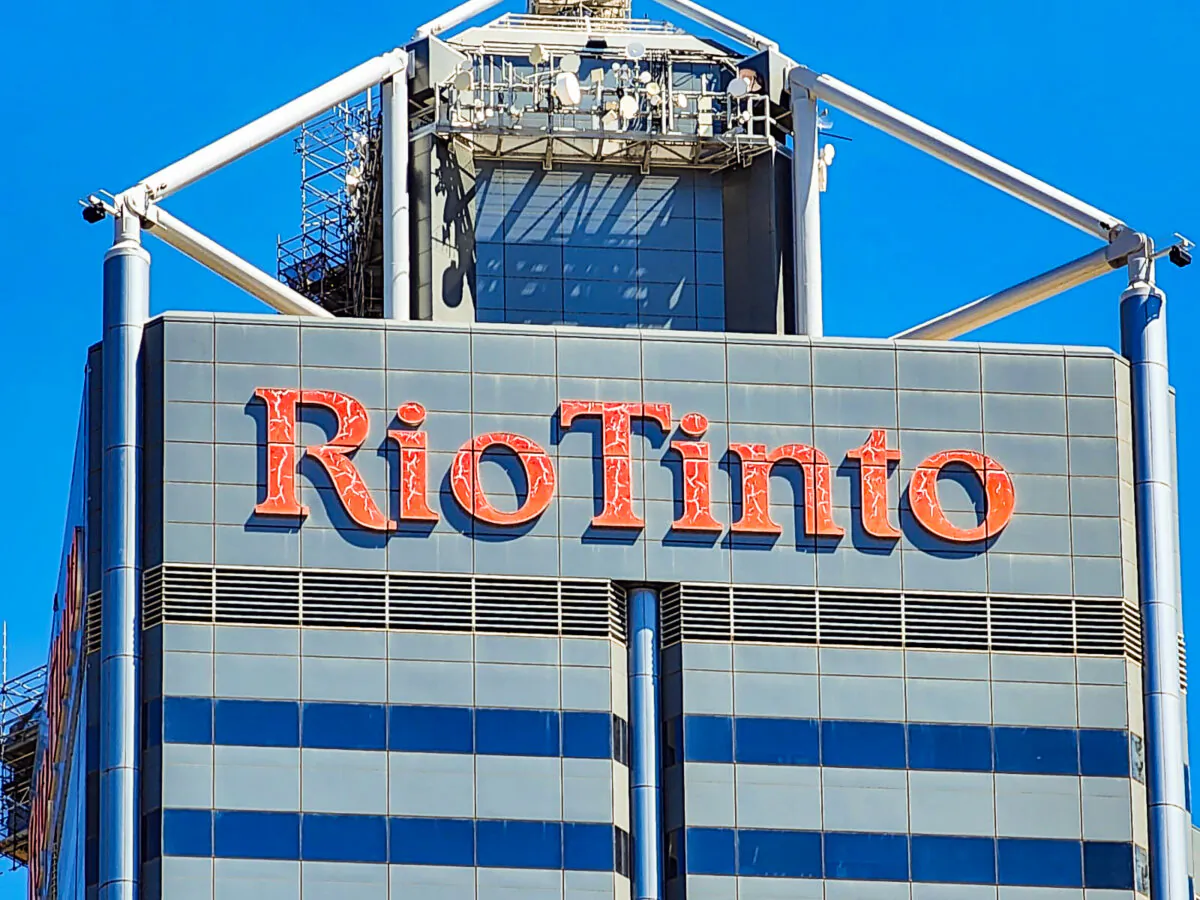

Rio Tinto, a British-Australian multinational mining and metals company, has announced that it will no longer pursue a merger or any other business combination with Glencore, an international natural resources firm headquartered in Baar, Switzerland.
Both firms maintain offices in the United States and are actively involved with American businesses. Rio Tinto operates in eight states with a workforce of nearly 5,000, while Glencore has locations in New York City, Stamford, Connecticut, and Houston, Texas, among other metros.
Rio Tinto backed out of the latest discussions to merge with Glencore, which would have formed the world’s largest mining company, after determining it could not reach an agreement that would deliver value to its shareholders, the company said.
In a Jan. 8 announcement, Rio Tinto revealed that the two firms had been involved in preliminary discussions about a possible combination of some or all of their businesses, which could include an all-share merger. At the time, both agreed that the merger transaction would be completed by Rio Tinto acquiring Glencore.
“There can be no certainty that an offer will be made or as to the terms of any such offer, should one be made,” the announcement reads. Both firms had agreed that Rio Tinto would have until 5 p.m. London time on Feb. 5, to announce either an offer or a rejection of an offer.
The history of the would-be merger dates back to 2014, when Glencore contacted Rio Tinto about the possibility of acquisition. According to a Rio Tinto statement, the company’s board of directors rejected the proposal after consulting with its financial and legal advisers and concluding that the deal would not be in the best interest of its shareholders. Merger discussions resumed again briefly in late 2024 with no positive outcome.
However, just days before Rio Tinto’s merger rejection on Feb. 5, Glencore and the Orion Critical Mineral Consortium announced they had entered into a nonbinding memorandum of understanding regarding a potential acquisition by Orion. This would involve Orion taking a 40 percent stake in Glencore’s interests in its Democratic Republic of Congo assets, which include Mutanda Mining (Mumi) and Kamoto Copper Company (KCC). Under the agreement, Glencore and Orion would also look to expand and develop Mumi and KCC.
The Orion Consortium was established in October 2025 by Orion Resource Partners in partnership with the U.S. government to develop supply chains for critical minerals.
At the end of January, Rio Tinto and the Aluminum Corporation of China Limited (Chalco) entered into an agreement to acquire Votorantim’s controlling shareholding in Companhia Brasileira de Alumíno (CBA). Terms call for Rio Tinto to own 33 percent, while Chalco will own 67 percent.
In a Jan. 30 statement, Rio Tinto said the transaction would leverage both firms’ expertise across the aluminium value chain to advance the next phase of growth at CBA.
Dating back to 1873, Rio Tinto has more than 150 years of mining and processing experience. The company operates in more than 35 countries, employing more than 60,000 people. Its portfolio includes iron ore, copper, aluminium, and a range of other minerals and materials.
Founded in the 1970s as a trading company, Glencore today is a major producer and marketer of commodities with nearly 150,000 employees and contractors in more than 30 countries.
 Friends Read Free
Copy
Facebook
Tweet
Friends Read Free
Copy
Facebook
Tweet