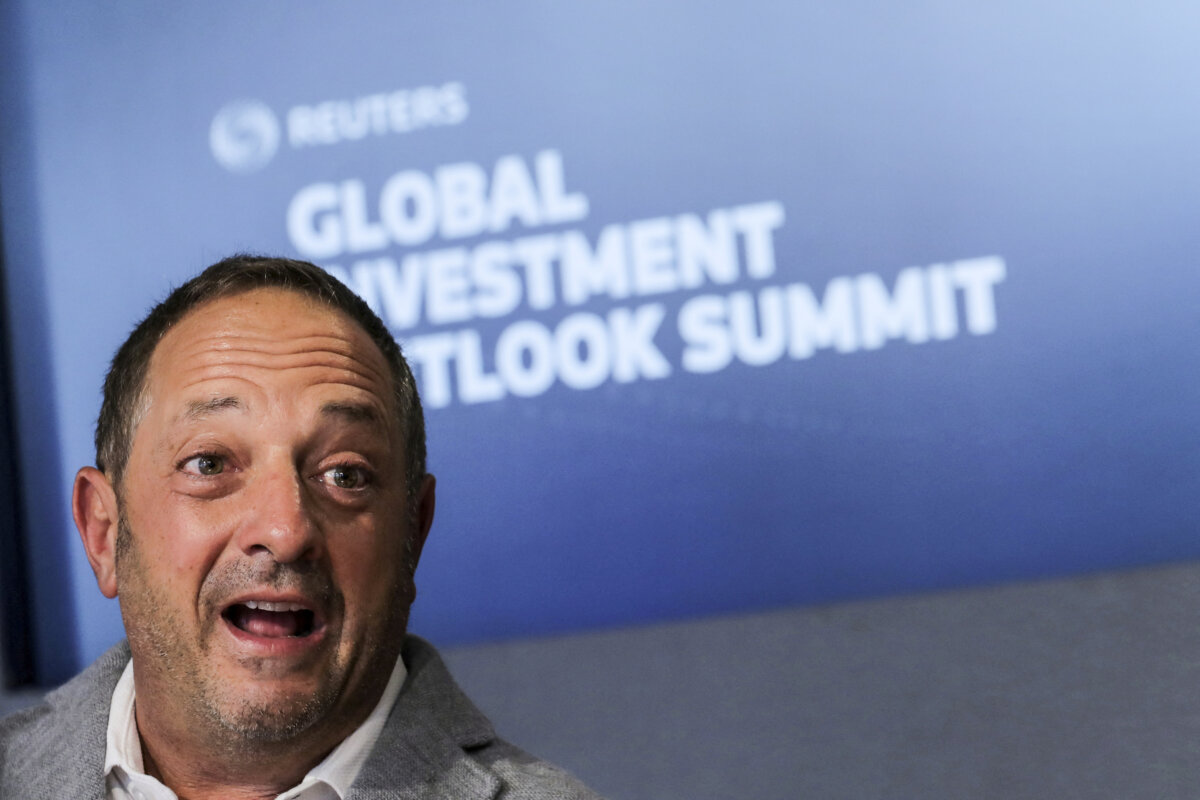

Prominent U.S. investor Andrew Left was convicted of securities fraud by a jury on June 1, the Justice Department said.
Prosecutors in July 2024 charged that the Citron Research founder manipulated stocks and misled investors about his positions in firms such as Meta Platforms, Nvidia, and Tesla. Left denied the accusations and pleaded not guilty.
Left has been one of the best-known short sellers in financial markets for years.
Short sellers are investors who bet against publicly traded companies because they believe the firm is overvalued. They then profit when the firm’s stock falls.
“Left used his TV appearances to disguise his intentions, manipulate the stock market, and pad his pockets,” Bill Essayli, first assistant U.S. attorney, said in a statement.
“A fair and transparent securities market is a foundation of our nation’s financial system. We will continue to bring to justice individuals who abuse the public trust placed in financial advisors.”
Prosecutors argued that Left used Citron’s platform to publish commentary asserting that certain stocks were mispriced, often pairing his views with claims about his own trading positions and a target price. Prosecutors say he leveraged Citron’s market influence to make at least $21 million by manipulating share prices between March 2018 and October 2023.
Knowing his reputation could move markets, he selected companies and crafted commentary with the intent of driving their stock in a direction that benefited his trades, attorneys said.
Jurors convicted him on one count of a securities fraud scheme and 12 counts of securities fraud linked to specific trades after just two days of deliberations.
The jury acquitted Left of four counts of securities fraud arising from trades in four specific companies.
In a post on Citron Research’s X account, Left stated that he never made false statements.
“Not once did anyone say I lied. The government’s own agent admitted it on the stand,” Left said.
“So now a truthful opinion that ends up making money is illegal. Is this America? We disagree with the jury and this does not stop here. We will keep fighting for free, honest speech and opportunity, the backbone of this country.”
Left also penned an email to CNBC host Andrew Ross Sorkin, writing that it is “chilling” that the federal government can regulate a private citizen’s trading and speech.
“I’m a bit speechless,” Left wrote. “What does this do for the future of free speech?”
A sentencing hearing has been scheduled for August 31. Left faces a statutory maximum sentence of 25 years in federal prison for the securities fraud scheme count and up to 20 years in federal prison for each count of securities fraud.
Left, 55, will remain free until the hearing.
Eat the Shorts
Many short sellers defend the controversial practice by claiming they sniff out companies engaged in odious business practices and help investors protect their portfolios from exposure to these stocks.
Prescient calls that Left had made, for example, were China Evergrande Group and Valeant Pharmaceuticals.

In June 2012, Left published a report arguing that Evergrande was insolvent and had engaged in fraudulent accounting. Three years later, he compared Valeant to Enron, asserting that the pharmaceutical company had inflated revenues.
Both calls were correct.
Conversely, critics warn that short sellers can undermine market stability, increase companies’ capital costs, and trigger margin-loan pressures.
Over the years, regulators in the United States and abroad have taken action against shorting.
In 2008, the Securities and Exchange Commission (SEC) temporarily prohibited most short sales in almost 1,000 financial stocks between Sept. 19 and Oct. 8 that year. The objective was to stabilize Wall Street during the collapse of Lehman Brothers.
South Korea has regularly targeted short selling, implementing restrictions during the pandemic, the 2011 eurozone debt crisis, and the 2008 global financial crisis.
Billionaire Elon Musk has feuded with the short-selling community on various occasions.
In a letter to CNBC in 2022, Musk argued that sophisticated hedge funds often use short selling and complex derivatives to exploit small investors—shorting a stock, launching negative publicity to push the price down, taking profits, and repeating the cycle.
“The term for this, as you may be aware, is ‘short & distort,’” Musk said.
 Friends Read Free
Copy
Facebook
Tweet
Friends Read Free
Copy
Facebook
Tweet