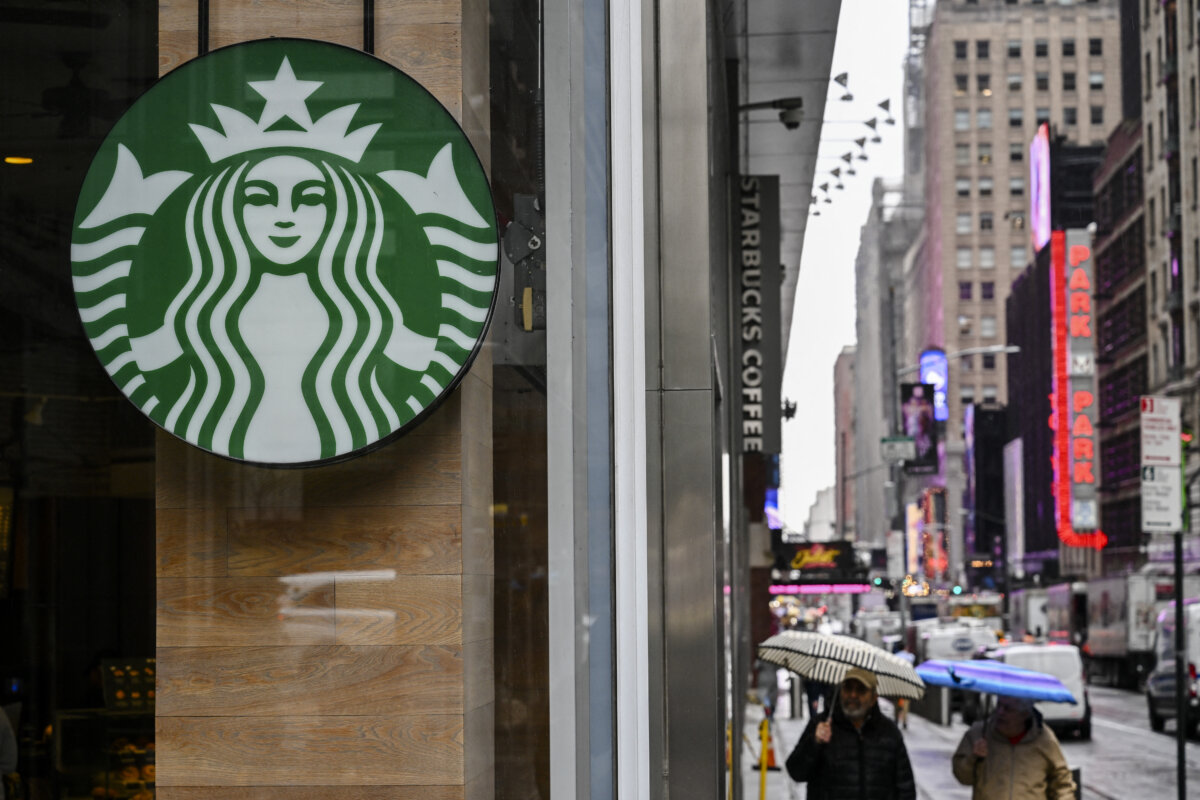

As part of its “Back to Starbucks” program, the global coffee maker is offering its baristas and shift supervisors a chance to earn up to $1,200 per year, or $300 per quarter, in performance bonuses.
“This reward recognizes teams that work together to deliver excellence and is part of our commitment to shared success,” Mike Grams, Starbucks executive vice president and chief operating officer, said in an April 2 statement.
The company also promised perks such as expanded tipping options for customers and moving to a weekly pay schedule for all of its U.S. employees. The new program is slated to begin in July, with the first payouts scheduled for the fall.
“Taken together, these steps will provide the potential for partners to receive an extra 5–8 percent on average, on top of what they receive today,” Grams added.
According to Glassdoor, the average hourly wage for a Starbucks barista in New York City currently is $15–19. At the rate of $19 an hour, full-time employees would earn just under $40,000 a year.
According to Starbucks, these upgrades offer one of the strongest total compensation and benefits packages in retail and are available to employees who work at least 20 hours a week. Other perks include comprehensive health care, 100 percent upfront tuition coverage for a bachelor’s degree, 18 weeks of paid parental leave, and mental health support.
The company noted that it receives more than one million applications annually for barista positions in the United States alone. It also claims to have record-low turnover in the industry, with about 85 percent of employees receiving the hours they request.
For those locations where partners are unionized—about 5 percent—Starbucks will engage in collective bargaining as required by federal law.
Last November, Starbucks Workers United staged a strike involving 2,500 Starbucks union baristas at 120 coffeehouses in 85 U.S. cities. The “Red Cup Rebellion” protested against what it called unfair labor practices.
The union’s top demands included higher take-home pay, better hours, and a resolution of hundreds of outstanding unfair labor practice charges for alleged union busting.
Later in the month, Starbucks agreed to pay $38.9 million to settle claims by New York City that it had violated a local law requiring fast-food businesses to give workers stable schedules more than half a million times over three years. The coffeemaker was accused of routinely failing to provide regular schedules, cutting workers’ scheduled hours, and giving shifts to new hires without first offering them to existing employees.
At its 2026 Investor Day in January, Starbucks CEO Bran Niccol touted the success of its “Back to Starbucks” initiative, launched in late 2024.
“Starbucks is back,” he said in a statement. “Customers are responding to our commitment to world-class service, compelling menu innovation, and marketing that truly resonates. We know there’s more work ahead, but we’re confident in our plan and see significant opportunities in the U.S. and around the world.”
Among the improvements slated through 2028 are a 5 percent consolidated net revenue growth and more than 2,000 net new stores internationally. The company’s new Green Apron Service is set to improve service times and strengthen customer satisfaction.
Niccol also is committed to improving employee relations. On that front, the company is offering its Next Leadership Academy to help employees expand their careers within Starbucks. The company states that its goal is to promote 90 percent of retail leaders from within.
Founded in 1971 in Seattle, Washington, Starbucks today has more than 41,000 company-operated coffeehouses worldwide.
 Friends Read Free
Copy
Facebook
Tweet
Friends Read Free
Copy
Facebook
Tweet