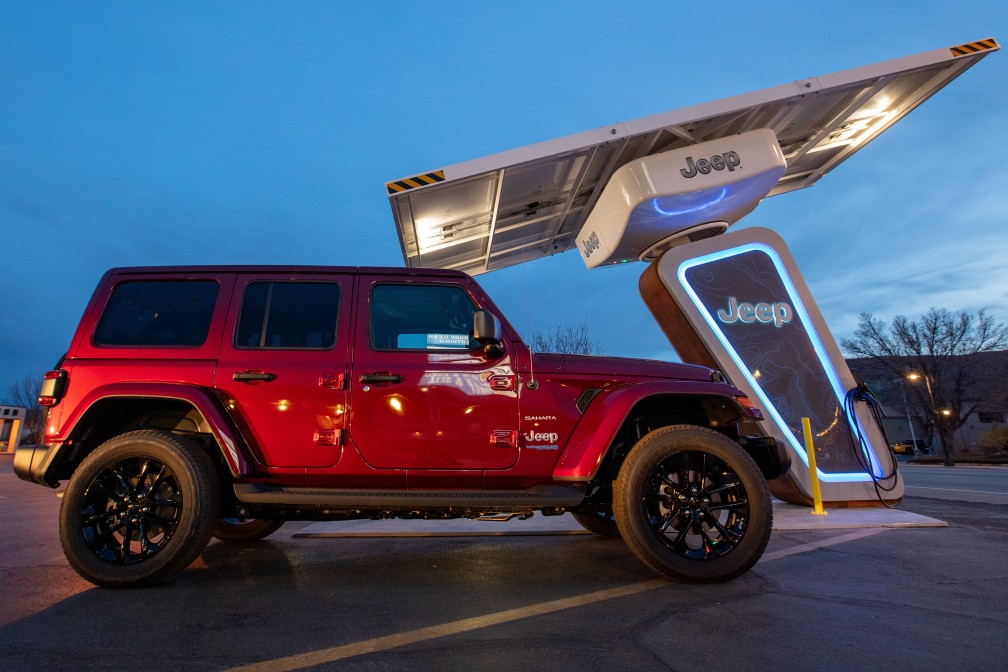

Carmaker Stellantis has reported a €22.3 billion ($24.1 billion) net loss for 2025, as CEO Antonio Filosa said the company had overestimated the pace of the global shift to electric vehicles.
The Netherlands-based automaker said on Feb. 26 that net revenues for 2025 totaled €153.5 billion ($181.3 billion), down 2 percent from 2024, due to foreign exchange headwinds and pricing declines in the first half of the year. This was partially offset by higher volumes and improved vehicle mix.
“Our 2025 full-year results reflect the cost of over-estimating the pace of the energy transition and of the need to reset our business around our customers’ freedom to choose from the full range of electric, hybrid, and internal combustion technologies,” Filosa said.
The company said the net loss for 2025 was driven by €25.4 billion ($30 billion) in charges, primarily related to what it described as a “profound strategic shift” to better align with customer preferences and regulatory changes.
A business reset, announced on Feb. 6, scaled back the company’s EV push and restructuring operations. It resulted in approximately €22.2 billion ($26.2 billion) in charges in the second half of 2025, excluded from adjusted operating income.
Commenting on the charges, Filosa said on Feb. 6 they “reflect the cost of over-estimating the pace of the energy transition that distanced us from many car buyers’ real-world needs, means and desires.”
The reset included revising the company’s product plan and electric-vehicle supply chain to better reflect customer demand.
Headquartered in Amsterdam, Stellantis owns a portfolio of U.S. brands, including Jeep, Dodge, and Chrysler, as well as European brands such as Fiat, Peugeot, and Alfa Romeo.
Stellantis joins other carmakers reassessing the EV market, including General Motors and Ford.
In October 2025, General Motors said it will bear a $1.6 billion loss to scale back its electric vehicle (EV) operations, citing weaker expected demand. In December 2025, Ford announced a $19.5 billion charge related to its electric-vehicle investments as part of a “customer-driven shift to create a stronger, more resilient and more profitable” business, CEO Jim Farley said.
The $7,500 federal EV tax credit, established under former President Joe Biden’s 2022 Inflation Reduction Act, had been a key driver of EV sales in the United States.
It expired on Sept. 30, 2025 as part of a broader policy rollback under President Donald Trump.
Return to Growth
Despite the full-year loss, Stellantis said it delivered a return to top-line growth in the second half of 2025.
Consolidated shipments reached 2.8 million units in the second half, up 277,000 vehicles, or 11 percent year over year, with all regions reporting higher volumes.
North America accounted for the largest share of the increase, adding 231,000 units for a 39 percent year-over-year rise. Net revenues in the second half rose 10 percent compared with the same period in 2024.
Looking ahead, Stellantis said it will broaden market coverage and target new opportunities for profitable growth in 2026.
In North America, the company is reentering key segments with models such as the Jeep Cherokee and Dodge Charger SIXPACK, marking a return to the mid-size SUV and internal combustion muscle car categories.
Additional momentum is expected from the late-2025 launch of the Ram 1500 HEMI V8 and Express models.
In South America, the mid-size pickup Ram Dakota anchors the lineup, while in Enlarged Europe, models including the Citroën C5 Aircross BEV, Jeep Compass BEV, and the recently launched Fiat 500 Hybrid aim to strengthen the company’s ability to meet a range of customer needs.
 Friends Read Free
Copy
Facebook
Tweet
Friends Read Free
Copy
Facebook
Tweet