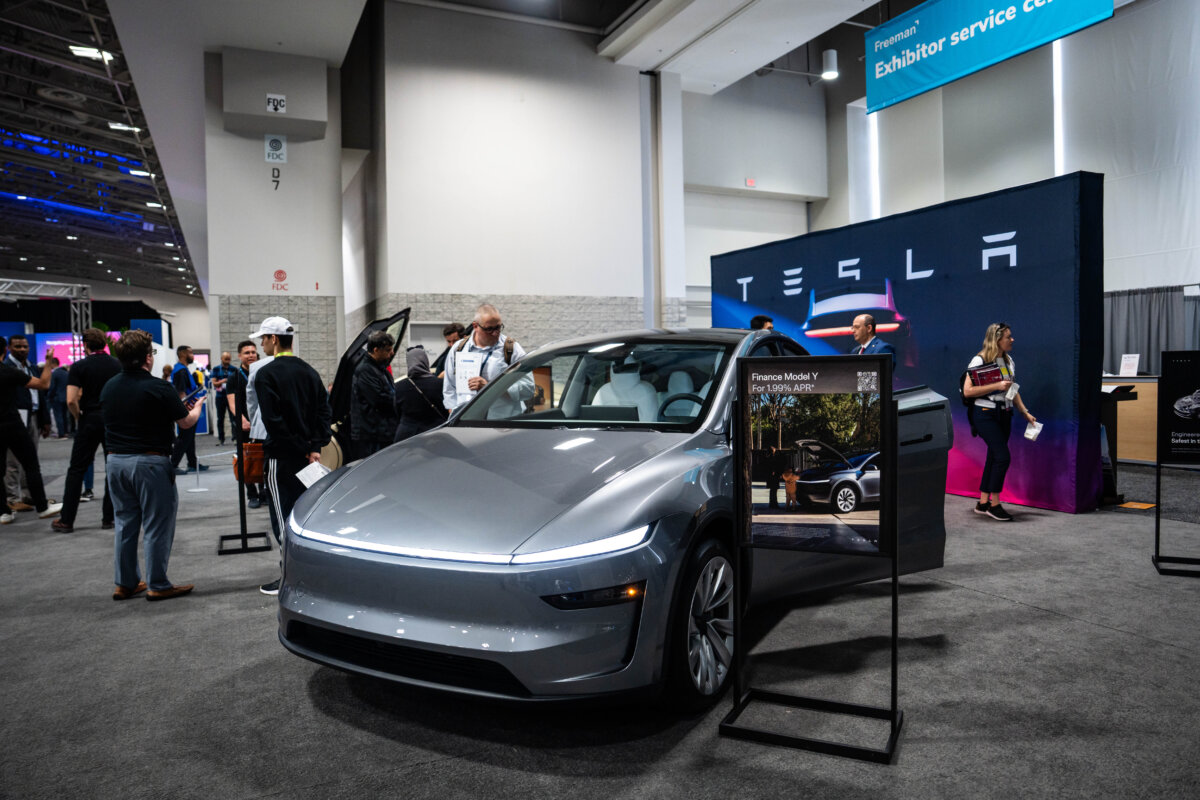

The $7,500 electric vehicle (EV) federal tax credit is set to end on Sept. 30, a move that is likely to dampen sales of these vehicles in the United States.
The credit was instituted as part of the Inflation Reduction Act signed into law by President Joe Biden in 2022. On July 4, President Donald Trump signed the One Big Beautiful Bill Act, setting Sept. 30 as the final date for receiving EV credits as part of terminating EV purchase benefits.
On its website, Tesla, the biggest EV seller in the United States, has been encouraging visitors to make an order for a Tesla EV before Sept. 30 to qualify for the $7,500 credit and to take delivery later.
In a Sept. 25 post, auto services company Cox Automotive forecasts a record 410,000 EVs will be sold in the third quarter, the final few months before the expiry of tax credits. This would be a 21.1 percent year-over-year increase. The share of EV sales in overall auto sales is expected to be close to 10 percent, which Cox said would also be a record.
Charlie Chesbrough, senior economist at Cox, said that a key contributor to the sales boost is buyers rushing to market before the expiry of the $7,500 tax credit.
Stephanie Valdez Streaty, director of Industry Insights at Cox, said the credit was “a key catalyst for EV adoption, and its expiration marks a pivotal moment.”
The end of this credit “will test whether the electric vehicle market is mature enough to thrive on its own fundamentals or still needs support to expand further,” Streaty added.
Cox expects EV sales to “slow notably” in the fourth quarter, but for long-term sales growth to persist.
However, sentiment among auto dealers regarding EV market outlook has dropped to the lowest score on record, according to a Sept. 3 report from Cox.
Multiple automakers have already announced scaling down their EV ambitions.
On Sept. 12, American truck manufacturer Ram said it has abandoned plans to launch an electric pickup truck.
“As demand for full-size battery-electric trucks slows in North America, Stellantis is reassessing its product strategy and will discontinue development of a full-size [battery-electric] pickup,” Ram, which is owned by Stellantis, said in a statement.
In a Sept. 2 report, Duncan Aldred, senior vice president and president for North America at General Motors, said the company will see “lower EV sales next quarter after tax credits end Sept. 30, and it may take several months for the market to normalize.”
“Still, we believe GM can continue to grow EV market share,” he wrote. “We are seeing marginal competitors dramatically scale back their products and plans, which should end much of the overproduction and irrational discounts we’ve seen in the marketplace.”
The scaling down of EV businesses can push up unemployment in the sector, a negative effect of ending the EV credits. According to a 2024 report from the Department of Energy, the battery EV sector employed 149,702 workers during 2021–23.
California Gov. Gavin Newsom had earlier suggested that the state would provide tax rebates if Washington withdrew such funding.
During a Sept. 19 press conference, Newsom said the state won’t be implementing such measures due to resource constraints.
“We can’t make up for the federal vandalism of those tax credits [by the Trump administration],” Newsom said. “But we can continue to make the unprecedented investments in infrastructure.”
In addition to an end to rebates, another challenge to EV sales is lower interest among potential auto buyers, according to a June 3 survey from the American Automobile Association (AAA).
Only 16 percent of U.S. adults in the survey said they are “likely” or “very likely” to buy a full electric vehicle as their next car, which AAA said was the “lowest percentage recorded of EV interest since 2019.”
Respondents cited high purchase price and repair costs, lack of convenient public charging stations, and a fear of running out of charge as some of the key reasons not to buy EVs, the survey said.
“While the automotive industry is committed to long-term electrification and providing a diverse range of models, underlying consumer hesitation remains,” AAA’s director of automotive engineering, Greg Brannon, said.
 Friends Read Free
Copy
Facebook
Tweet
Friends Read Free
Copy
Facebook
Tweet