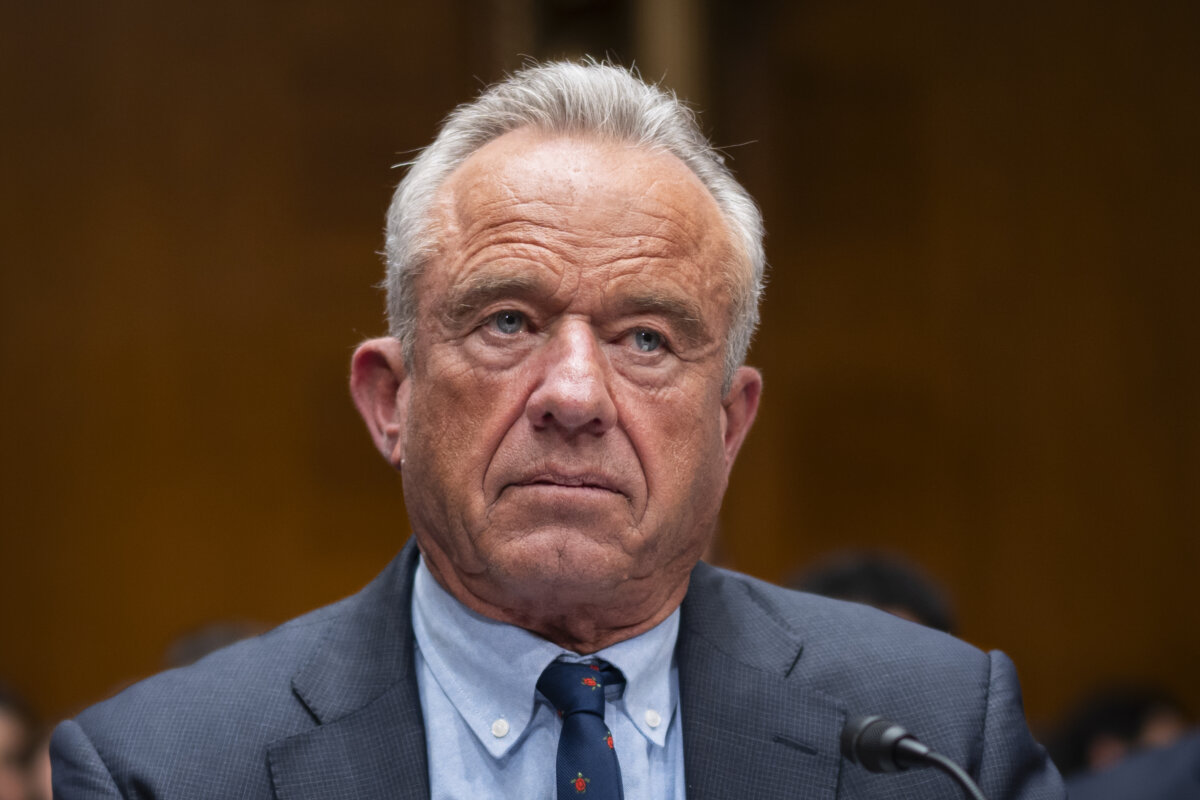

The Trump administration on Wednesday asked a federal appeals court to reverse a ruling that had blocked Health Secretary Robert F. Kennedy Jr.’s appointment of 13 members to a key vaccine advisory panel.
U.S. District Judge Brian Murphy ruled in March that Kennedy’s appointees did not possess the required vaccine-related expertise and blocked them from serving on the Advisory Committee on Immunization Practices (ACIP). Murphy also blocked the panel’s new vaccine schedule for children.
In a brief filed on June 17, government lawyers argued that the ruling prevented the panel from achieving a quorum and that the government could not reconvene it without court approval.
“Should a pathogen emerge tomorrow, the government’s only path to respond would run through the district court,” the government lawyers stated.
“Staying thirteen of fifteen appointments does not produce a balanced committee. It produces no functioning committee at all, one without a quorum and unable to meet. The stay does not cure the violation the court identified,” they said.
ACIP is a federal advisory committee that provides recommendations to the Centers for Disease Control and Prevention on the use of vaccines to control diseases and helps establish immunization schedules for children and adults in the United States.
In June 2025, Kennedy removed all 17 members of ACIP and appointed eight new members. The move drew legal challenges from some medical groups.
Murphy ruled in March that the new appointments violated the Federal Advisory Committee Act, which requires members of such panels to “maintain a fair balance on its committees and to avoid inappropriate influences by both the appointing authority and any special interest.”
In his ruling, the judge said that “of the fifteen members currently on ACIP, even under the most generous reading, only six appear to have any meaningful experience in vaccines.”
Government lawyers argued in the brief that Murphy lacked the authority to evaluate each of Kennedy’s appointees or invalidate the appointment of those he deemed to have insufficient expertise.
“The secretary decides what expertise ACIP needs, who has it, and how to weigh competing qualifications against the committee’s mission. A federal judge who substitutes his own assessment of those questions has crossed the line between judicial review and executive staffing,” the brief reads.
Kennedy warned on June 12 that the ruling has left the advisory committee “unable to carry out its core responsibilities.” Influenza and other viruses typically circulate each year in the fall and winter.
“As a result, the committee cannot issue new recommendations, review newly approved vaccines, or complete important work ahead of the fall flu season,” the health secretary said in a social media post.
Zachary Stieber contributed to this report.
 Friends Read Free
Copy
Facebook
Tweet
Friends Read Free
Copy
Facebook
Tweet